 Chat with us

- Dew Point Meters
- Gas Analysers
- Portable Gas Detector
- Moisture And Dew Point Analyzer
- Dust/Opacity Monitor
- Gas Monitoring Systems
- Gas Leak Detectors
- Gas Transmitters
- VOC Leak Detector
- Air Quality Monitoring System
- Online Continuous Emission Monitoring System-OCEMS
- Dew Point Monitors
- Gas Detector
- Opacity Monitor
- Portable Flue Gas Analyzer
- Online SOX & NOX Gas Analyzer
- Methane Gas Leak Detector
- Hydrogen Purity Analyzer
- Gas Purity Analyzer
- Effluent Monitoring Systems
- Producer Gas Analyzer
- Gas Detector Calibration Service
- Portable Gas Monitors
- Gas Sensor Transmitter

 Send Inquiry
Gas Purity Monitoring Equipment
Price 85500.0 INR/ Piece
Gas Purity Monitoring Equipment Specification
- Humidity
- 0 to 95% RH (non-condensing)
- Gas Pressure
- 0.5 to 2 Bar
- Interface Type
- RS232 / USB (optional)
- Temperature
- 0C to 50C
- Frequency
- 50 Hz
- Number of Specimens
- Single channel measurement
- Power Supply
- 230V AC, 50Hz
- Application
- Continuous gas purity and composition monitoring for industrial and laboratory environments
- Accuracy
- 2% of full scale (typical)
- Response Time
- T90 < 20 seconds
- Test Range
- CO: 0-1000 PPM, CO2: 0-25%, O2: 0-25%, NO: 0-2000 PPM, SO2: 0-2000 PPM
- Port Size
- 1/4 inch NPT
- Equipment Type
- Gas Purity Monitoring Equipment
- Display Type
- Large Backlit LCD Display
- Features
- Data logging, micro-printer, user-configurable alarms, flow measurement
- Resolution
- 1 PPM or 0.01% (depending on parameter)
- Measuring Range
- Multi-gas: CO, CO2, O2, NO, SO2
- Mounting Type
- Benchtop
- Operating Voltage
- 230V AC
- Automation Grade
- Automatic
- Usage
- Industrial gas quality monitoring, laboratory analysis
- Machine Weight
- 5 kg (approx)
- Control Mode
- Microprocessor Based
- Data Storage
- On-board memory up to 1000 records
- Language Support
- English (standard)
- Output Option
- Analog 4-20mA and relay output
- Flow Rate Measurement
- 0-5 LPM (via flow meter)
- Calibration
- Automatic/Manual via keypad
- Enclosure Material
- Powder coated metal body
- Clock
- Real-time with date and time stamp
- Printer Type
- Thermal Printer built-in
- Alarm Output
- User-programmable relay
About Gas Purity Monitoring Equipment
The Portable Gas Purity Analyser is a compact and reliable gas analysis instrument designed for measuring gas concentration, purity, and composition in industrial and commercial applications. Depending on the sensor and configuration, the analyser can be used for measuring gases such as Oxygen (O), Hydrogen (H), Nitrogen (N), Methane (CH), Carbon Dioxide (CO), Carbon Monoxide (CO), Hydrogen Sulfide (HS), and other process or specialty gases. Its portable design enables convenient on-site testing, routine inspection, gas quality verification, troubleshooting, and process monitoring at different sampling points. The analyser is suitable for gas purity measurement, gas composition analysis, process gas monitoring, leak investigation, gas quality control, equipment maintenance, and operational safety. It can be used for applications including power generation, hydrogen systems, biogas plants, gasification, natural gas, oil and gas, petrochemical, chemical processing, steel plants, industrial gas systems, laboratories, and other industries requiring reliable gas purity and composition analysis. The Portable Gas Purity Analyser provides a practical solution for field-based gas measurement and quality monitoring across a wide range of industrial processes.Comprehensive Gas Analysis
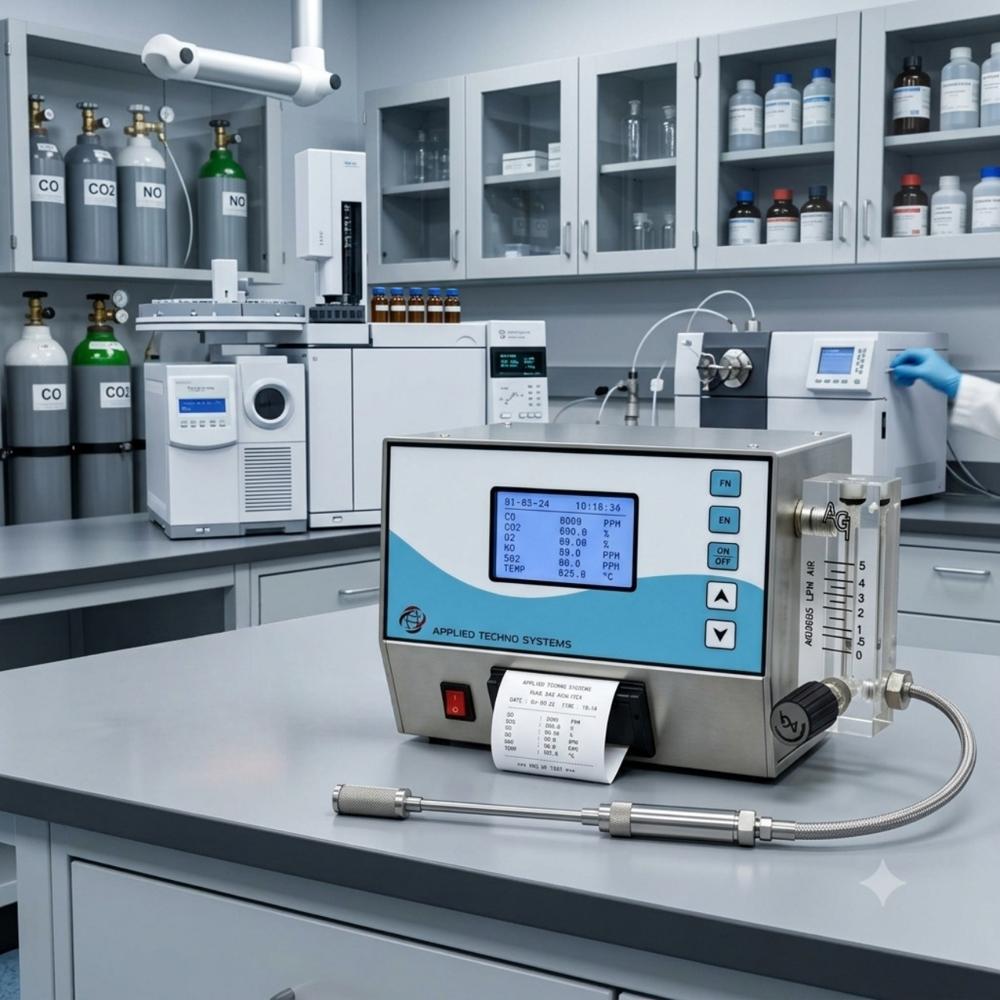
This equipment provides simultaneous monitoring of CO, CO2, O2, NO, and SO2, making it ideal for settings that require precise gas purity and composition data. Its versatility suits it to continuous monitoring in laboratories and industrial facilities, ensuring real-time quality assurance.
Advanced Data Management
Keep your records organized effortlessly with built-in memory capable of storing up to 1000 results and a thermal printer for immediate printouts. Real-time date and time stamping, plus user-friendly data retrieval, support compliance reporting and traceability needs.
User-Friendly Operation and Control
The intuitive interface, large backlit display, automatic/manual calibration options, and microprocessor-based control make operation straightforward, reducing training and set-up time. Configurable relay alarms and analog output ensure seamless integration with existing process systems.
FAQ's of Gas Purity Monitoring Equipment:
Q: How does the gas purity monitoring equipment measure gas composition and purity?
A: The equipment uses highly sensitive sensors and a microprocessor-based system to continuously measure the concentration of CO, CO2, O2, NO, and SO2 within predefined ranges. Real-time results are displayed on a large LCD, supporting reliable industrial and laboratory monitoring.Q: What are the key benefits of the built-in thermal printer and on-board memory?
A: The built-in thermal printer allows for instant printing of measurement data, while the on-board memory stores up to 1000 records. This ensures both immediate documentation and long-term data retention for compliance, audits, and process optimization.Q: When and how should calibration be performed on this instrument?
A: Calibration can be conducted automatically or manually at user-defined intervals via the keypad interface. Regular calibration is recommended as per the operating manual to maintain measurement accuracy and reliability.Q: Where can this equipment be installed for optimal performance?
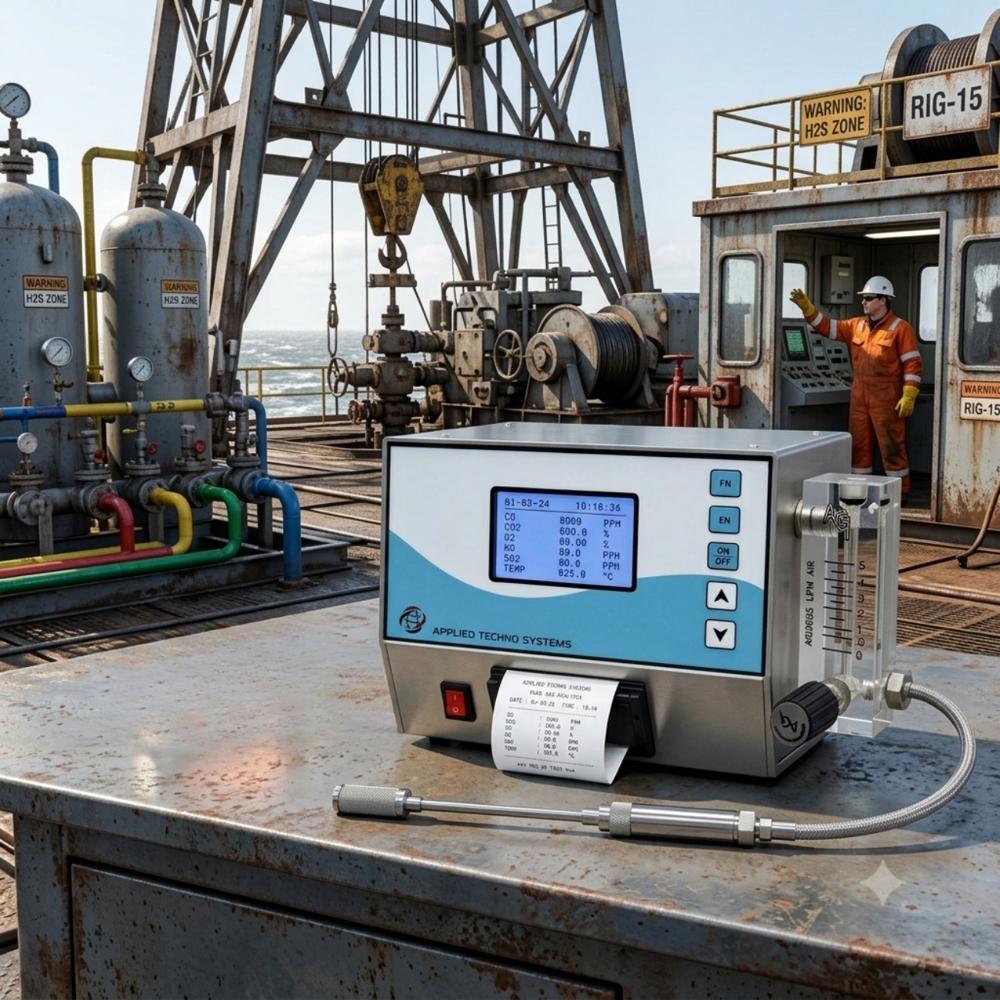
A: Designed for benchtop use, the equipment is suitable for laboratory and industrial environments with temperature ranges from 0C to 50C, humidity up to 95% RH (non-condensing), and gas pressures between 0.5 and 2 Bar. Ensure proximity to a power outlet (230V AC, 50Hz) and appropriate gas connections (1/4 inch NPT ports).Q: How do the user-configurable relay alarms work?
A: The relay alarm output can be adjusted by the user to trigger when measured gas concentrations exceed specific thresholds. This feature enhances safety and process control by alerting operators instantly when gas levels fall outside safe limits.Q: What is the typical response time for measurements and its significance in usage?
A: The device features a fast response time (T90 < 20 seconds), allowing users to promptly detect and react to changes in gas composition. This is crucial for applications requiring immediate corrective actions or precise quality control.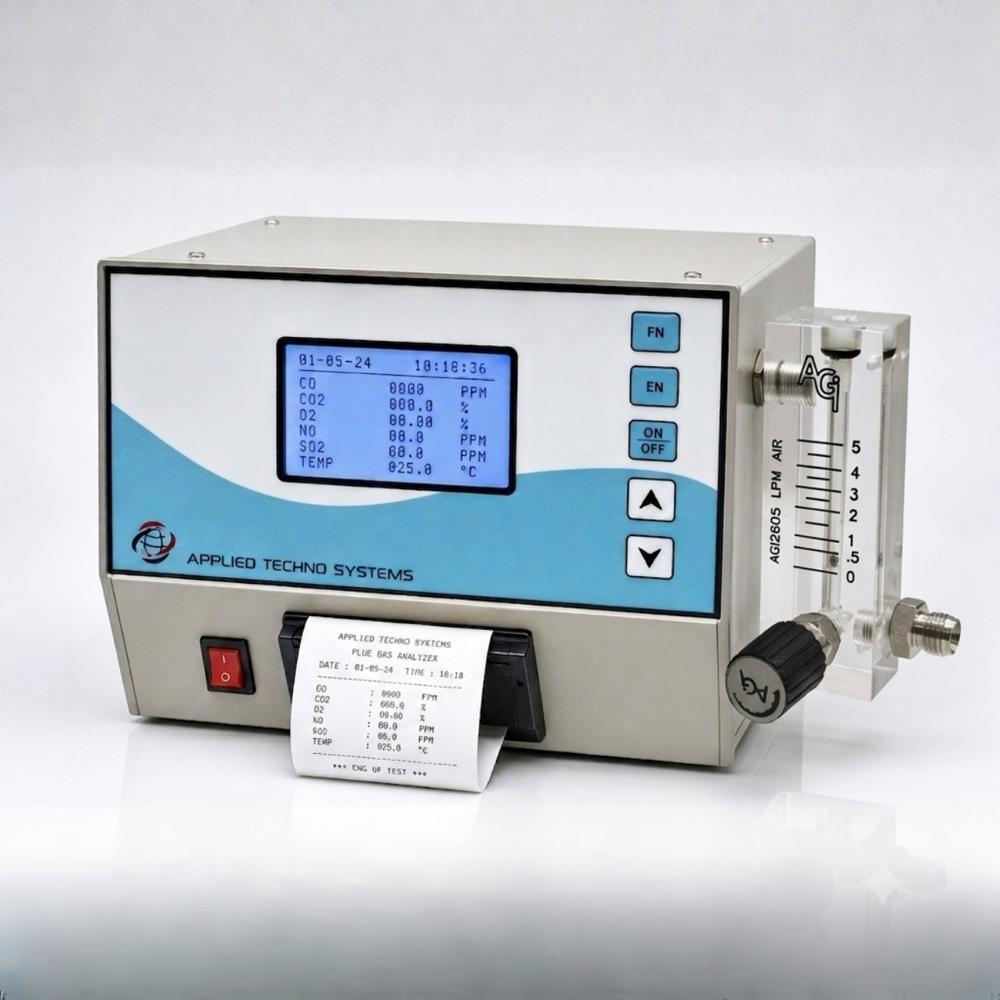

Price:
- 50
- 100
- 200
- 250
- 500
- 1000+

More Products in Gas Purity Analyzer Category
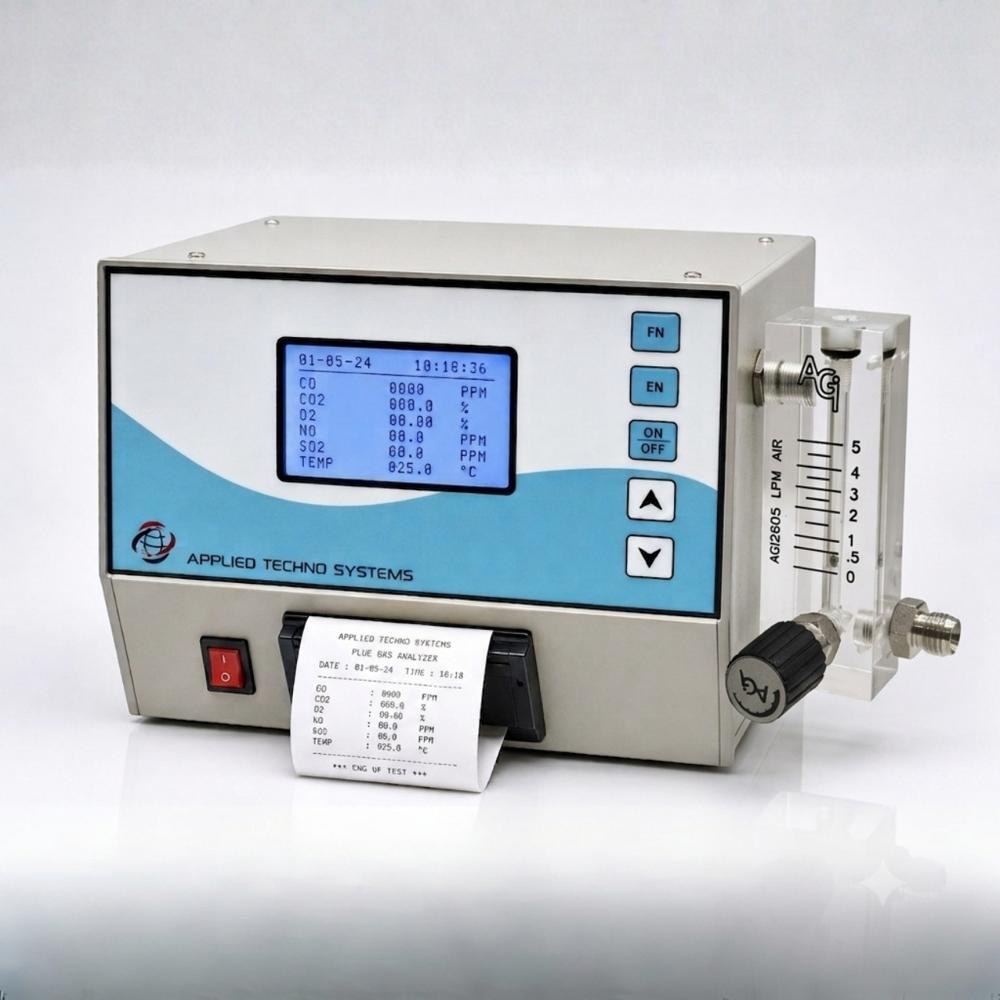
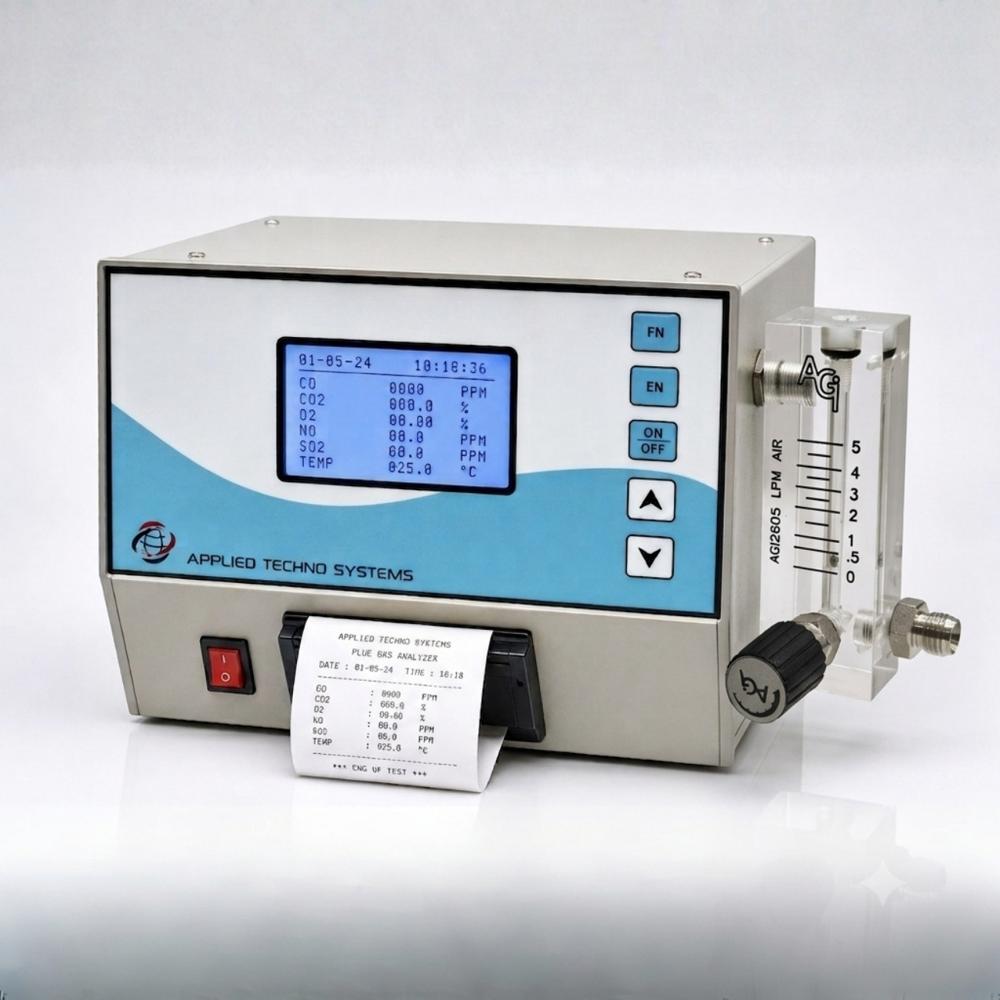
Portable Gas Composition Analyser
Price 180500.0 INR / Piece
Minimum Order Quantity : 1 Piece
Application : Analysis of CO, CO2, O2, NO, SO2 in air/gas mixtures
Control Mode : Microprocessor Based
Resolution : CO/NO/SO2: 1 PPM, O2: 0.01%, CO2: 0.01%
Usage : Field/Laboratory/Stack Emission Analysis
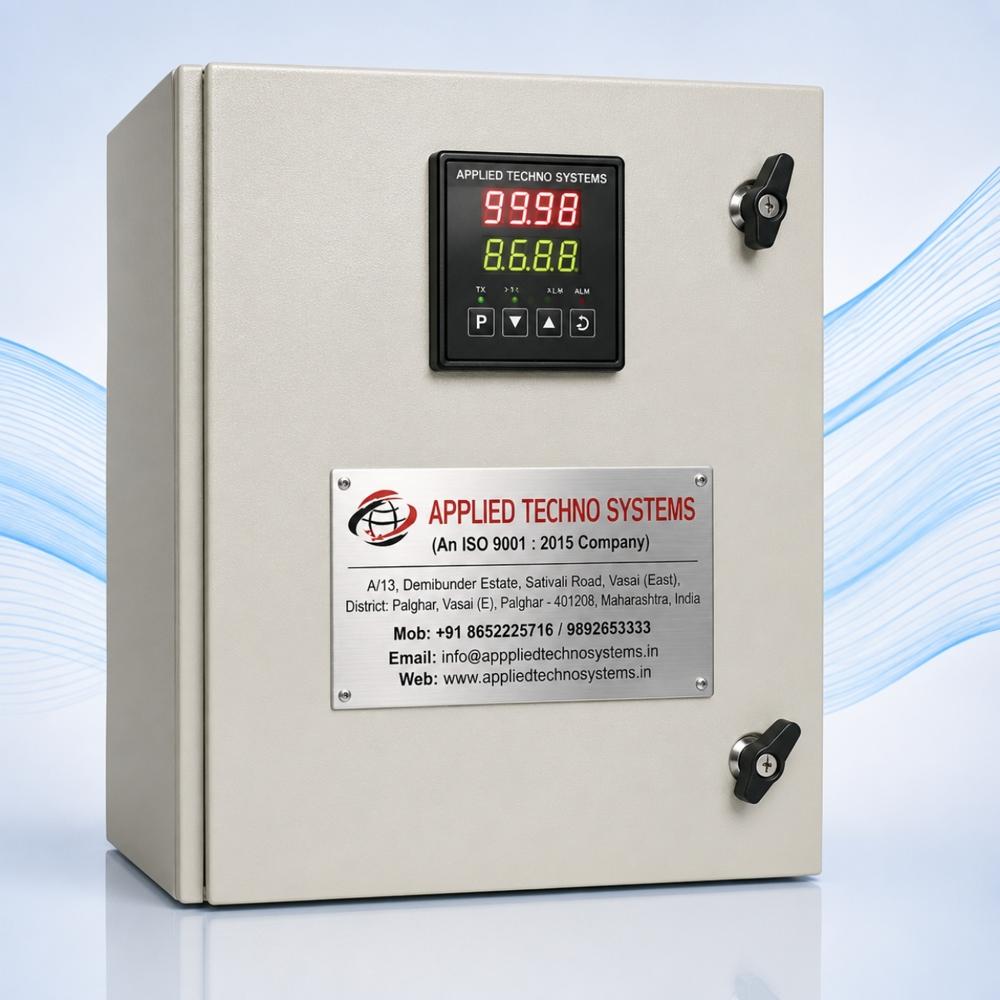
Portable Gas Testing Instrument
Price 145500.0 INR / Unit
Minimum Order Quantity : 1 Unit
Application : Stack, ambient and industrial gas analysis
Control Mode : Automatic / Manual via keypad
Resolution : 1 ppm / 0.1% (gas dependent)
Usage : Gas concentration detection & documentation
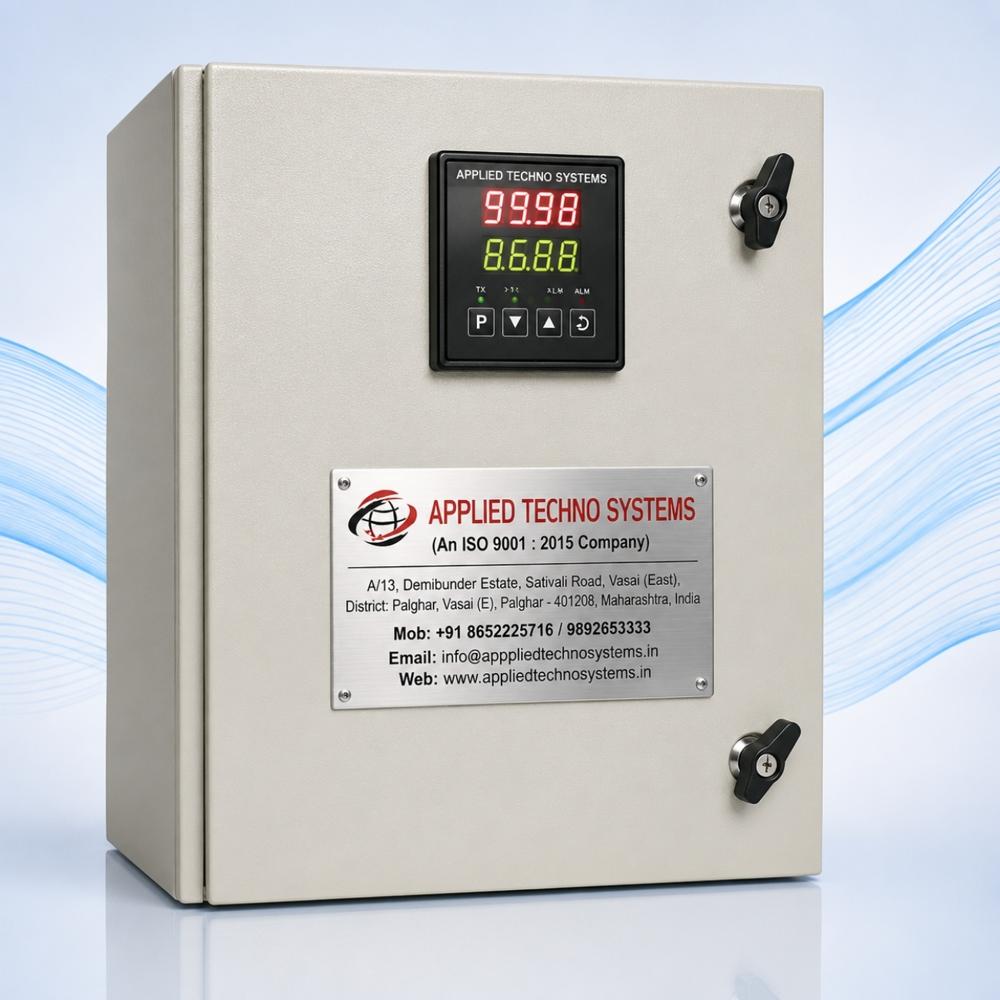
Continuous Oxygen Analyzer
Price 135500.0 INR / Piece
Minimum Order Quantity : 1 Piece
Application : Continuous monitoring of oxygen in process industries, pharmaceutical, chemical, gas plants, and environmental applications.
Control Mode : Microprocessor Based
Resolution : 0.01% O2
Usage : Industrial Gas Monitoring
Online Oxygen Analyser
Price 135500.0 INR / Piece
Minimum Order Quantity : 1 Piece
Application : Continuous Oxygen Monitoring in Process Industries
Control Mode : Microprocessor Based Controller
Resolution : 0.01% O2
Usage : Industrial Gas Detection, Safety Monitoring


- 104, Delta Industrial Estate, Building No 1, Gokhivare, Sativali Road, Vasai East, Dist-Palghar,Vasai - 401208, Maharashtra, India
- Phone : 08045814504
GST : 27AAVCA1127G1ZN

- Mr M L YADAV (Marketing Manager)
- Mobile : 08045814504
- Send Inquiry
 Send Inquiry

|


- Dew Point Meters
- Gas Analysers
- Portable Gas Detector
- Moisture And Dew Point Analyzer
- Dust/Opacity Monitor
- Gas Monitoring Systems
- Gas Leak Detectors
- Gas Transmitters
- VOC Leak Detector
- Air Quality Monitoring System
- Online Continuous Emission Monitoring System-OCEMS
- Dew Point Monitors
- Gas Detector
- Opacity Monitor
- Portable Flue Gas Analyzer
- Online SOX & NOX Gas Analyzer
- Methane Gas Leak Detector
- Hydrogen Purity Analyzer
- Gas Purity Analyzer
- Effluent Monitoring Systems
- Producer Gas Analyzer
- Gas Detector Calibration Service
- Portable Gas Monitors
- Gas Sensor Transmitter

Developed and Managed by Infocom Network Private Limited.


 English
 Spanish
 French
 German
 Italian
 Chinese (Simplified)
 Japanese
 Korean
 Arabic
 Portuguese
