 Chat with us

- Dew Point Meters
- Gas Analysers
- Portable Gas Detector
- Moisture And Dew Point Analyzer
- Dust/Opacity Monitor
- Gas Monitoring Systems
- Gas Leak Detectors
- Gas Transmitters
- VOC Leak Detector
- Air Quality Monitoring System
- Online Continuous Emission Monitoring System-OCEMS
- Dew Point Monitors
- Gas Detector
- Opacity Monitor
- Portable Flue Gas Analyzer
- Online SOX & NOX Gas Analyzer
- Methane Gas Leak Detector
- Hydrogen Purity Analyzer
- Gas Purity Analyzer
- Effluent Monitoring Systems
- Producer Gas Analyzer
- Gas Detector Calibration Service
- Portable Gas Monitors
- Gas Sensor Transmitter

 Send Inquiry
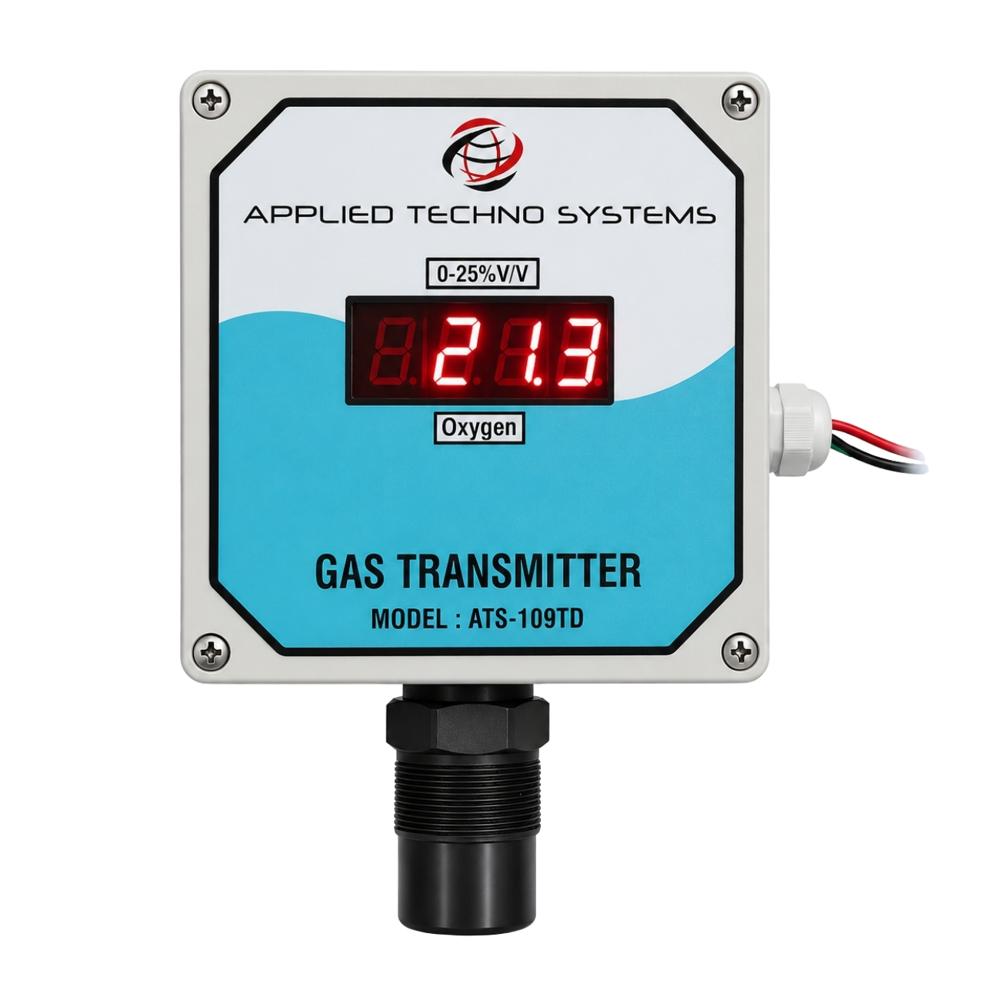
Industrial Gas Transmitter
Price 23500.0 INR/ Piece
Industrial Gas Transmitter Specification
- Sensitivity
- High Sensitivity for Trace Oxygen Detection
- Signal Type
- Analog/RS485
- Ingress Protection
- IP65
- Mounting Type
- Wall or Duct Mountable
- Cable Length
- Up to 10 meters (customizable)
- Measurement Range
- 0-25% V/V Oxygen
- Response Time
- <15 seconds
- Application
- Oxygen Gas Detection and Safety Monitoring in Industries
- Housing Material
- ABS Plastic and Polycarbonate
- Power Consumption
- <1 Watt
- IP Rating
- IP65
- Interface
- Terminal Block, Optional Modbus
- Sensor Type
- Electrochemical
- Features
- Digital Display, Robust Housing, Fast Response, Easy Installation
- Spectral Range
- N/A (Electrochemical Sensor)
- Mounting Thread
- 3/4 inch NPT
- Wireless
- No
- Operating Temperature
- -10C to +55C
- Product Type
- Industrial Gas Transmitter
- Material
- Industrial Grade Plastic Housing
- Input
- Oxygen Gas (0-25% V/V)
- Output
- 4-20mA Analog or RS485 Digital Output
- Function
- Continuous Gas Level Measurement and Transmitting
- Usage
- Industrial Gas Monitoring
- Accuracy
- 2% of full scale
- Resolution
- 0.01% V/V
- Voltage
- 12-24V DC
- Weight
- Approx. 250g
- Relative Humidity
- 0-95% RH Non-Condensing
- Display Type
- High Brightness 4-Digit LED
- Alarm Output
- Optional Relay Contact
- Zero and Span Adjustment
- Yes, Via Front Buttons
- Typical Sensor Life
- 2 years (field replaceable)
- Signal Transmission Distance
- Up to 2000 meters for RS485
- Calibration
- User & Factory Calibration Supported
- Power Supply Protection
- Reverse Polarity and Overvoltage
- Storage Temperature
- -20C to +60C
About Industrial Gas Transmitter
The Gas Sensor Transmitter WP (Weatherproof) is a reliable industrial gas detection and monitoring device designed for the continuous measurement of hazardous, toxic, combustible, and flammable gases in indoor and outdoor environments. The transmitter can be configured with suitable gas sensors for detecting gases such as Oxygen (O), Hydrogen Sulfide (HS), Carbon Monoxide (CO), Sulfur Dioxide (SO), Hydrogen (H), Methane (CH), combustible gases, VOCs, and other toxic or flammable gases, depending on the application requirement. Its rugged weatherproof construction makes it suitable for demanding industrial conditions and outdoor gas monitoring applications. The transmitter provides reliable gas concentration measurement with 420 mA output, alarm/relay options, self-diagnostics, and continuous monitoring capabilities, and can be integrated with fixed gas detection and multi-point gas monitoring systems. It is suitable for gas leak detection, plant safety, process monitoring, storage area monitoring, workplace safety, and continuous gas monitoring in Oil Refineries, Petrochemical, Chemical, Oil & Gas, Natural Gas, LNG/LPG, Fertilizer, Coal Mining, Power Plants, Iron & Steel, Foundries, Pharmaceutical, Battery Manufacturing, and other industrial environments.Superior Display and Alarm Capabilities
Equipped with a high-brightness 4-digit LED display, this transmitter allows easy visibility of oxygen levels, even in harsh industrial environments. The optional relay contact output provides immediate alarm notifications for enhanced safety, making it ideal for critical monitoring applications.
User-Friendly Calibration and Adjustment
Both user and factory calibration are supported, ensuring optimal accuracy. Zero and span adjustments can be performed directly via the front buttons without specialized tools, simplifying sensor setup and ongoing maintenance for on-site engineers.
Rugged Design for Industrial Applications
Built with ABS plastic and polycarbonate in a robust, IP65-rated housing, the device withstands challenging conditions, including high humidity and wide temperature ranges. Its industrial-grade construction ensures long-term reliability for oxygen gas detection and safety monitoring.
FAQ's of Industrial Gas Transmitter:
Q: How is the industrial gas transmitter installed?
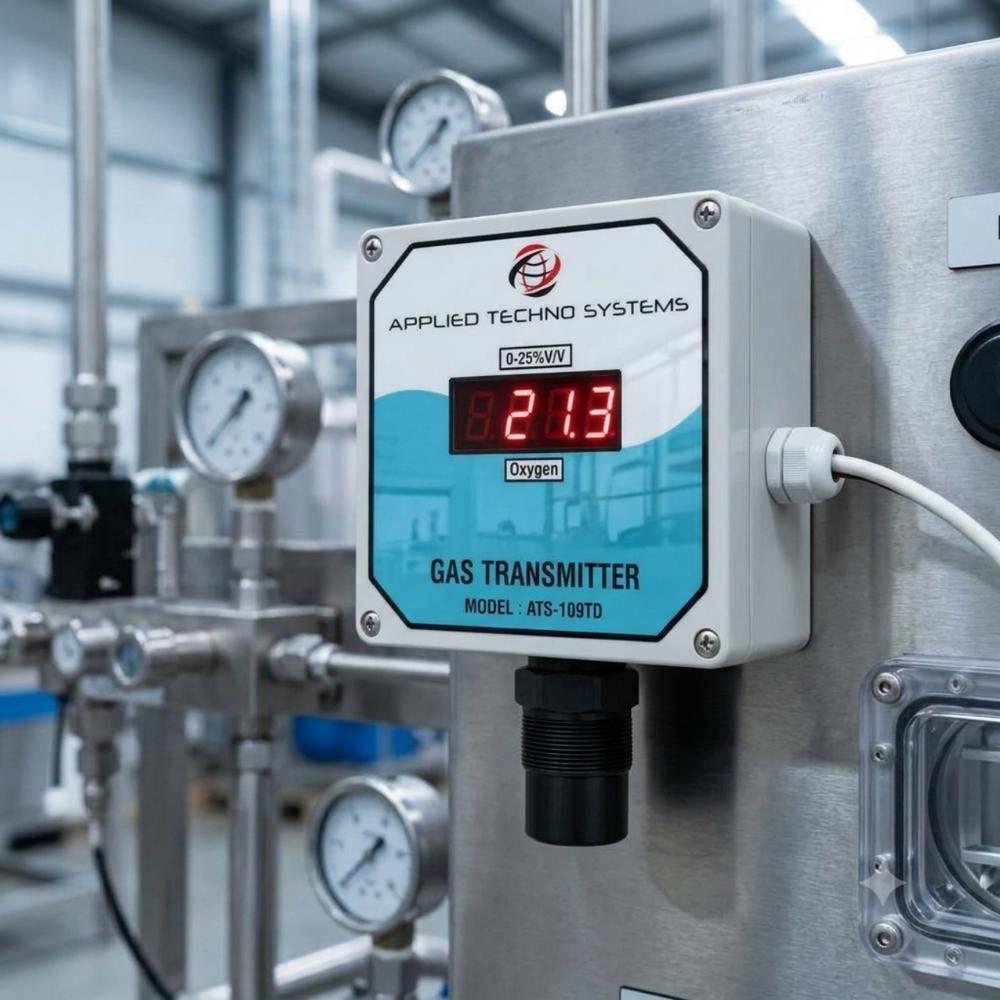
A: The transmitter is designed for wall or duct mounting and uses a standard 3/4 inch NPT thread. Installation is straightforward and can be completed quickly with the included mounting hardware, allowing flexible placement in various industrial settings.Q: What are the calibration and adjustment procedures?
A: Calibration can be performed either at the factory or by the user. Zero and span adjustments are made easily through the front-facing buttons, allowing maintenance personnel to ensure accurate readings without disassembling the unit or using specialized calibration tools.Q: When should the sensor be replaced, and is it field-replaceable?
A: The typical sensor lifespan is approximately two years. When accuracy declines or as a preventive measure, the sensor can be field-replaced, minimizing downtime and ensuring ongoing detection performance.Q: Where can the transmitter be used within an industrial facility?
A: Owing to its IP65 ingress protection and rugged housing, the device can be used in a wide range of environments-be it process areas, confined spaces, or ventilation ducts-where oxygen monitoring is essential for safety and compliance.Q: What are the benefits of the dual output options (analog and digital)?
A: The transmitter offers 4-20mA analog and RS485 digital outputs, as well as optional Modbus capability, enabling seamless integration with a variety of industrial control and monitoring systems. This flexibility supports both modern and legacy infrastructure.Q: How does the power supply protection enhance operational safety?
A: Integrated protection against reverse polarity and overvoltage safeguards the transmitter from electrical faults, reducing the risk of device damage and unplanned downtime in critical environments.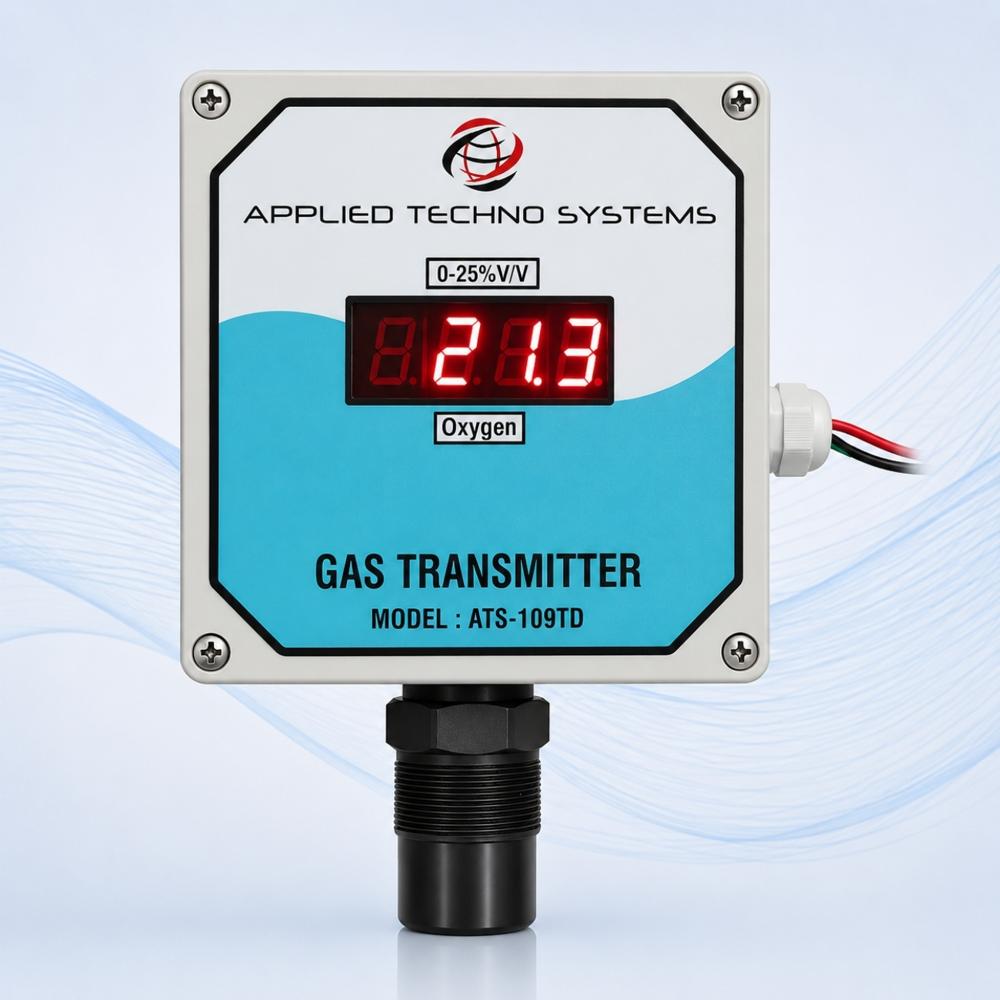

Price:
- 50
- 100
- 200
- 250
- 500
- 1000+

More Products in Gas Transmitters Category
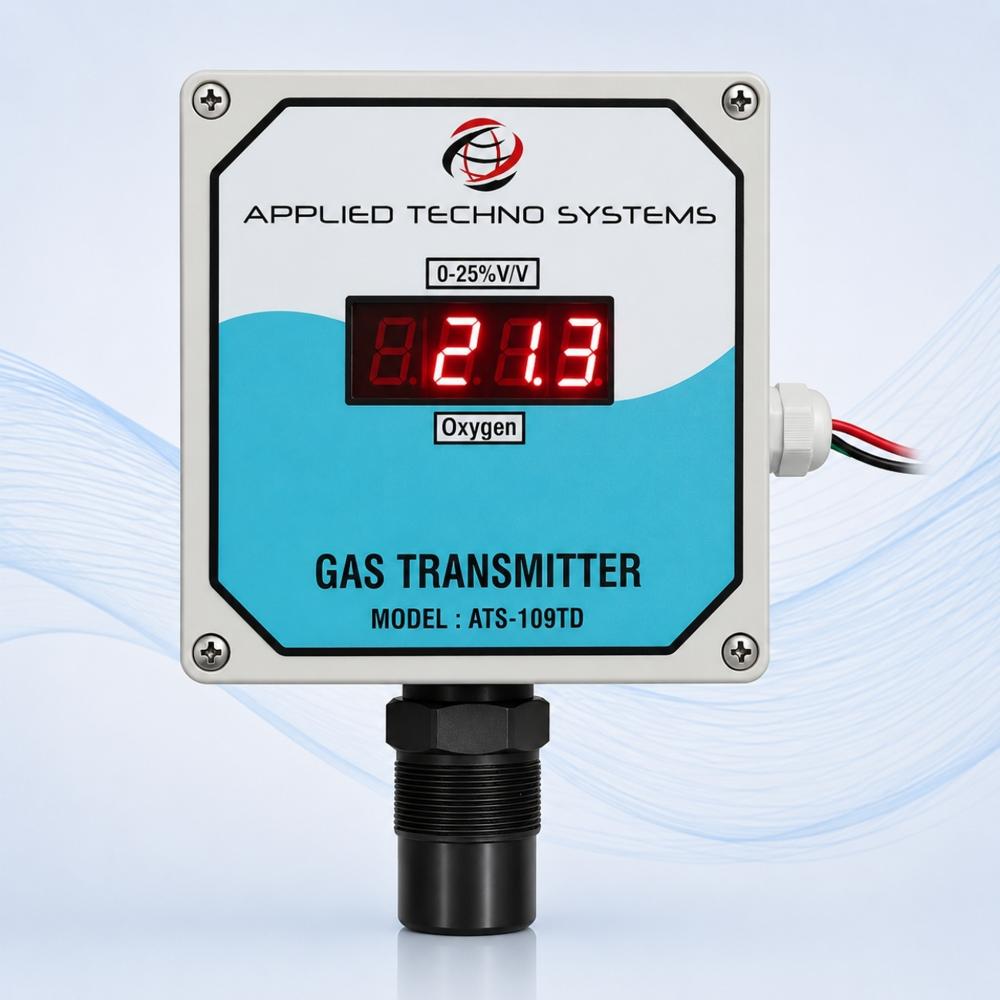
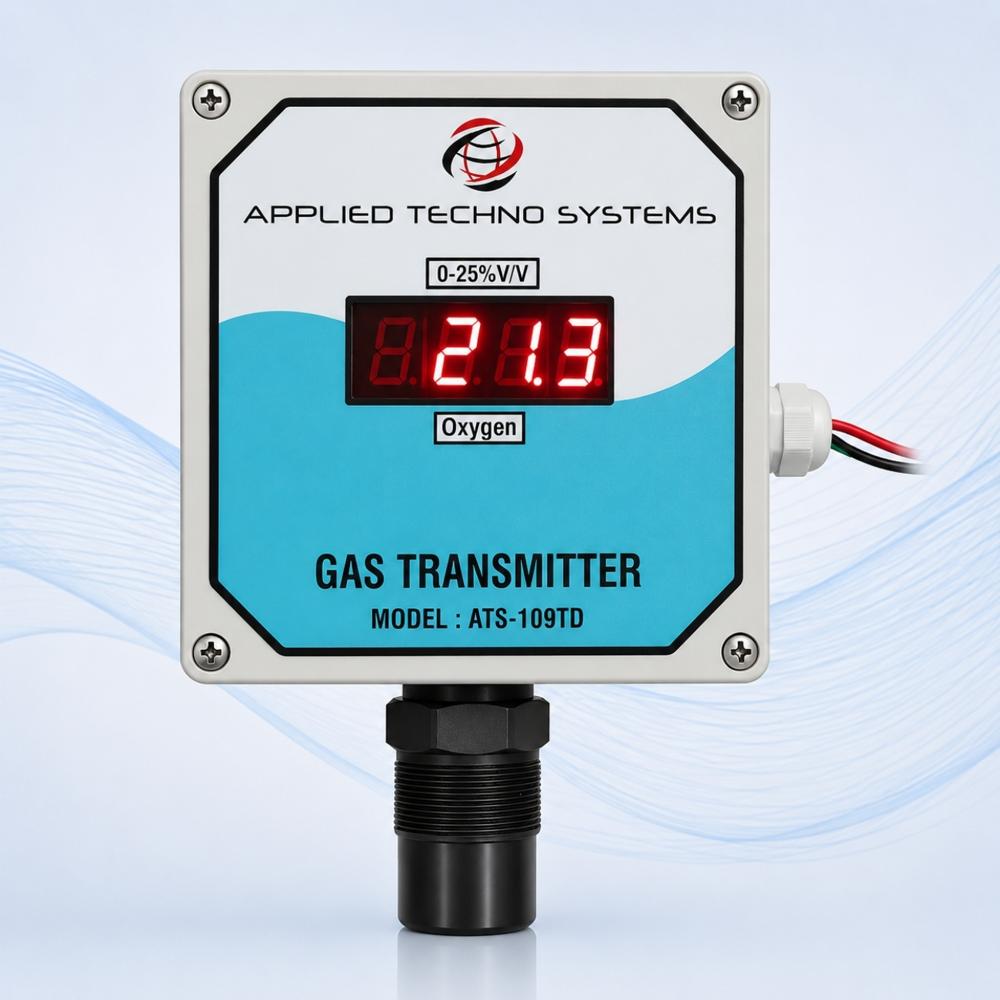
Gas Detection Sensor Transmitter
Price 36500.0 INR / Piece
Minimum Order Quantity : 1 Piece
Output : 420 mA Analog Signal
Sensor Type : Electrochemical Sensor
Input : Oxygen Gas Sample
Accuracy : 2% of Full Scale
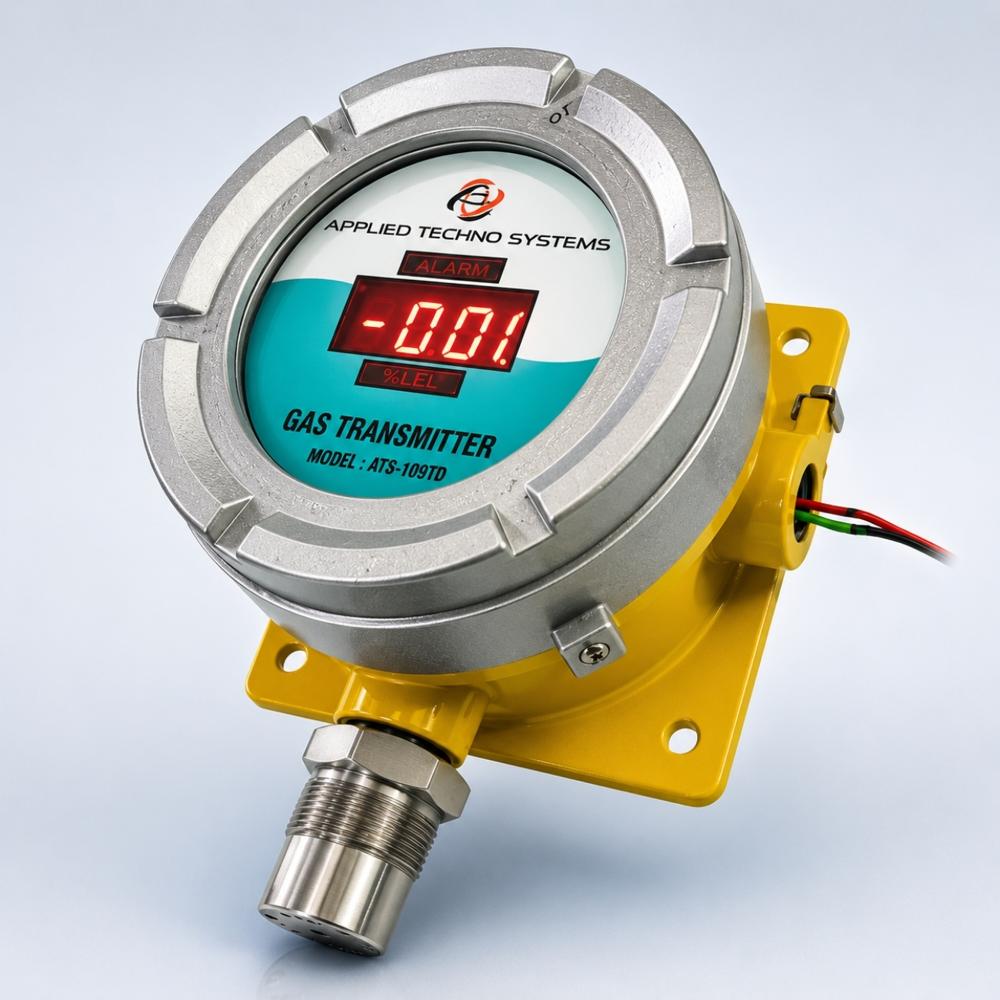
Weatherproof Gas Detection System
Price 33500.0 INR / Piece
Minimum Order Quantity : 1 Piece
Output : 420 mA Analog / Digital signal (RS485 MODBUS options available)
Sensor Type : Electrochemical sensor for Oxygen (O2)
Input : 24V DC
Accuracy : 2% of full scale
Hazardous Area Gas Detector
Price 31500.0 INR / Piece
Minimum Order Quantity : 1 Piece
Output : 420mA Analog, RS485 (optional)
Sensor Type : Catalytic / Electrochemical / Semiconductor
Input : 24V DC Nominal
Accuracy : 2% FS

LPG Gas Transmitter
Price 35000.0 INR / Number
Minimum Order Quantity : 1 Number
Output : 420 mA Analog Signal
Sensor Type : Electrochemical Oxygen Sensor
Input : 24V DC (Typical)
Accuracy : +/2 %


- 104, Delta Industrial Estate, Building No 1, Gokhivare, Sativali Road, Vasai East, Dist-Palghar,Vasai - 401208, Maharashtra, India
- Phone : 08045814504
GST : 27AAVCA1127G1ZN

- Mr M L YADAV (Marketing Manager)
- Mobile : 08045814504
- Send Inquiry
 Send Inquiry

|


- Dew Point Meters
- Gas Analysers
- Portable Gas Detector
- Moisture And Dew Point Analyzer
- Dust/Opacity Monitor
- Gas Monitoring Systems
- Gas Leak Detectors
- Gas Transmitters
- VOC Leak Detector
- Air Quality Monitoring System
- Online Continuous Emission Monitoring System-OCEMS
- Dew Point Monitors
- Gas Detector
- Opacity Monitor
- Portable Flue Gas Analyzer
- Online SOX & NOX Gas Analyzer
- Methane Gas Leak Detector
- Hydrogen Purity Analyzer
- Gas Purity Analyzer
- Effluent Monitoring Systems
- Producer Gas Analyzer
- Gas Detector Calibration Service
- Portable Gas Monitors
- Gas Sensor Transmitter

Developed and Managed by Infocom Network Private Limited.


 English
 Spanish
 French
 German
 Italian
 Chinese (Simplified)
 Japanese
 Korean
 Arabic
 Portuguese
