 Chat with us

- Dew Point Meters
- Gas Analysers
- Portable Gas Detector
- Moisture And Dew Point Analyzer
- Dust/Opacity Monitor
- Gas Monitoring Systems
- Gas Leak Detectors
- Gas Transmitters
- VOC Leak Detector
- Air Quality Monitoring System
- Online Continuous Emission Monitoring System-OCEMS
- Dew Point Monitors
- Gas Detector
- Opacity Monitor
- Portable Flue Gas Analyzer
- Online SOX & NOX Gas Analyzer
- Methane Gas Leak Detector
- Hydrogen Purity Analyzer
- Gas Purity Analyzer
- Effluent Monitoring Systems
- Producer Gas Analyzer
- Gas Detector Calibration Service
- Portable Gas Monitors
- Gas Sensor Transmitter

 Send Inquiry
Portable Biogas Analysis Instrument
Price 275500.0 INR/ Unit
Portable Biogas Analysis Instrument Specification
- Instruments Type
- Gas Analyzer
- Scrubber Type
- Inbuilt Gas Scrubbing
- Sensor Type
- Electrochemical & Infrared Sensors
- Orientation
- Horizontal
- Efficiency
- High Precision Analysis
- Automation Grade
- Semi-automatic
- Usage & Applications
- Biogas Plants, Laboratories, Research Institutes
- Air Flow
- Adjustable Sampling Rate
- Measurement
- O2, N2, CH4, CO2, H2S Concentrations
- Temperature
- Operating Range: 0C to 50C
- Display Type
- Digital LCD Display
- Power Source
- Electric AC
- Product Type
- Portable Biogas Analysis Instrument
- Material
- Aluminum Alloy & ABS Plastic
- Cooling System
- Natural Air Cooling
- Noise Level
- Less than 50 dB
- Processing Time
- Instant Measurement
- Capacity
- 1 Sample per Cycle
- Voltage
- 230V AC
- Weight
- 8 kg
- Dimension (L*W*H)
- 425mm x 220mm x 140mm
- Surface
- Powder Coated Finish
- Accuracy
- 1% of Reading
- Data Output
- Thermal Printer
- Interface
- USB and RS232
- Operating Humidity
- Up to 90% RH
- Battery Backup
- Optional Inbuilt Battery
- Calibration
- Automatic & Manual Calibration
- Display Resolution
- 0.1% for Gases
- Response Time
- <10 seconds
- Protection
- Fuse Protection
- Sample Intake
- Manual Port
- Mounting Type
- Portable/Bench-top
- Memory Storage
- Internal Data Logger
About Portable Biogas Analysis Instrument
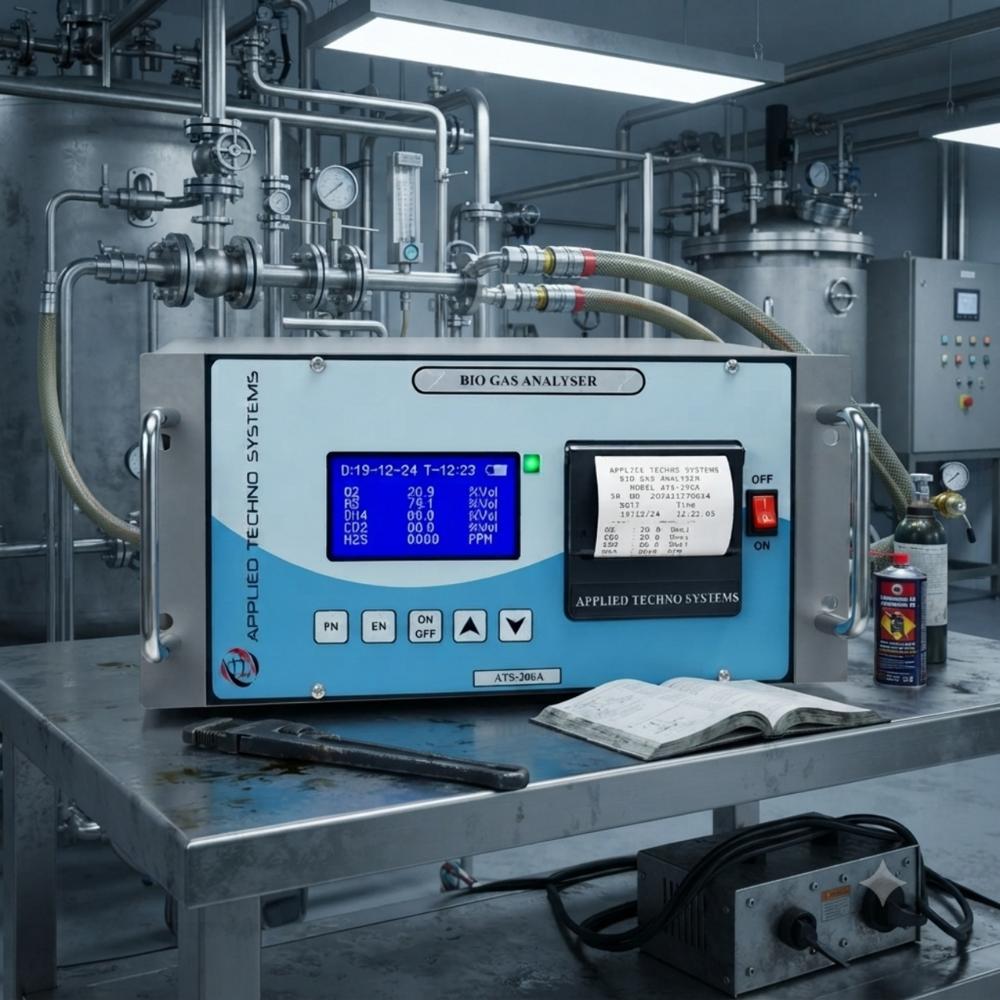
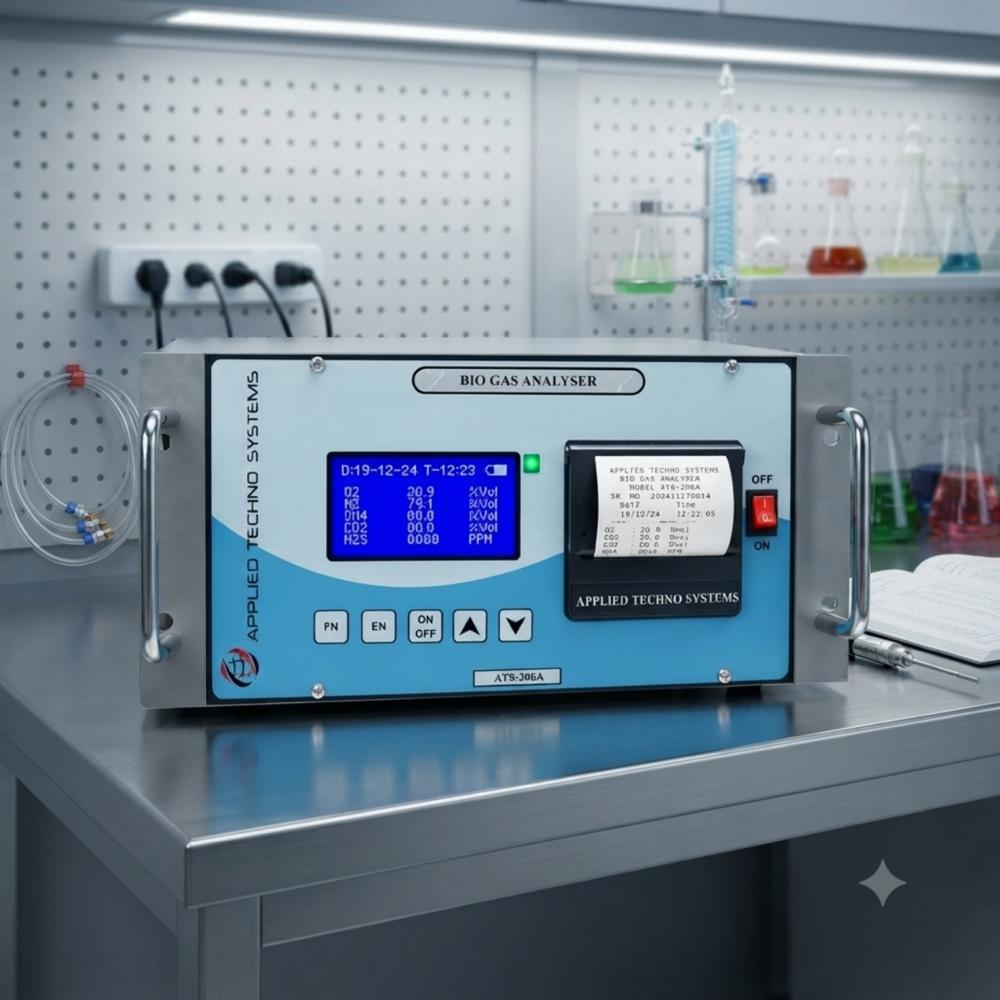
The Portable Biogas Analyser is a compact and reliable gas analysis instrument designed for the measurement and monitoring of biogas composition in industrial, commercial, and environmental applications. Depending on the configuration, the analyser can measure key biogas components such as Methane (CH), Carbon Dioxide (CO), Oxygen (O), Hydrogen Sulfide (HS), Hydrogen (H), and other gases, providing accurate gas concentration measurement for process monitoring and gas quality assessment. Its portable design enables convenient field testing, routine inspection, troubleshooting, and performance monitoring at different sampling points. The analyser is suitable for biogas plants, anaerobic digesters, sewage treatment plants, wastewater treatment facilities, landfills, biomass plants, renewable energy systems, gasification processes, and other applications involving biogas and process gases. It can be used for biogas quality monitoring, methane concentration measurement, CO monitoring, HS monitoring, digester performance analysis, gas purification assessment, process optimization, and operational safety, making it suitable for a wide range of industrial and environmental gas analysis requirements.Advanced Gas Analysis for Multiple Applications
Designed for biogas plants, laboratories, and research institutes, this portable analyzer delivers high-precision readings for a range of gases: O2, N2, CH4, CO2, and H2S. Backed by fast processing times and robust construction, it meets the demands of continuous operation and mobile testing alike.
Flexible Data Management and Output Options
Easily export measurement results using the integrated thermal printer or internal data logger. USB and RS232 interfaces ensure compatibility with various computers and data systems, supporting efficient record-keeping and analysis. With automatic and manual calibration modes, confidence in measurement accuracy is assured in every session.
Designed for Reliable and Safe Operation
The instrument's aluminum alloy and ABS plastic build provides durability, while fuse protection, powder-coated finish, and natural air cooling enhance safety. Working effectively in up to 90% humidity and across a range of temperatures, it delivers accurate results with minimal error and low noise levels below 50 dB.
FAQ's of Portable Biogas Analysis Instrument:
Q: How does the sample intake process work with this biogas analyzer?
A: Samples are manually introduced into the analyzer through a dedicated intake port. The device then immediately processes the sample, providing concentration data for O2, N2, CH4, CO2, and H2S, thanks to its adjustable sampling rate and instant measurement capability.Q: What are the benefits of using both automatic and manual calibration modes?
A: Automatic calibration ensures ongoing measurement accuracy without user intervention, while manual calibration offers flexibility for users who need to adjust or verify the calibration parameters in specific operational scenarios, ensuring precise results across varied conditions.Q: What data output options are available for recorded measurements?
A: You can print test results directly using the built-in thermal printer or store data internally with the data logger for later download via USB or RS232 interface, facilitating thorough result analysis and record-keeping.Q: Where can this portable analyzer be used effectively?
A: The instrument was engineered for diverse settings, including biogas plants, research laboratories, and academic institutes. Its portable, bench-top design makes it suitable for both fieldwork and stationary lab use.Q: Does the analyzer provide adequate protection and safety during operation?
A: Yes, the instrument features fuse protection to safeguard against electrical faults, operates below 50 dB to minimize noise, and is built with durable materials and natural air cooling for optimal safety and longevity.Q: What are the main benefits of the inbuilt gas scrubbing system?
A: The inbuilt gas scrubbing mechanism purifies the sample before analysis, increasing sensor longevity and ensuring that measurement results are reliable and unaffected by potential contaminants.Q: How often should the device be calibrated for accurate measurements?
A: Calibration frequency depends on the frequency and conditions of use. However, with its automatic calibration feature, the device maintains accuracy during regular operations, while manual calibration can be done whenever required by the user for added assurance.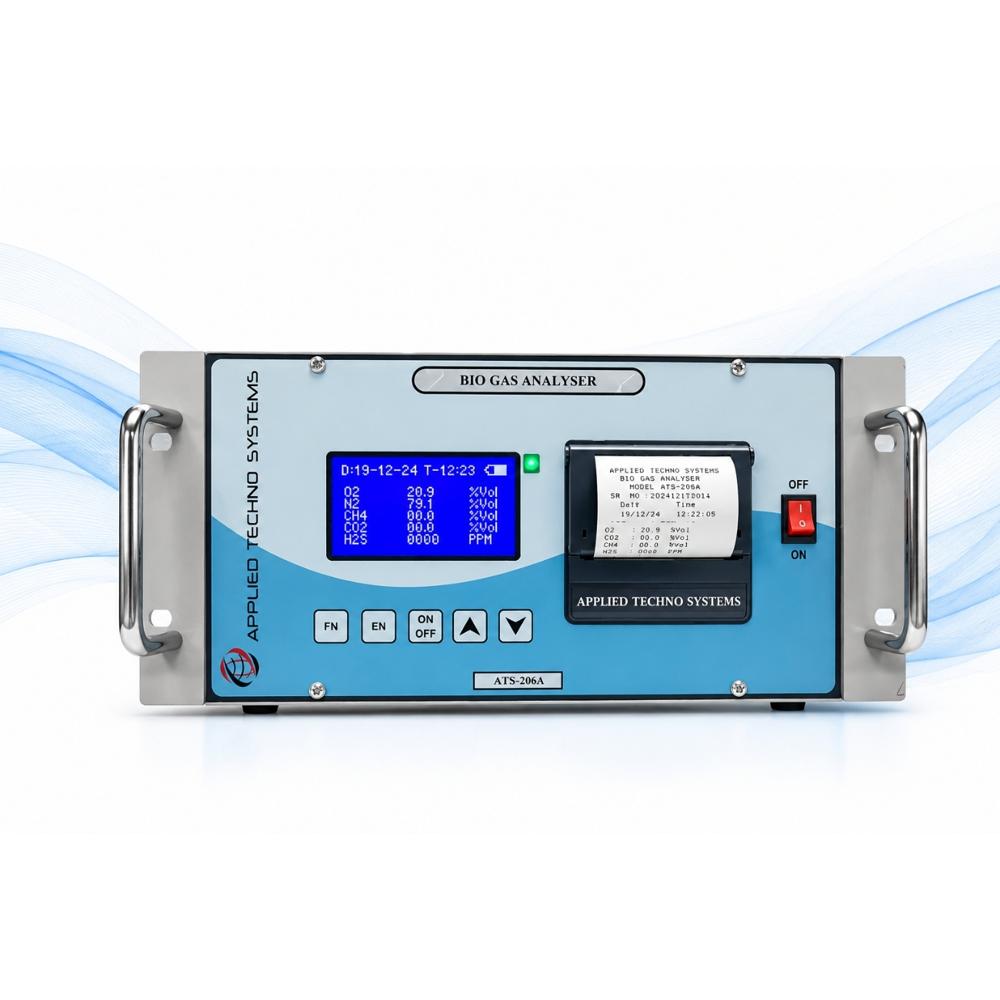

Price:
- 50
- 100
- 200
- 250
- 500
- 1000+

More Products in Portable Gas Monitors Category
Portable Ozone Gas Leak Detector
Price 85500.0 INR / Unit
Minimum Order Quantity : 1 Unit
Usage & Applications : Detect Ozone Gas Leakage
Power Source : Battery Operated
Display Type : Digital Display
Product Type : Gas Leak Detector
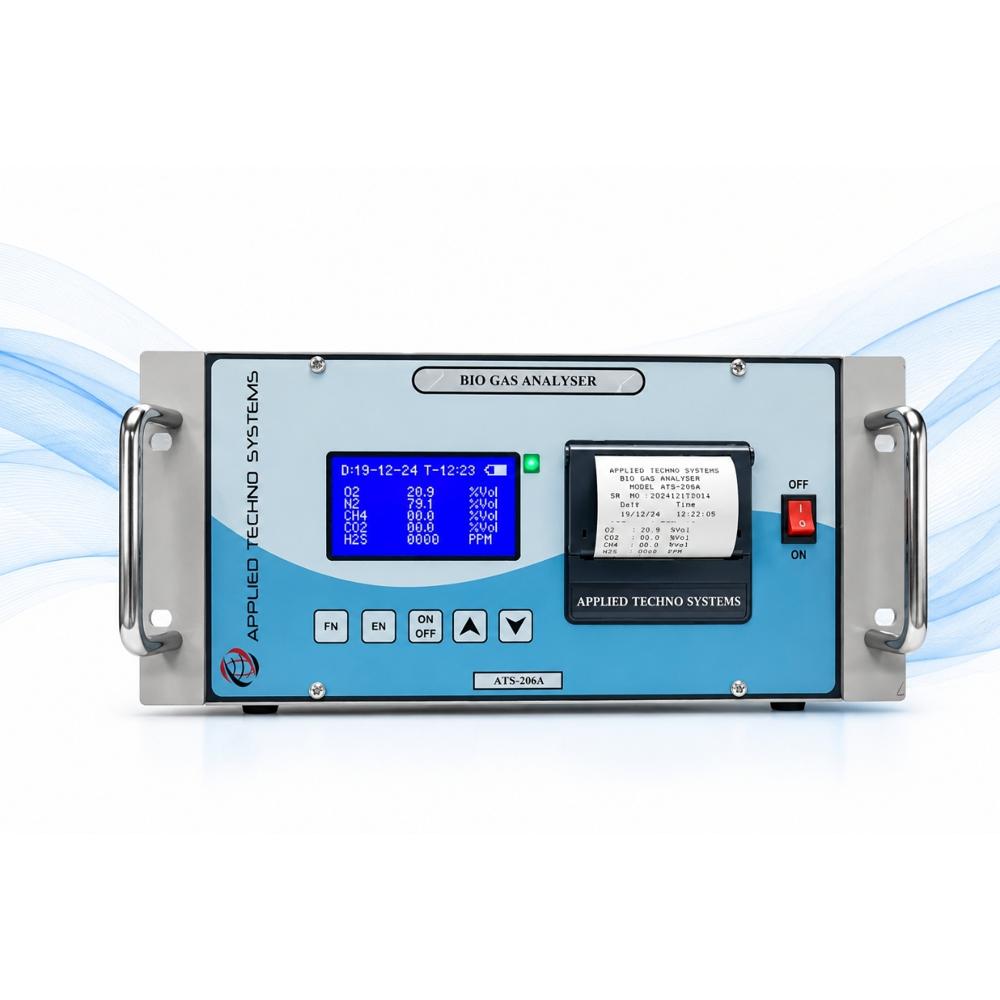
Portable Industrial Biogas Analyser
Price 275500.0 INR / Piece
Minimum Order Quantity : 1 Piece
Usage & Applications : Biogas plants, digesters, research, industrial biogas measurement
Power Source : Mains AC or Internal Rechargeable Battery
Display Type : LCD Digital Display
Product Type : Portable Industrial Biogas Analyser
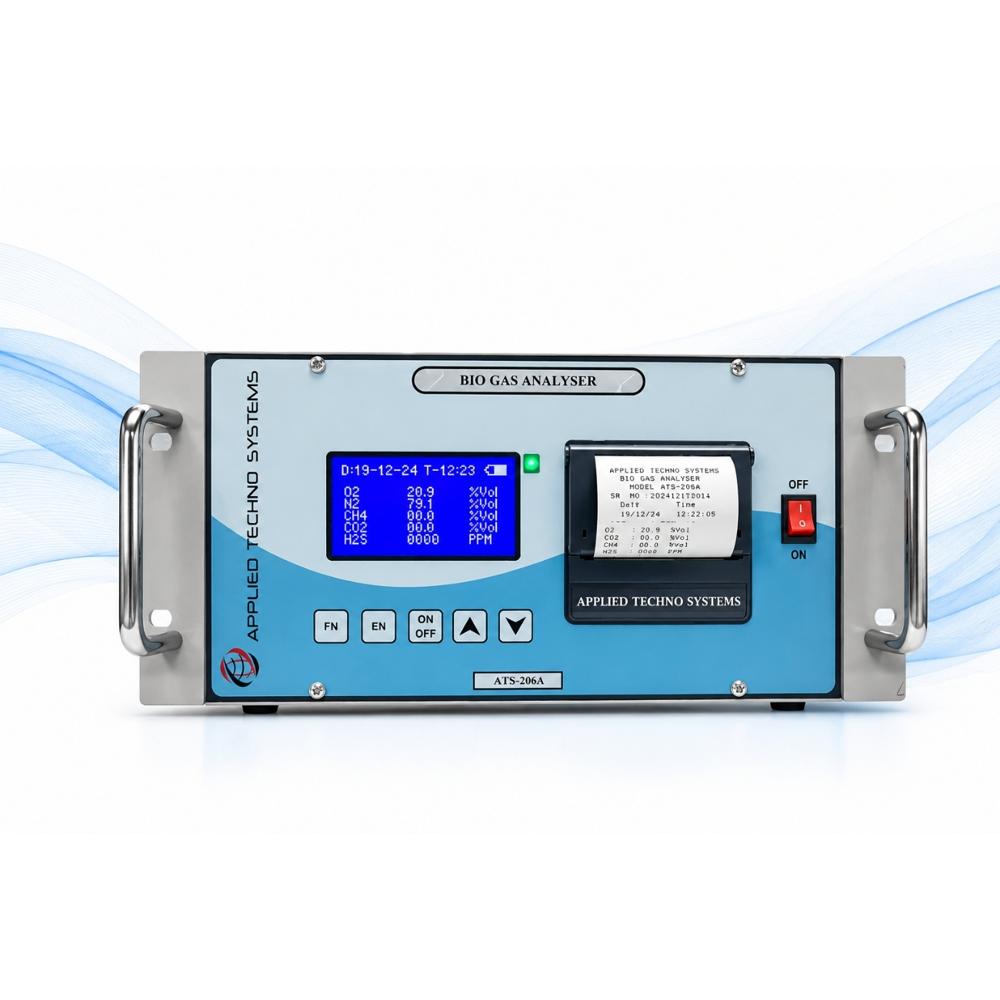
Biogas Composition Gas Analyser
Price 275500.0 INR / Unit
Minimum Order Quantity : 1 Unit
Usage & Applications : Biogas Plants, Waste to Energy Projects, Landfills, Lab R&D
Power Source : Electric
Display Type : Digital LCD Display with Printer
Product Type : Biogas Composition Gas Analyser
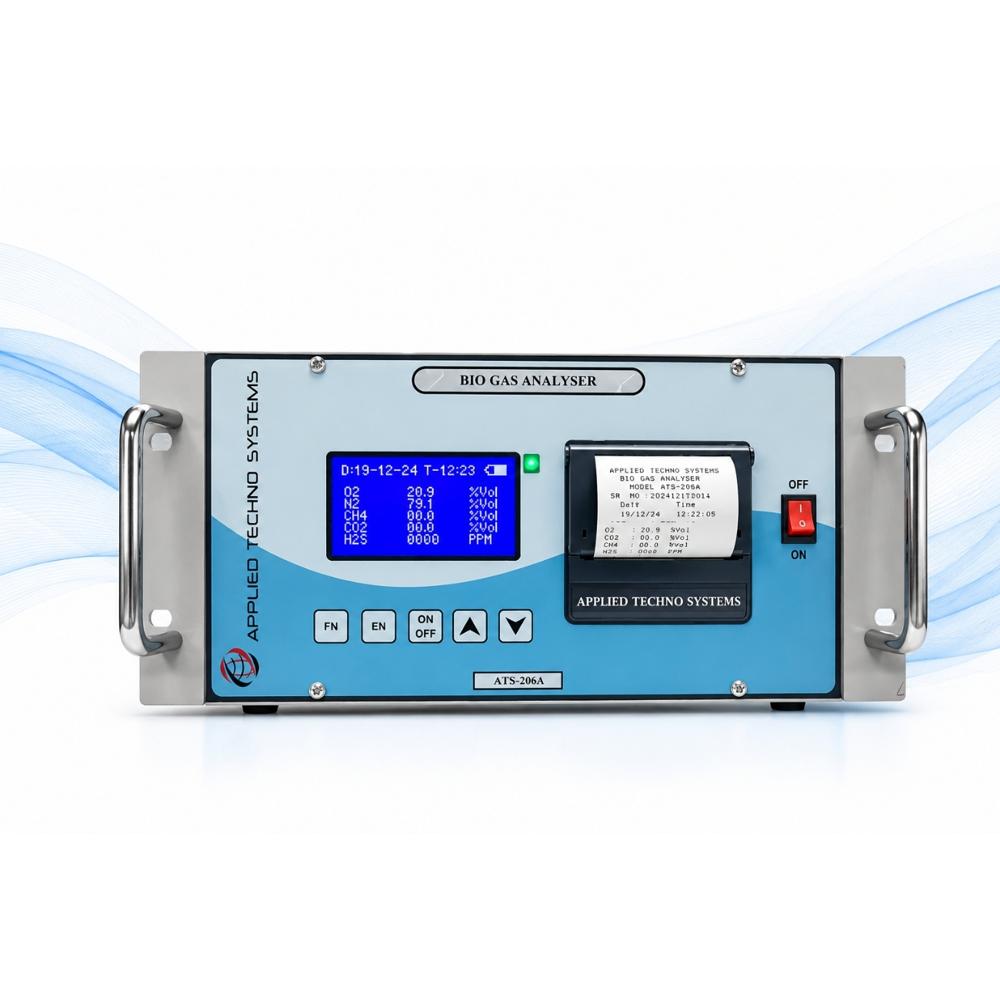
Portable Biogas Analysis Equipment
Price 275500.0 INR / Unit
Minimum Order Quantity : 1 Unit
Usage & Applications : Biogas plants, water treatment, landfill gas monitoring, R&D
Power Source : Electric
Display Type : Digital LCD Display
Product Type : Portable Biogas Analysis Equipment


- 104, Delta Industrial Estate, Building No 1, Gokhivare, Sativali Road, Vasai East, Dist-Palghar,Vasai - 401208, Maharashtra, India
- Phone : 08045814504
GST : 27AAVCA1127G1ZN

- Mr M L YADAV (Marketing Manager)
- Mobile : 08045814504
- Send Inquiry
 Send Inquiry

|


- Dew Point Meters
- Gas Analysers
- Portable Gas Detector
- Moisture And Dew Point Analyzer
- Dust/Opacity Monitor
- Gas Monitoring Systems
- Gas Leak Detectors
- Gas Transmitters
- VOC Leak Detector
- Air Quality Monitoring System
- Online Continuous Emission Monitoring System-OCEMS
- Dew Point Monitors
- Gas Detector
- Opacity Monitor
- Portable Flue Gas Analyzer
- Online SOX & NOX Gas Analyzer
- Methane Gas Leak Detector
- Hydrogen Purity Analyzer
- Gas Purity Analyzer
- Effluent Monitoring Systems
- Producer Gas Analyzer
- Gas Detector Calibration Service
- Portable Gas Monitors
- Gas Sensor Transmitter

Developed and Managed by Infocom Network Private Limited.


 English
 Spanish
 French
 German
 Italian
 Chinese (Simplified)
 Japanese
 Korean
 Arabic
 Portuguese
