 Chat with us

- Dew Point Meters
- Gas Analysers
- Portable Gas Detector
- Moisture And Dew Point Analyzer
- Dust/Opacity Monitor
- Gas Monitoring Systems
- Gas Leak Detectors
- Gas Transmitters
- VOC Leak Detector
- Air Quality Monitoring System
- Online Continuous Emission Monitoring System-OCEMS
- Dew Point Monitors
- Gas Detector
- Opacity Monitor
- Portable Flue Gas Analyzer
- Online SOX & NOX Gas Analyzer
- Methane Gas Leak Detector
- Hydrogen Purity Analyzer
- Gas Purity Analyzer
- Effluent Monitoring Systems
- Producer Gas Analyzer
- Gas Detector Calibration Service
- Portable Gas Monitors
- Gas Sensor Transmitter

 Send Inquiry
Portable Syngas Monitoring Instrument
Price 950500.0 INR/ Piece
Portable Syngas Monitoring Instrument Specification
- Equipment Type
- Portable Syngas Monitoring Instrument
- Mounting Type
- Portable/Bench Top
- Port Size
- Standard 6mm Gas Inlet
- Display Type
- Digital LCD with Backlight
- Interface Type
- RS232, USB, Printer Output
- Temperature
- 0C to 50C (Operating)
- Humidity
- Up to 90% RH (non-condensing)
- Test Range
- O2, N2, CH4, CO2, H2, CO: 0-100% Vol (Individually Selected)
- Application
- Continuous Analysis and Monitoring of Producer Gas, Syngas, Biomass Gasification Plants, Industrial Gas Analysis
- Automation Grade
- Automatic
- Resolution
- 0.1% Vol
- Number of Specimens
- Single Gas Stream Input
- Accuracy
- 2% of Full Scale
- Features
- Portable, Real-Time Data Logging, Built-In Printer, Multi-Gas Analysis, User-Friendly Operation, On-Site Measurement Capability
- Frequency
- 50Hz
- Measuring Range
- 0-100% Vol for Detected Gases
- Power Supply
- 230V AC, 50Hz
- Response Time
- < 30 seconds
- Operating Voltage
- 230V AC
- Gas Pressure
- 0.05-0.5 bar
- Usage
- Industrial Gas Analysis, Syngas Quality Control
- Capacity
- Up to 6 Gases Simultaneous Measurement
- Machine Weight
- Approx. 4-6 kg
- Control Mode
- Microprocessor-Based Control
- Printer Type
- Thermal Printer
- Calibration
- User-Friendly Calibration Menu
- Model Number
- ATS-206A
- Enclosure
- Stainless Steel Casing
- Data Logging
- Inbuilt Memory for Data Storage
- Gas Sample System
- Suction Pump/Flow Regulated
- Alarm System
- High/Low Gas Concentration Alarm Output
- Display Language
- English
- Warm-Up Time
- < 5 minutes
About Portable Syngas Monitoring Instrument
The Portable Producer Gas Analyser is a reliable gas analysis instrument designed for accurate measurement and monitoring of the composition of producer gas, syngas, biomass gas, and other process gases. Depending on the configuration, the analyser can measure key gas components such as Carbon Monoxide (CO), Carbon Dioxide (CO), Methane (CH), Hydrogen (H), Oxygen (O), and Nitrogen (N), providing valuable information for gas quality assessment and process monitoring. Its portable design enables convenient on-site analysis, routine testing, troubleshooting, and performance monitoring at different sampling points. The analyser is suitable for gasification plants, biomass gasification, producer gas systems, syngas generation, waste-to-energy applications, industrial furnaces, thermal processes, and other process gas applications. It can be used for producer gas analysis, syngas composition monitoring, gas quality measurement, gasifier performance evaluation, combustion optimization, process control, troubleshooting, and efficiency monitoring. The Portable Producer Gas Analyser provides a practical solution for field-based analysis of combustible and process gases across a wide range of industrial and energy applications.Reliable Multi-Gas Monitoring
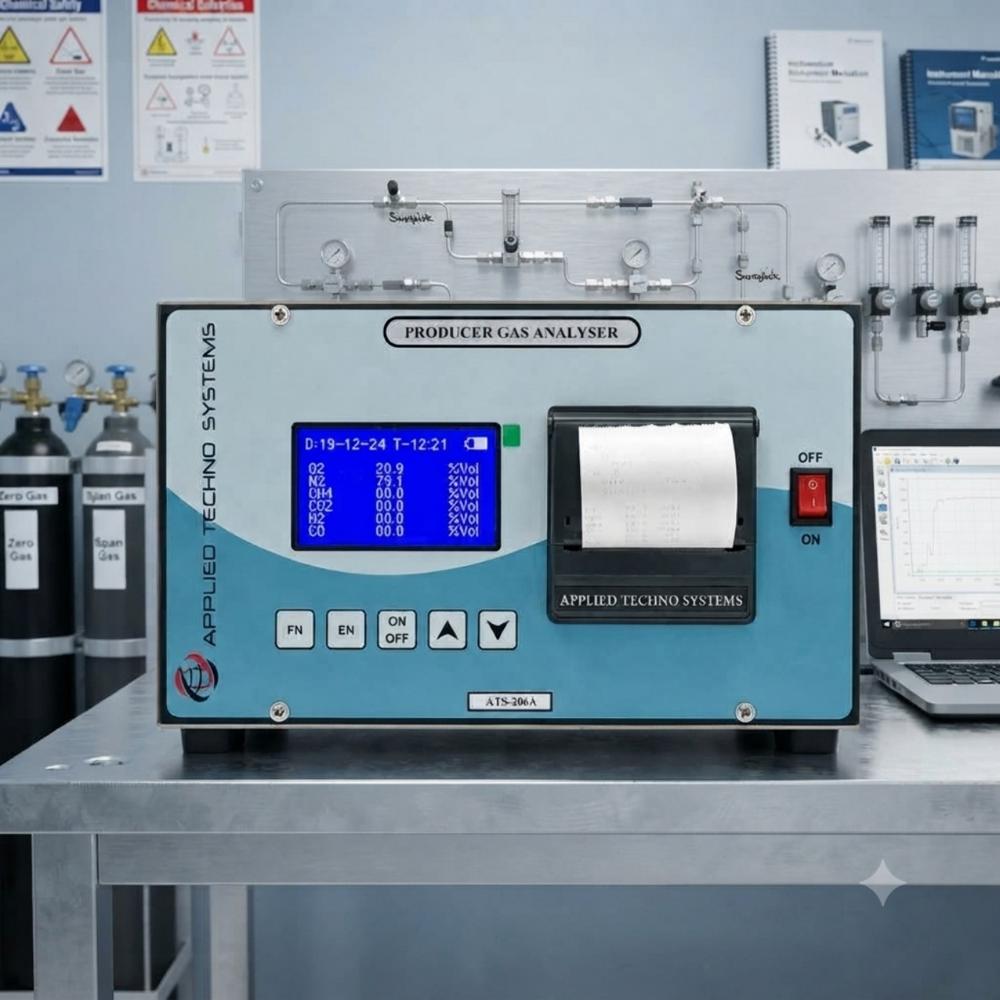
ATS-206A offers simultaneous measurement of up to six gases-O2, N2, CH4, CO2, H2, and CO-making it a versatile solution for continuous gas analysis. Its high accuracy (2% of full scale) and wide measurement range ensure precise monitoring for quality control in syngas, biomass gasification, and other industrial applications.
User-Friendly Operation and Data Handling
Equipped with a digital LCD display, inbuilt data memory, and a thermal printer, this instrument simplifies operation and reporting. The intuitive calibration menu allows users to adjust settings with ease, while real-time data logging and multiple interface options (RS232, USB) streamline data management and documentation.
Portable Design for On-Site Usage
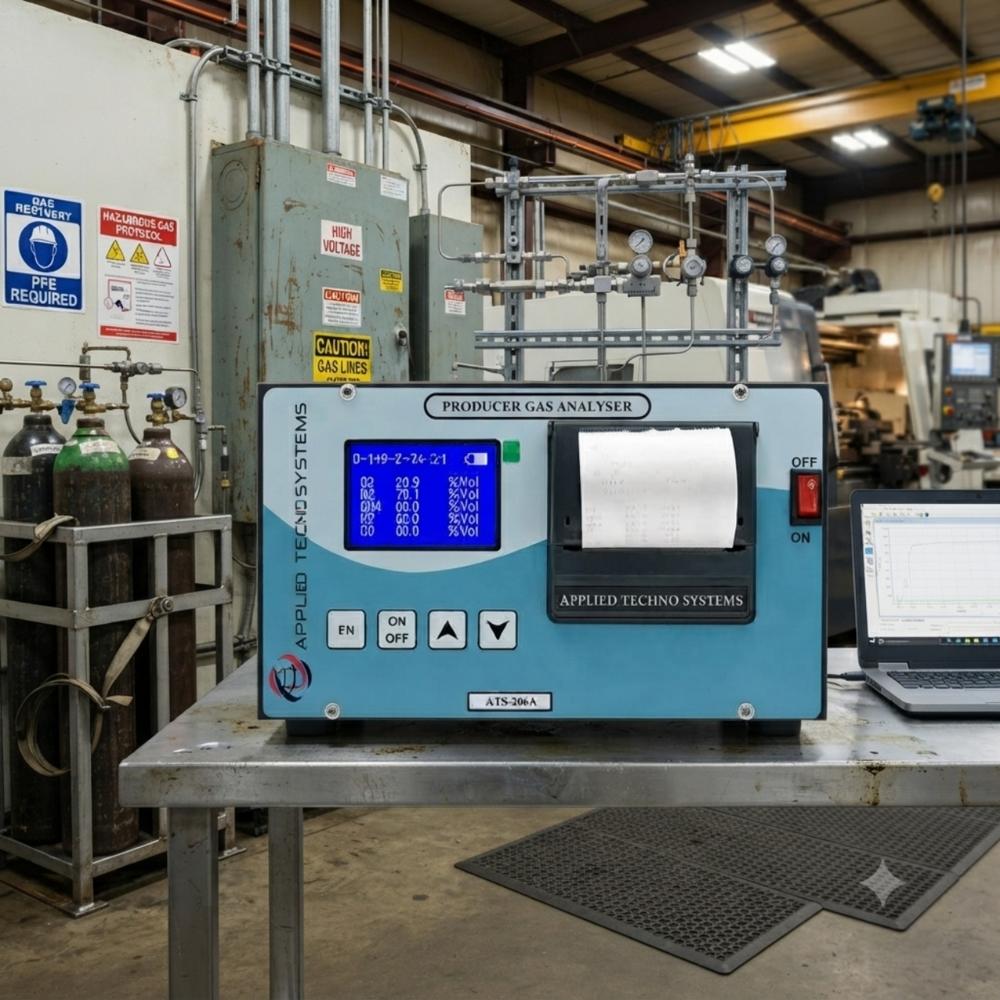
With a compact stainless steel casing and lightweight construction (approx. 4-6 kg), the ATS-206A is suitable for both portable and bench-top use. It supports quick setup with a short warm-up time (<5 minutes) and can operate in environments with high humidity and a wide temperature range, enhancing its reliability for field applications.
FAQ's of Portable Syngas Monitoring Instrument:
Q: How does the ATS-206A syngas monitoring instrument operate and what types of gases can it measure?
A: The instrument uses a suction pump and regulated flow system to sample gas streams for analysis. It can simultaneously measure up to six gases, including O2, N2, CH4, CO2, H2, and CO, each within a measurement range of 0-100% Vol.Q: What is the process for logging and retrieving data from the ATS-206A?
A: Data is logged in real-time to the instrument's built-in memory. Users can retrieve records via RS232 or USB interfaces, and immediate printouts can be generated using the integrated thermal printer for on-site documentation.Q: When and how should users calibrate the ATS-206A instrument?
A: Calibration should be performed periodically or whenever measurement accuracy needs verification. The user-friendly calibration menu guides the operator through the steps, ensuring simple and reliable adjustments as needed.Q: Where can the ATS-206A be used for gas analysis?
A: It is suitable for use in industrial environments such as syngas production sites, biomass gasification plants, and facilities requiring continuous gas monitoring, thanks to its portability, stainless steel construction, and operating range of 0C to 50C.Q: What are the main benefits of using a portable syngas monitoring instrument like the ATS-206A?
A: The ATS-206A offers high measurement accuracy, rapid response times, multi-gas monitoring capability, and user-friendly operation, all within a portable unit. This streamlines on-site analysis and boosts efficiency in industrial process control and gas quality monitoring.Q: How does the alarm system function in the ATS-206A monitoring instrument?
A: The built-in alarm system triggers an output when gas concentrations rise above or fall below preset safety thresholds, alerting users instantly to abnormal conditions for immediate corrective action.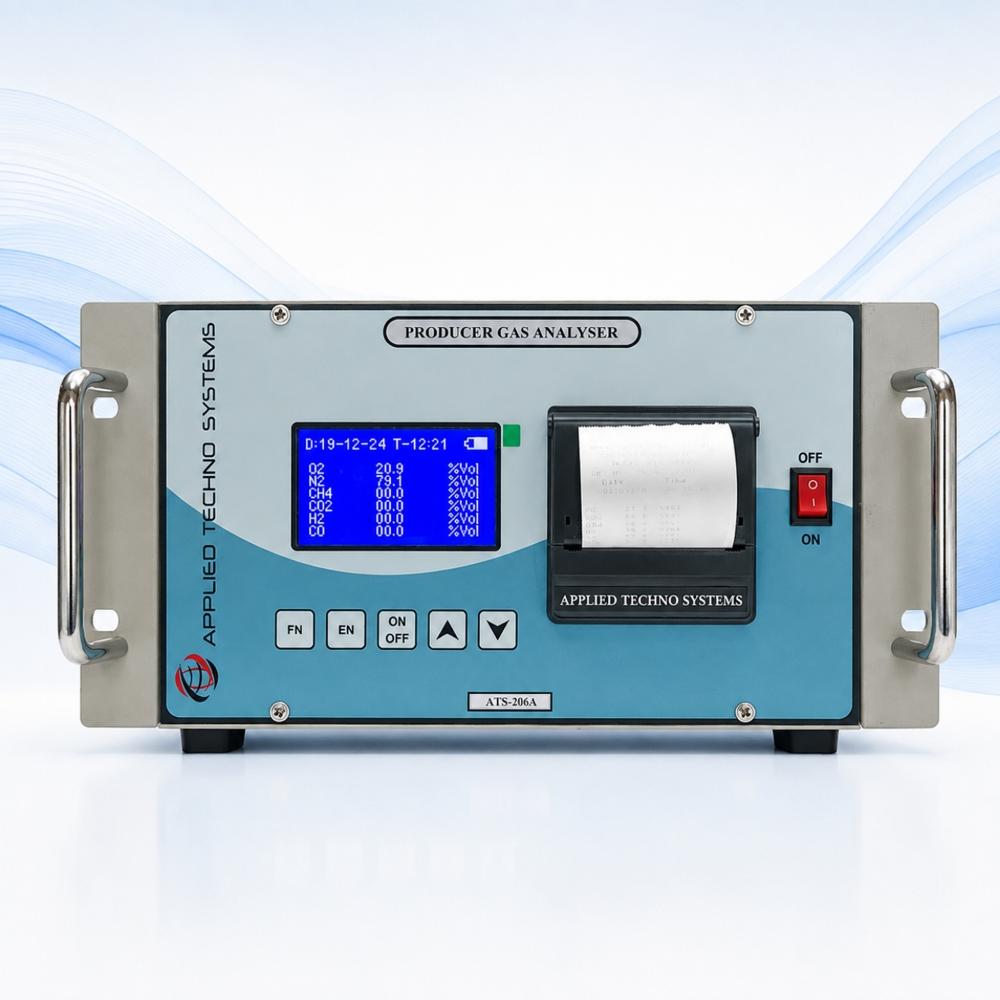

Price:
- 50
- 100
- 200
- 250
- 500
- 1000+

More Products in Producer Gas Analyzer Category
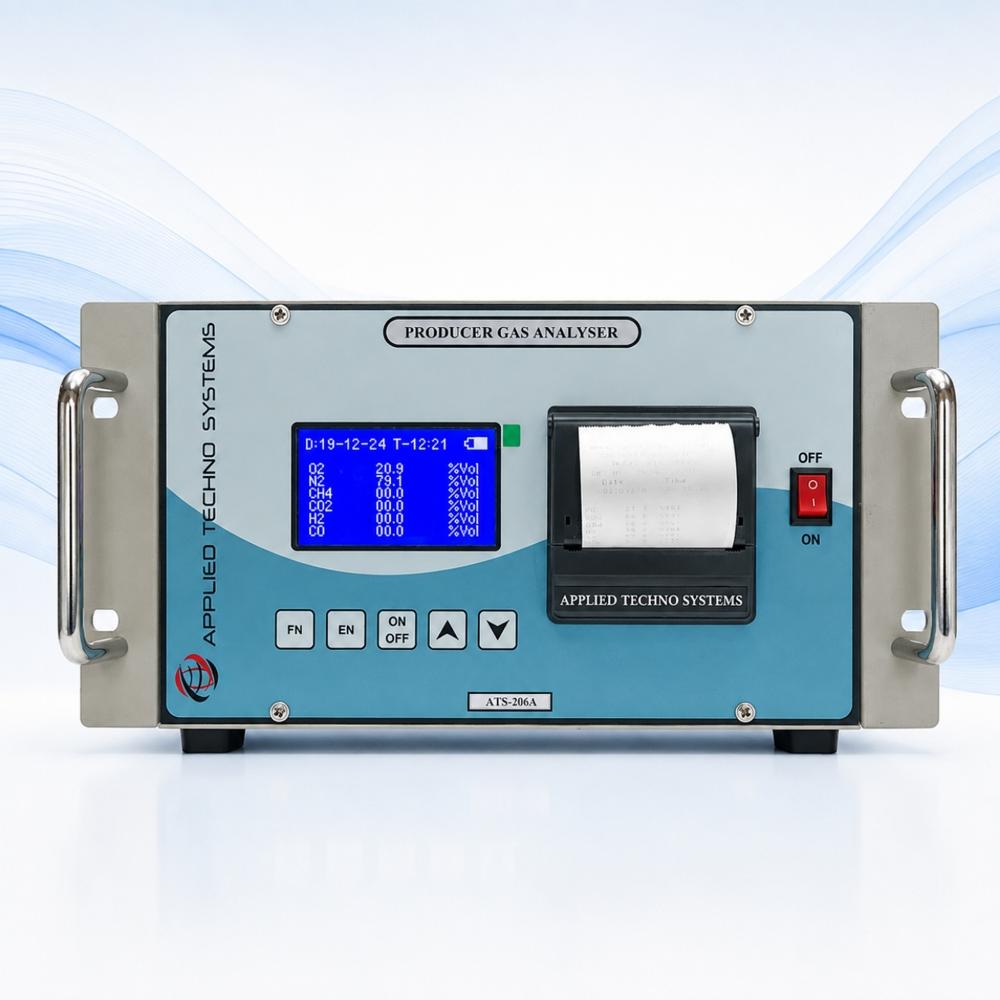
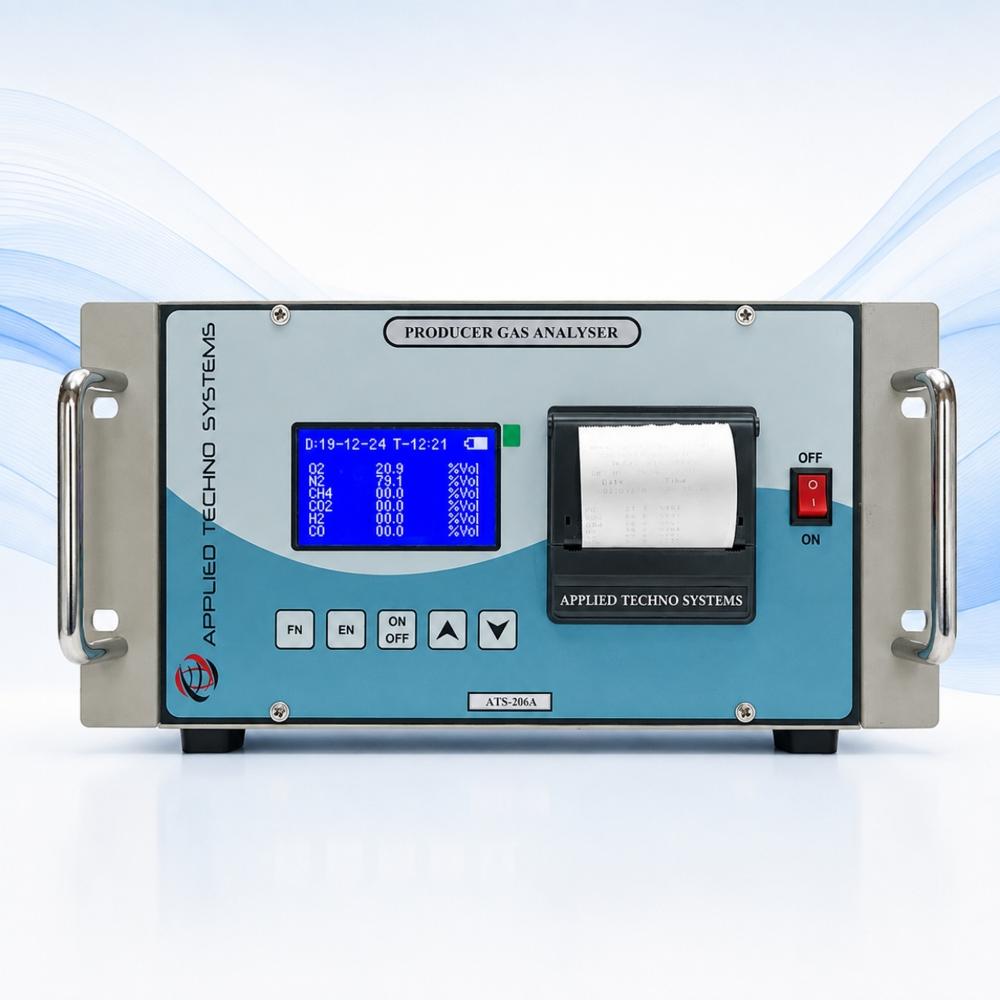
Portable Producer Gas Testing System
Price 945500.0 INR / Unit
Minimum Order Quantity : 1 Unit
Power Supply : 230V AC, 50Hz
Operating Voltage : 230V AC
Display Type : LCD digital display
Mounting Type : Portable/benchtop
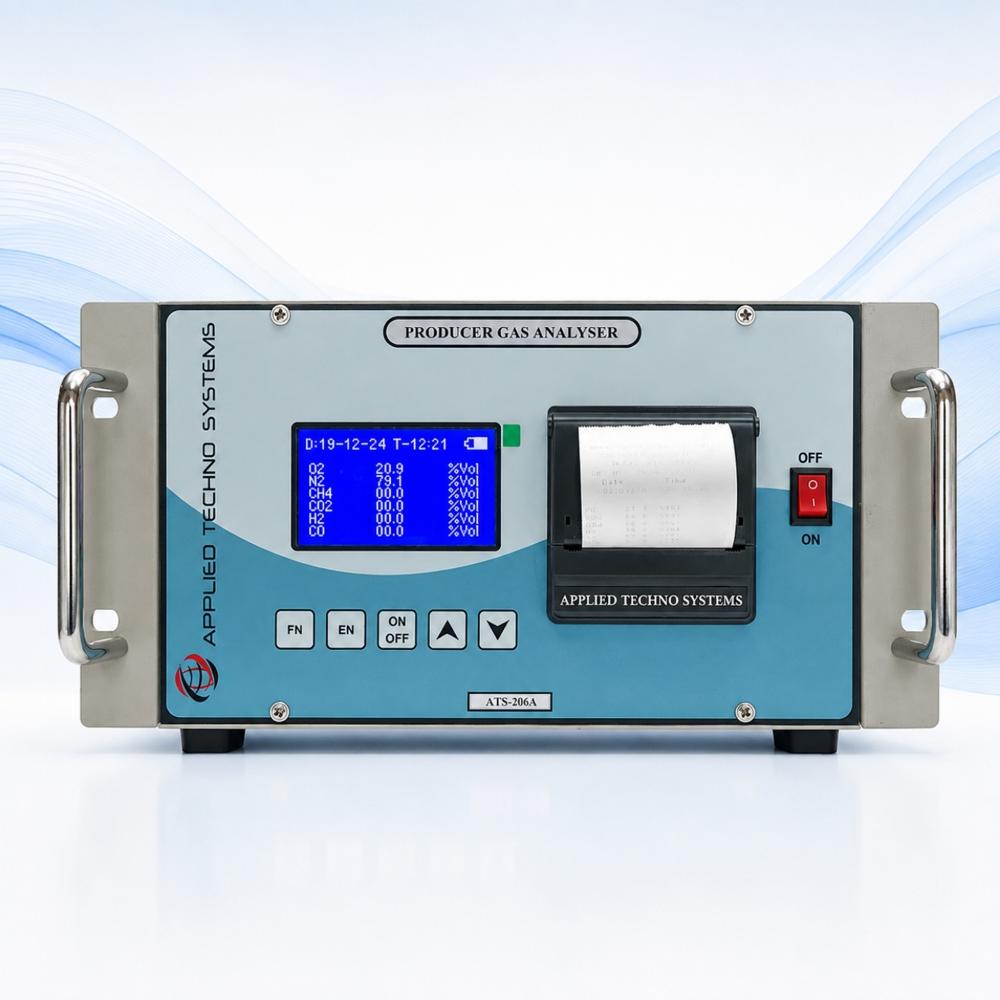
Producer Gas Composition Analyzer
Price 950500.0 INR / Unit
Minimum Order Quantity : 1 Unit
Power Supply : 220V AC, 50 Hz
Operating Voltage : 220V AC
Display Type : Digital LCD Display
Mounting Type : Benchtop / Portable
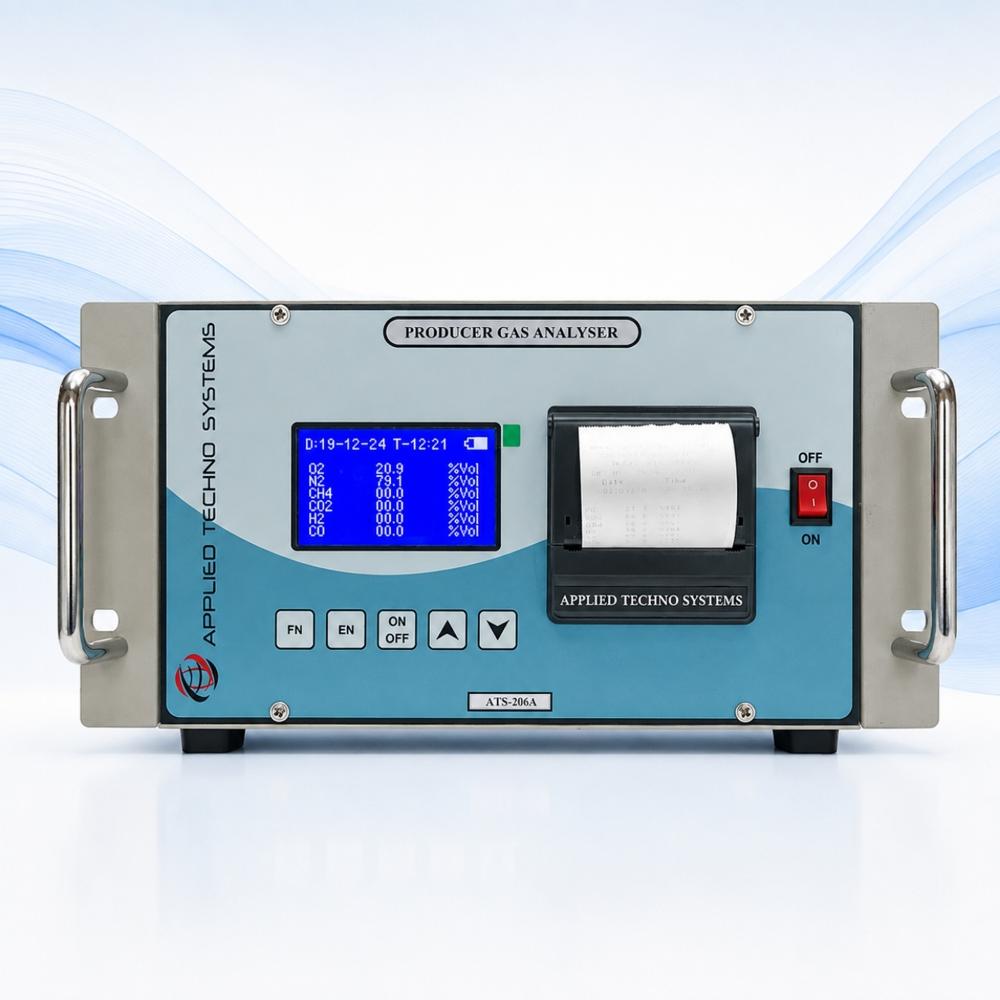
Portable Producer Gas Analysis Equipment
Price 950500.0 INR / Piece
Minimum Order Quantity : 1 Piece
Power Supply : 230V AC, 50Hz
Operating Voltage : 230V AC
Display Type : Digital LCD display
Mounting Type : Portable
Portable Syngas Monitoring System
Price 950500.0 INR / Piece
Minimum Order Quantity : 1 Piece
Power Supply : 230V AC, 50Hz
Operating Voltage : 230V AC
Display Type : LCD Graphic Display
Mounting Type : Portable, Desk/Tabletop


- 104, Delta Industrial Estate, Building No 1, Gokhivare, Sativali Road, Vasai East, Dist-Palghar,Vasai - 401208, Maharashtra, India
- Phone : 08045814504
GST : 27AAVCA1127G1ZN

- Mr M L YADAV (Marketing Manager)
- Mobile : 08045814504
- Send Inquiry
 Send Inquiry

|


- Dew Point Meters
- Gas Analysers
- Portable Gas Detector
- Moisture And Dew Point Analyzer
- Dust/Opacity Monitor
- Gas Monitoring Systems
- Gas Leak Detectors
- Gas Transmitters
- VOC Leak Detector
- Air Quality Monitoring System
- Online Continuous Emission Monitoring System-OCEMS
- Dew Point Monitors
- Gas Detector
- Opacity Monitor
- Portable Flue Gas Analyzer
- Online SOX & NOX Gas Analyzer
- Methane Gas Leak Detector
- Hydrogen Purity Analyzer
- Gas Purity Analyzer
- Effluent Monitoring Systems
- Producer Gas Analyzer
- Gas Detector Calibration Service
- Portable Gas Monitors
- Gas Sensor Transmitter

Developed and Managed by Infocom Network Private Limited.


 English
 Spanish
 French
 German
 Italian
 Chinese (Simplified)
 Japanese
 Korean
 Arabic
 Portuguese
