 Chat with us

- Dew Point Meters
- Gas Analysers
- Portable Gas Detector
- Moisture And Dew Point Analyzer
- Dust/Opacity Monitor
- Gas Monitoring Systems
- Gas Leak Detectors
- Gas Transmitters
- VOC Leak Detector
- Air Quality Monitoring System
- Online Continuous Emission Monitoring System-OCEMS
- Dew Point Monitors
- Gas Detector
- Opacity Monitor
- Portable Flue Gas Analyzer
- Online SOX & NOX Gas Analyzer
- Methane Gas Leak Detector
- Hydrogen Purity Analyzer
- Gas Purity Analyzer
- Effluent Monitoring Systems
- Producer Gas Analyzer
- Gas Detector Calibration Service
- Portable Gas Monitors
- Gas Sensor Transmitter

 Send Inquiry
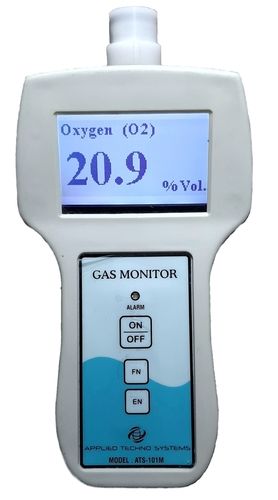
Single Gas Measurement Instrument with Pump
Price 43000.0 INR/ Piece
Single Gas Measurement Instrument with Pump Specification
- Gas Pressure
- Ambient Pressure
- Number of Specimens
- Single Gas Detection
- Power Supply
- Rechargeable Battery / USB Adapter
- Measuring Range
- Oxygen (O2) 0-100% Vol.
- Mounting Type
- Handheld
- Humidity
- 0-95% RH (Non-condensing)
- Response Time
- <10 seconds
- Application
- Gas detection / Industrial safety / Environmental monitoring
- Resolution
- 0.1% Vol.
- Features
- Portable, Built-in Pump, Alarm, LCD Display, Rechargeable
- Display Type
- Digital LCD Display
- Port Size
- Standard Sampling Port
- Interface Type
- Push Button Interface
- Accuracy
- 0.5% Vol.
- Automation Grade
- Semi-Automatic
- Temperature
- -10C to 50C
- Test Range
- 0-100% Vol. Oxygen
- Operating Voltage
- 3.7V DC (Rechargeable)
- Usage
- Industrial / Environmental / Laboratory
- Capacity
- Single Gas Measurement
- Machine Weight
- Approx. 250 grams
- Control Mode
- Manual/Automatic
- Sampling Method
- Active via built-in pump
- Sensor Type
- Electrochemical sensor
- Model Number
- ATS-101M
- Calibration
- User selectable
- Enclosure Material
- ABS Plastic
- Operating Time
- More than 10 hours per charge
- Alarm Type
- Audio/Visual Warning
- Equipment Type
- Single Gas Measurement Instrument with Pump
- Dimensions
- 60mm x 120mm x 30mm
About Single Gas Measurement Instrument with Pump
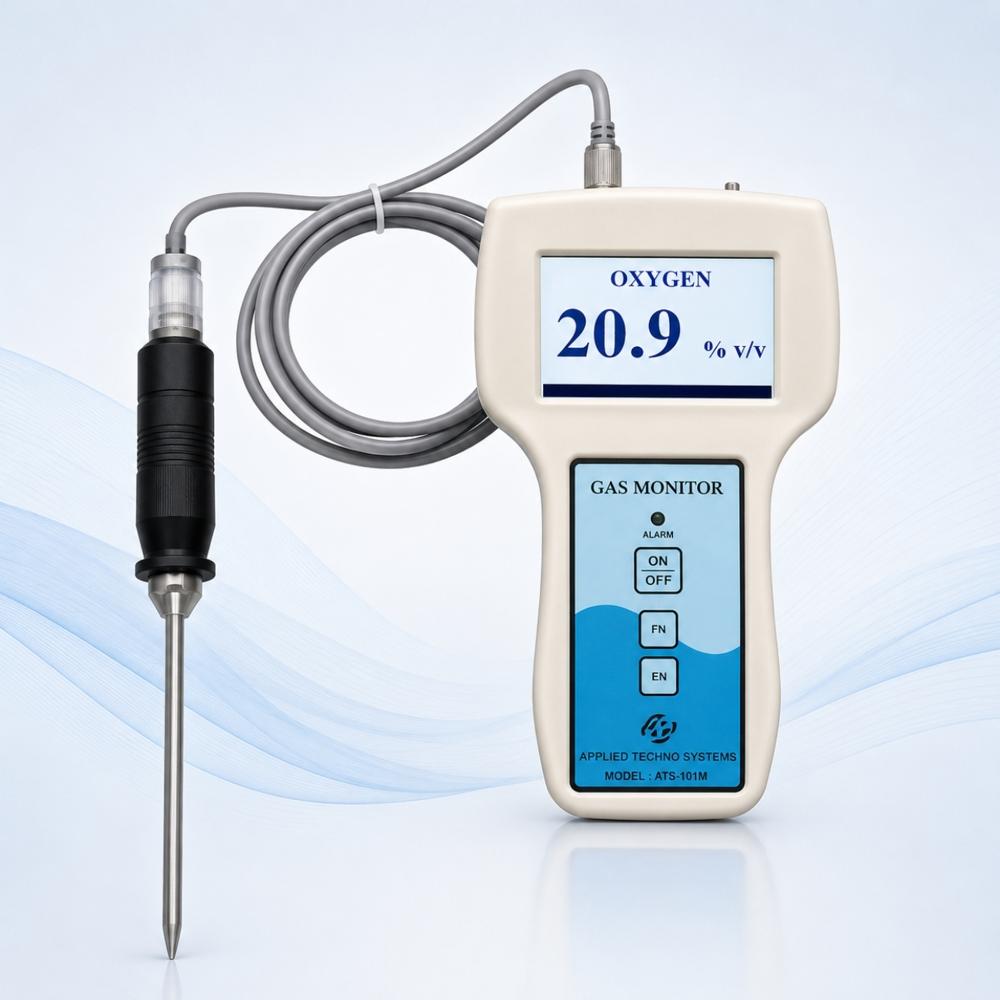
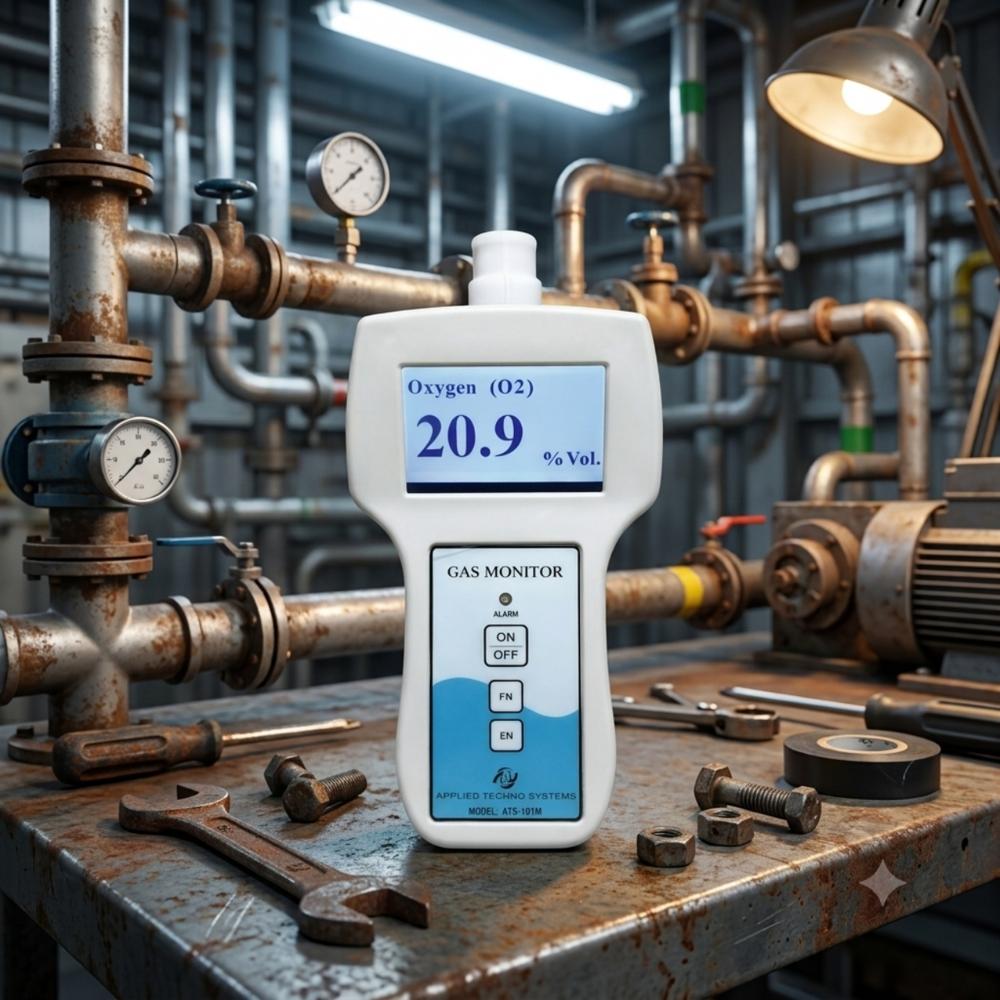
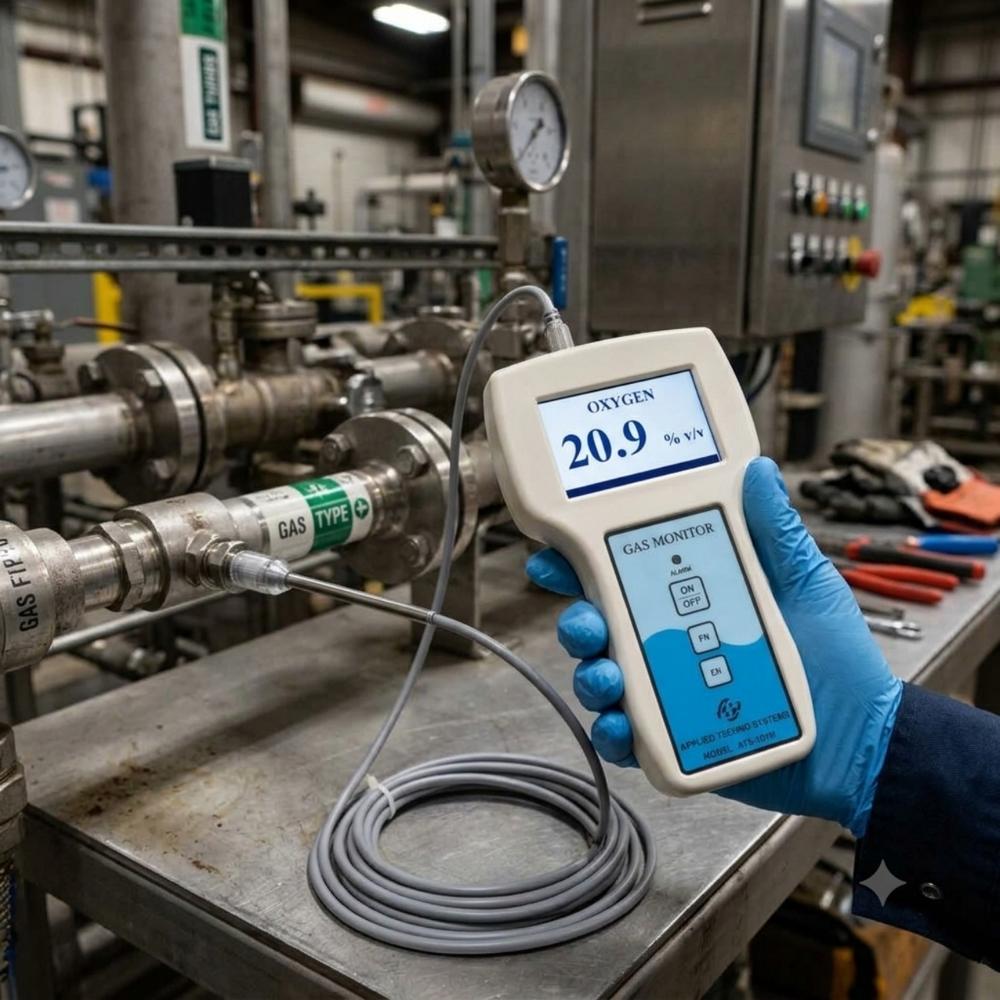
The Handheld Single Gas Detector With Pump is a compact and portable gas detection instrument designed for reliable monitoring of a specific gas in industrial, hazardous and confined-space environments. The integrated sampling pump enables active gas sampling from locations that are difficult to access, providing convenient and reliable detection of oxygen, toxic, combustible and other hazardous gases. Available in different gas configurations, the detector is suitable for personal safety, gas leak detection, confined-space entry, process monitoring and routine workplace gas monitoring. Its rugged handheld design makes it suitable for applications across oil & gas, oil refineries, petrochemical, chemical, pharmaceutical, fertilizer, power plants, steel, mining, battery manufacturing and other industrial sectors. The detector provides clear gas concentration readings along with visual and audible alarms when preset gas levels are reached, making it suitable for a wide range of industrial gas detection and safety applications.Reliable Gas Detection for Safety-Critical Environments
The ATS-101M ensures rapid, accurate oxygen measurement with a precision of 0.5% Vol. Powered by an electrochemical sensor and integrated pump, it delivers fast, active sampling. Its built-in audio/visual alerts keep users aware of hazardous conditions, making it indispensable for industrial, laboratory, and environmental safety teams.
Intuitive Operation and Flexible Calibration
Designed for user-friendly operation, the ATS-101M features a push-button interface, bright LCD display, and clear alarm indicators. Calibration is user-selectable, allowing adaptation to specific site needs. Semi-automatic controls make it easy to set up and maintain optimal performance, even in demanding field conditions.
Long-Lasting Portability and Durability
With an operating time exceeding 10 hours per charge and constructed from durable ABS plastic, the ATS-101M is built for tough tasks. Its lightweight, handheld form makes it convenient for mobile use, while the USB rechargeable battery ensures quick and easy power management wherever your work takes you.
FAQ's of Single Gas Measurement Instrument with Pump:
Q: How does the ATS-101M Single Gas Measurement Instrument detect oxygen levels?
A: The ATS-101M utilizes an electrochemical sensor combined with a built-in active pump to continuously draw in ambient air. This setup ensures rapid detection and accurate measurement of oxygen concentrations from 0 to 100% Vol., with a resolution of 0.1% Vol.Q: What makes the ATS-101M suitable for industrial and environmental monitoring?
A: With its portable design, fast response time (less than 10 seconds), robust ABS plastic enclosure, and digital LCD display, the ATS-101M is well-suited for demanding industrial, laboratory, and environmental safety applications where accurate oxygen measurement and prompt hazard alerts are critical.Q: When should the ATS-101M be calibrated?
A: Calibration intervals depend on usage frequency and environmental conditions; however, the ATS-101M offers user-selectable calibration modes, making it easy to schedule and perform calibrations as necessary to maintain accuracy and compliance with safety standards.Q: Where can the ATS-101M be used effectively?
A: The ATS-101M can be deployed in factories, laboratories, confined spaces, and field environments where oxygen monitoring is essential for worker safety, process control, or compliance with environmental regulations.Q: What is the process for recharging the ATS-101M?
A: The instrument features a built-in rechargeable battery that can be conveniently charged using a standard USB adapter. One full charge provides more than 10 hours of continuous operation, ideal for extended fieldwork or shift operations.Q: How does the audio/visual alarm system benefit users?
A: The dual audio and visual warning system immediately alerts users to hazardous oxygen levels, ensuring prompt awareness and timely response to potential safety threats, thereby reducing risks during gas monitoring tasks.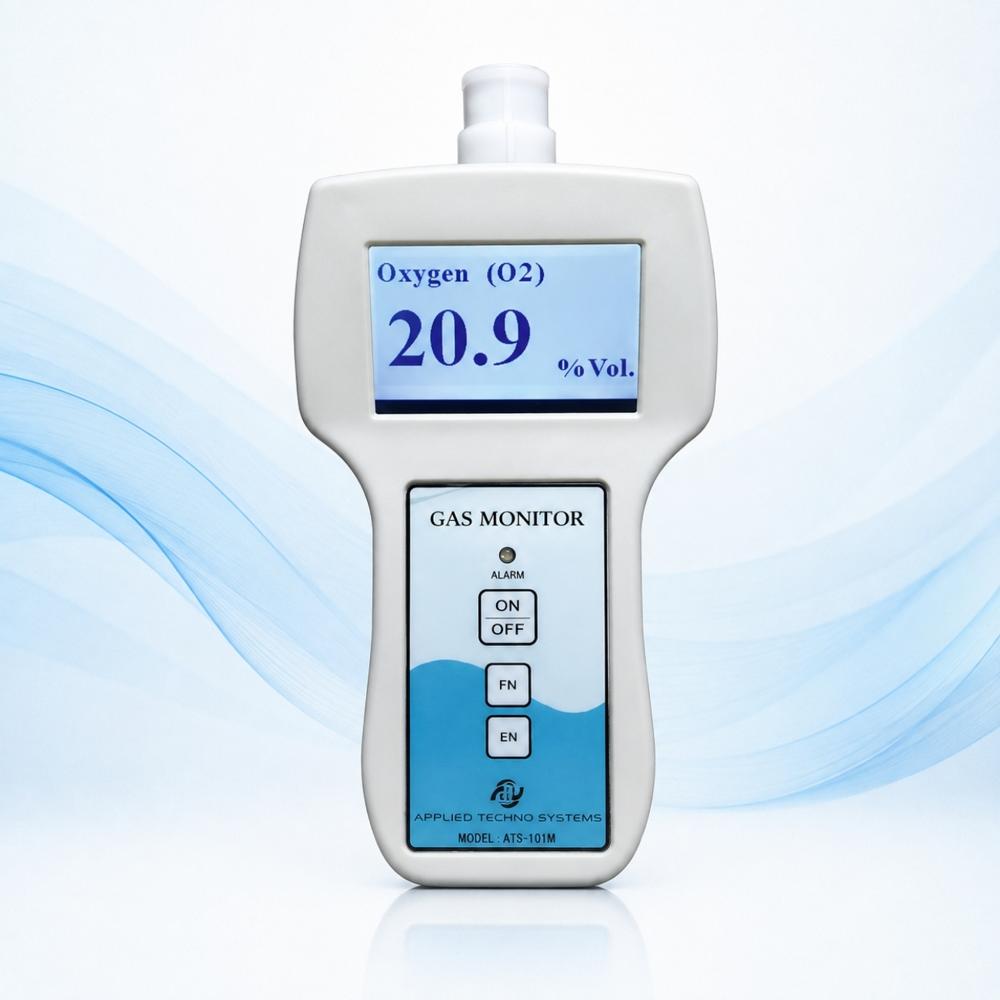

Price:
- 50
- 100
- 200
- 250
- 500
- 1000+

More Products in Gas Detector Category
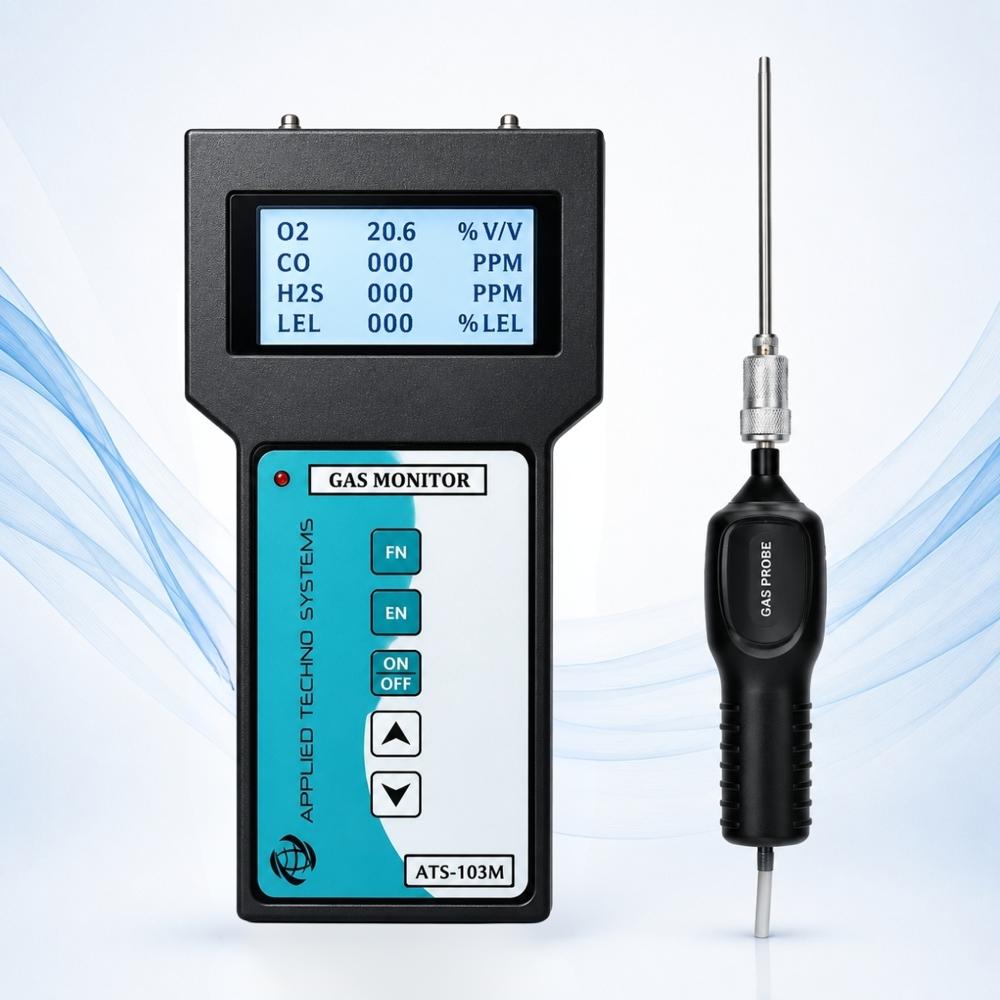
Multi Gas Detector With Sampling Pump
Price 78000.0 INR / Piece
Minimum Order Quantity : 1 Piece
Application : Industrial safety, confined space entry, environmental monitoring
Temperature : 10C to +50C operating range
Display Type : Backlit digital LCD
Machine Weight : Approx. 400g (including battery)
Industrial Hydrogen Gas Leak Detector
Price 80000.0 INR / Number
Minimum Order Quantity : 1 Number
Application : Industrial
Temperature : 15 Celsius (oC)
Display Type : Digital
Machine Weight : 250 Gram (g)

Portable Chlorine Gas Detector Model ATS 101M
Price 58500.0 INR / Unit
Minimum Order Quantity : 1 Unit
Application : Monitoring System
Temperature : 5 to 55 Deg. C Celsius (oC)
Display Type : 128 x 64 LCD Graphics Display with backlit
Machine Weight : 500 Gram (g)

Compact Gas Transmitter
Price 31998.0 INR / Unit
Minimum Order Quantity : 1 Unit
Application : Industrial
Temperature : 10 Celsius (oC)
Display Type : Graphic
Machine Weight : 1 Kilograms (kg)


- 104, Delta Industrial Estate, Building No 1, Gokhivare, Sativali Road, Vasai East, Dist-Palghar,Vasai - 401208, Maharashtra, India
- Phone : 08045814504
GST : 27AAVCA1127G1ZN

- Mr M L YADAV (Marketing Manager)
- Mobile : 08045814504
- Send Inquiry
 Send Inquiry

|


- Dew Point Meters
- Gas Analysers
- Portable Gas Detector
- Moisture And Dew Point Analyzer
- Dust/Opacity Monitor
- Gas Monitoring Systems
- Gas Leak Detectors
- Gas Transmitters
- VOC Leak Detector
- Air Quality Monitoring System
- Online Continuous Emission Monitoring System-OCEMS
- Dew Point Monitors
- Gas Detector
- Opacity Monitor
- Portable Flue Gas Analyzer
- Online SOX & NOX Gas Analyzer
- Methane Gas Leak Detector
- Hydrogen Purity Analyzer
- Gas Purity Analyzer
- Effluent Monitoring Systems
- Producer Gas Analyzer
- Gas Detector Calibration Service
- Portable Gas Monitors
- Gas Sensor Transmitter

Developed and Managed by Infocom Network Private Limited.


 English
 Spanish
 French
 German
 Italian
 Chinese (Simplified)
 Japanese
 Korean
 Arabic
 Portuguese
