 Chat with us

- Dew Point Meters
- Gas Analysers
- Portable Gas Detector
- Moisture And Dew Point Analyzer
- Dust/Opacity Monitor
- Gas Monitoring Systems
- Gas Leak Detectors
- Gas Transmitters
- VOC Leak Detector
- Air Quality Monitoring System
- Online Continuous Emission Monitoring System-OCEMS
- Dew Point Monitors
- Gas Detector
- Opacity Monitor
- Portable Flue Gas Analyzer
- Online SOX & NOX Gas Analyzer
- Methane Gas Leak Detector
- Hydrogen Purity Analyzer
- Gas Purity Analyzer
- Effluent Monitoring Systems
- Producer Gas Analyzer
- Gas Detector Calibration Service
- Portable Gas Monitors
- Gas Sensor Transmitter

 Send Inquiry
Tri Gas Monitoring Equipment
Price 450500.0 INR/ Piece
Tri Gas Monitoring Equipment Specification
- Power Supply
- 230V AC, 50Hz
- Measuring Range
- O2: 0-100%, CO2: 0-100%, N2: 0-100%
- Humidity
- 0-95% RH (non-condensing)
- Interface Type
- RS232/USB
- Test Range
- O2: 0-100%, CO2: 0-100%, N2: 0-100%
- Response Time
- <10 seconds
- Frequency
- 50 Hz
- Display Type
- Digital LCD
- Temperature
- 0C - 50C
- Mounting Type
- Portable (Tabletop)
- Operating Voltage
- 230V AC
- Gas Pressure
- 0.1 - 1 Bar
- Resolution
- 0.01%
- Automation Grade
- Semi-automatic
- Accuracy
- 1% of Full Scale
- Equipment Type
- Tri Gas Monitoring Equipment
- Features
- Portable, user-friendly controls, digital readout, built-in pressure regulator
- Application
- Gas analysis of O2, CO2, N2 in industrial/process environments
- Port Size
- 1/4 inch
- Usage
- Industrial gas monitoring
- Machine Weight
- 8 kg
- Control Mode
- Automatic
- Alarm
- Visual and audible alarm for threshold levels
- Data Storage
- Internal memory for up to 5000 readings
- Model
- ATS-203A
- Protection Class
- IP20
- Sample Input
- Flexible tubing
- Flow Rate
- 0.2 - 2 L/min
- Enclosure Material
- Stainless Steel
- Calibration
- Automatic/Manual
- Sensor Type
- Electrochemical/Oxygen, Infrared/CO2, Thermal Conductivity/N2
- Dimensions
- 350mm x 200mm x 210mm
- Sampling Mode
- Continuous
- Operating Principle
- Continuous, real-time monitoring
About Tri Gas Monitoring Equipment
The Tri Gas Analyser is a portable and reliable gas analysis instrument designed for accurate measurement and monitoring of gas composition in power generation and other industrial applications. It is particularly suitable for measuring Hydrogen (H), Air, and Carbon Dioxide (CO) during generator filling, purging, shutdown, startup, and normal operating conditions, helping users monitor gas purity and ensure safe and efficient operation. The analyser uses a reliable gas measurement system with temperature compensation for stable and accurate readings and can be configured with suitable sampling components for convenient field analysis. Its portable design makes it suitable for generator gas purity testing, hydrogen cooling system monitoring, gas replacement and purging operations, maintenance, commissioning, troubleshooting, and routine inspection. The Tri Gas Analyser can be used in power plants, electrical power generation facilities, turbine-generator systems, industrial plants, hydrogen-cooled generators, and other applications requiring reliable measurement of hydrogen, air, and carbon dioxide gas composition. It provides a practical solution for on-site gas analysis, helping operators verify gas purity, monitor generator conditions, and support safe and efficient plant operation.Precise Multi-Gas Detection
The ATS-203A tri gas monitor applies electrochemical, infrared, and thermal conductivity sensors to accurately measure O2, CO2, and N2 in challenging industrial environments. Continuous, real-time sampling ensures deviations are immediately identified and addressed, ensuring optimal process control and workplace safety.
User-Friendly Operation and Portability
This monitoring equipment is designed for ease of use, featuring intuitive digital controls and a digital LCD. Its portable, tabletop mounting and built-in pressure regulator maximize convenience during on-site analysis, allowing industrial staff to deploy and operate the device quickly and efficiently.
Optimal Data Management and Safety
ATS-203A comes equipped with internal memory for extensive data logging, storing up to 5000 readings for compliance and review. Visual and audible alarms promptly alert users when gas levels breach preset thresholds, supporting rapid response strategies and enhancing operational safety.
FAQ's of Tri Gas Monitoring Equipment:
Q: How does the ATS-203A ensure accurate gas measurement in industrial settings?
A: The ATS-203A uses advanced sensors (electrochemical for O2, infrared for CO2, and thermal conductivity for N2) to provide highly accurate, real-time detection of gas concentrations. The automatic/manual calibration ensures ongoing measurement precision, meeting industrial process control requirements with 1% full-scale accuracy.Q: What is the process for calibrating the Tri Gas Monitoring Equipment?
A: Calibration can be performed either automatically or manually depending on user preference. For automatic calibration, the system self-adjusts using built-in protocols, while manual calibration allows for user input of reference gases to ensure sensor accuracy and reliability over time.Q: Where can the ATS-203A be deployed for gas analysis?
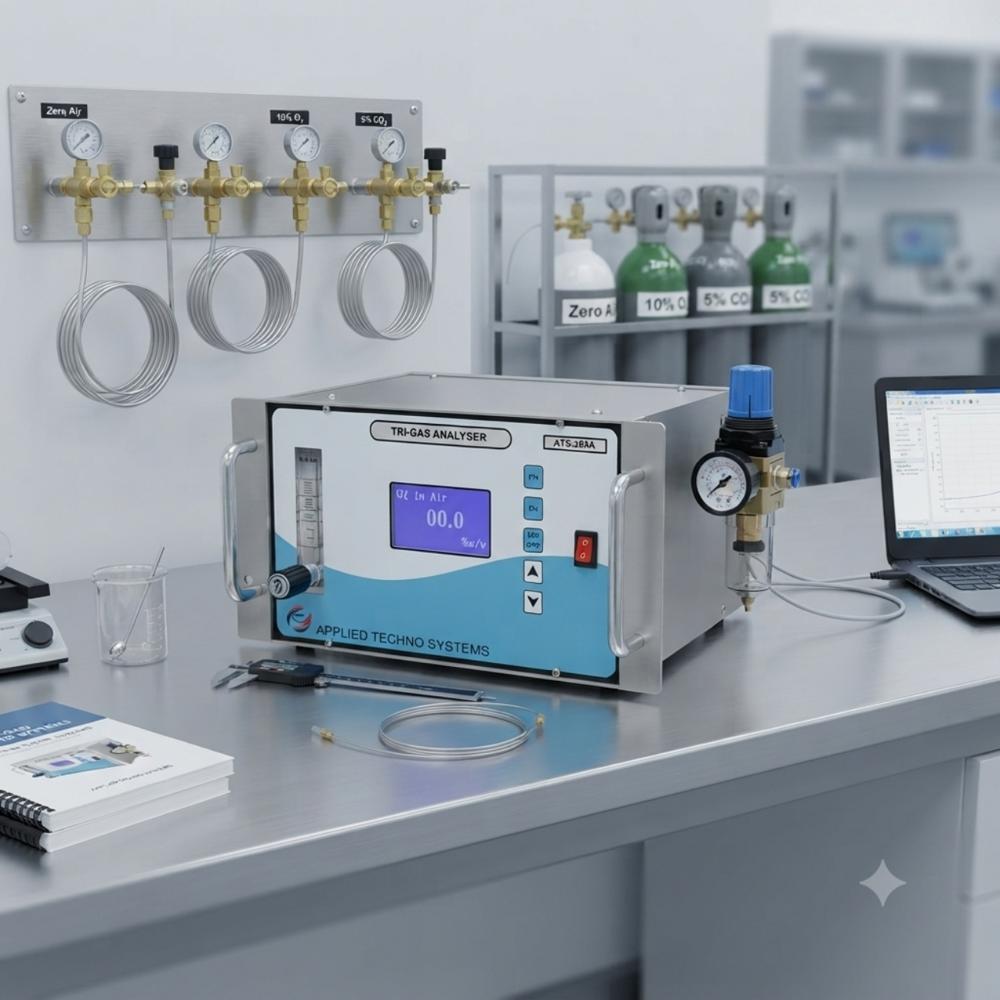
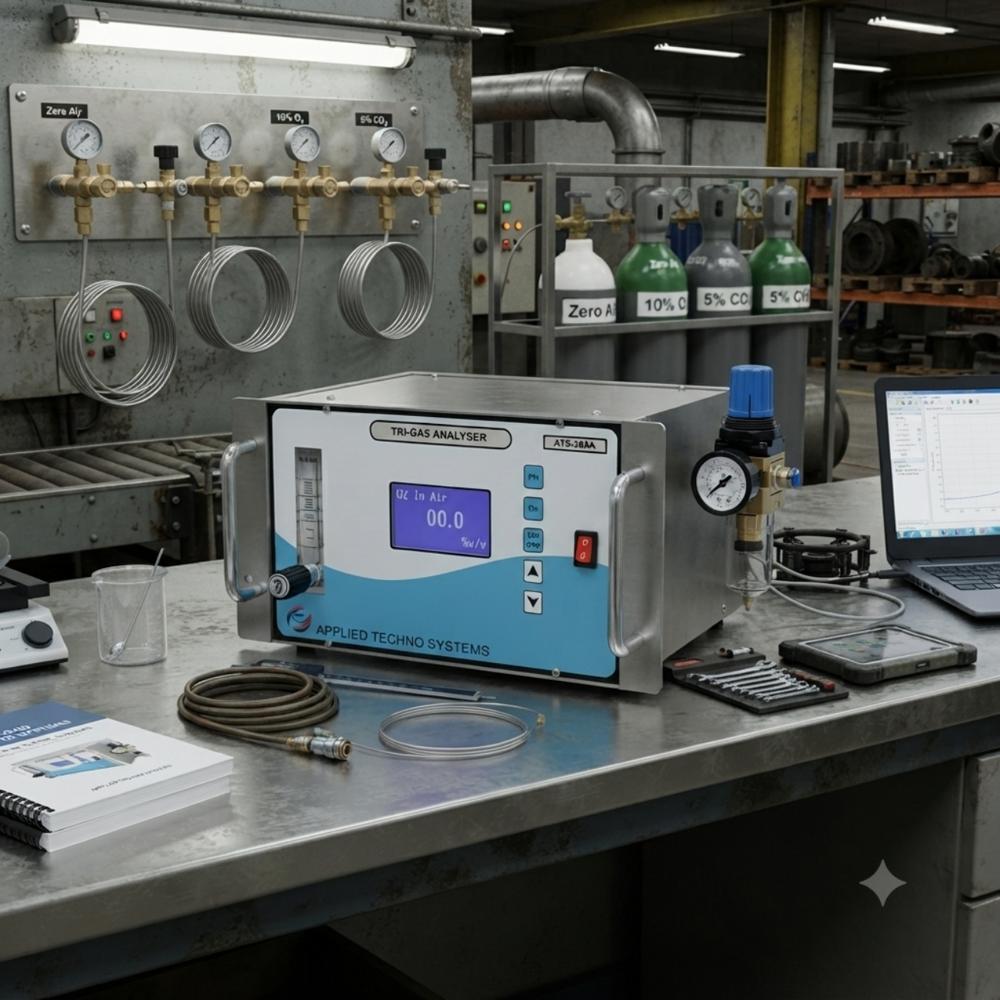
A: This equipment is engineered for portability and is ideally used in industrial or process environments requiring continuous monitoring of O2, CO2, and N2. It operates well anywhere a stable tabletop setup is available and where flexible sample tubing can access the gas source.Q: What are the key benefits of using this tri gas monitor?
A: The major benefits include accurate, simultaneous multi-gas detection, real-time digital readouts, extensive data storage for traceability, user-friendly controls for ease of operation, and robust safety features such as threshold alarms and stainless steel enclosures.Q: How does the equipment alert users when gas levels cross safety thresholds?
A: The ATS-203A features both visual and audible alarms that are immediately activated if any of the detected gas concentrations surpass preset safety limits, ensuring personnel can take corrective action quickly.Q: When is it necessary to use the data logging function of the monitor?
A: Data logging is essential during regulatory compliance checks, process optimization, or when a historical record of gas concentrations is required for safety audits or troubleshooting production issues.Q: What is the recommended sampling process using this device?
A: Using the provided flexible tubing, users should connect the sample input to the gas source. The system's continuous sampling mode then draws gas for real-time analysis, with readings displayed instantly on the digital LCD and automatically stored in memory.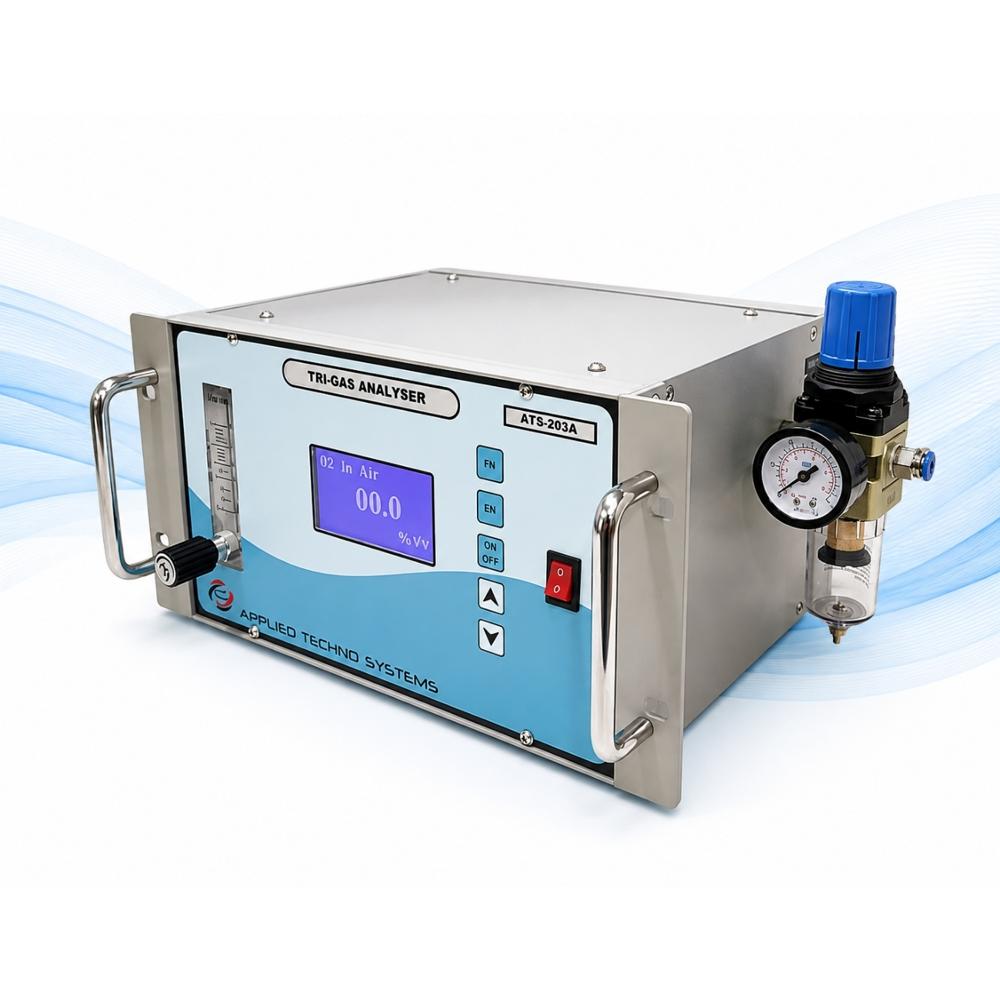

Price:
- 50
- 100
- 200
- 250
- 500
- 1000+

More Products in Gas Analysers Category
N2 Purity Analyser
Price 128000.0 INR / Unit
Minimum Order Quantity : 1 Unit
Resolution : 0.01%
Temperature : 0 C to 50 C Celsius (oC)
Application : Nitrogen purity measurement for process and quality control
Accuracy : 0.5% of reading %
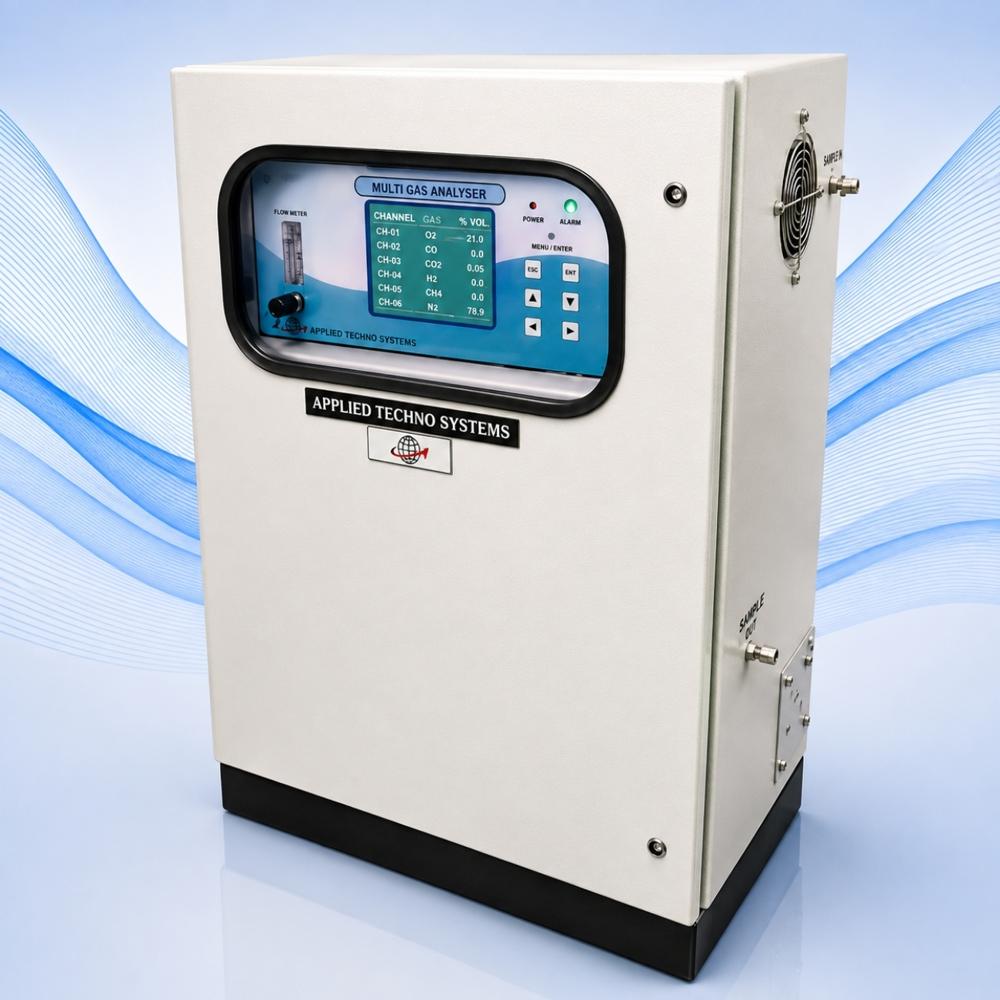
Industrial Producer Gas Analyzer
Price 1070500.0 INR / Piece
Minimum Order Quantity : 1 Piece
Resolution : 0.01%
Temperature : 0C to 50C
Application : Measurement and Analysis of Producer Gas Components
Accuracy : 1% of Full Scale
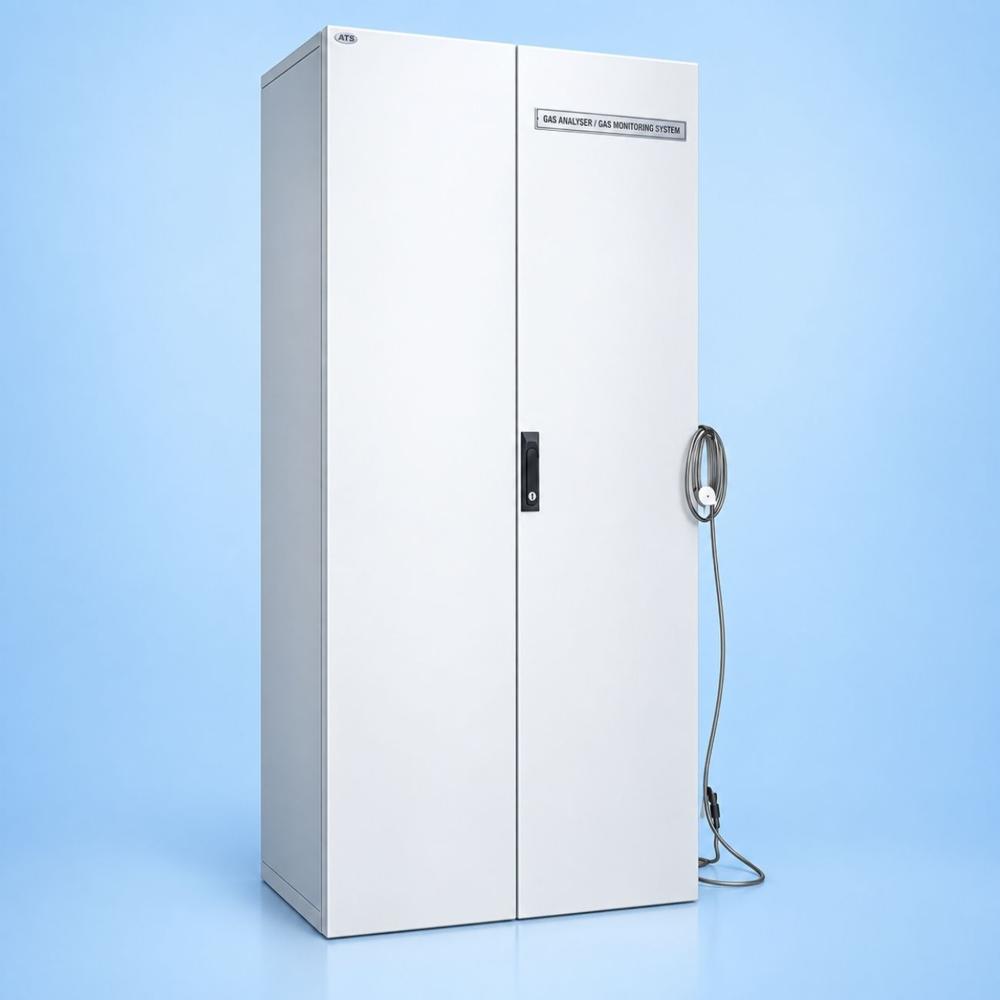
Continuous Tri Gas Analyser
Price 1650500.0 INR / Piece
Minimum Order Quantity : 1 Piece
Resolution : 0.01% (O2/CO2), 1 ppm (CO)
Temperature : 0C 50C
Application : Online Gas Monitoring in industrial plants
Accuracy : 1% of full scale
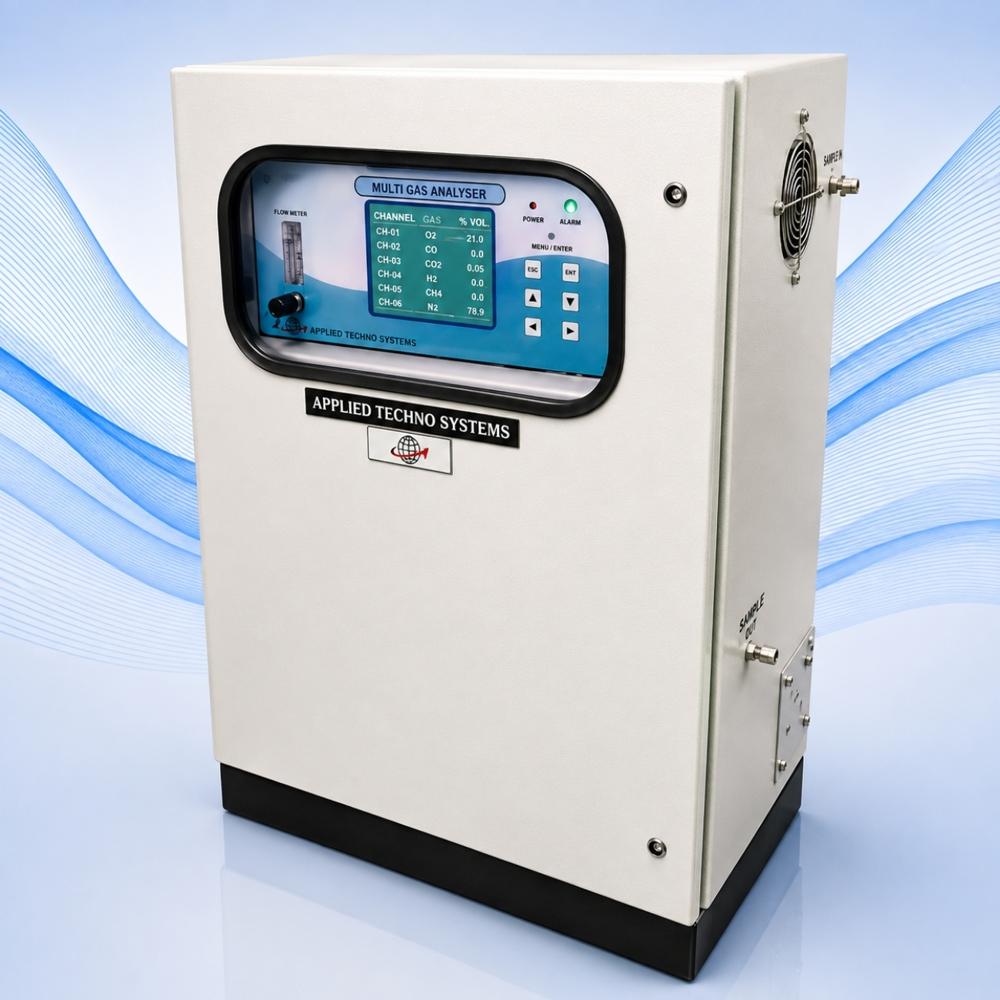
Biogas Analyzer
Price 850500.0 INR / Piece
Minimum Order Quantity : 1 Piece
Resolution : 0.1% for volume gases; 1ppm for H2S/NH3
Temperature : 0 to 50C
Application : Gas composition analysis in biogas plants, landfill, wastewater treatment, fermentation
Accuracy : 2% of reading


- 104, Delta Industrial Estate, Building No 1, Gokhivare, Sativali Road, Vasai East, Dist-Palghar,Vasai - 401208, Maharashtra, India
- Phone : 08045814504
GST : 27AAVCA1127G1ZN

- Mr M L YADAV (Marketing Manager)
- Mobile : 08045814504
- Send Inquiry
 Send Inquiry

|


- Dew Point Meters
- Gas Analysers
- Portable Gas Detector
- Moisture And Dew Point Analyzer
- Dust/Opacity Monitor
- Gas Monitoring Systems
- Gas Leak Detectors
- Gas Transmitters
- VOC Leak Detector
- Air Quality Monitoring System
- Online Continuous Emission Monitoring System-OCEMS
- Dew Point Monitors
- Gas Detector
- Opacity Monitor
- Portable Flue Gas Analyzer
- Online SOX & NOX Gas Analyzer
- Methane Gas Leak Detector
- Hydrogen Purity Analyzer
- Gas Purity Analyzer
- Effluent Monitoring Systems
- Producer Gas Analyzer
- Gas Detector Calibration Service
- Portable Gas Monitors
- Gas Sensor Transmitter

Developed and Managed by Infocom Network Private Limited.


 English
 Spanish
 French
 German
 Italian
 Chinese (Simplified)
 Japanese
 Korean
 Arabic
 Portuguese
