 Chat with us

- Dew Point Meters
- Gas Analysers
- Portable Gas Detector
- Moisture And Dew Point Analyzer
- Dust/Opacity Monitor
- Gas Monitoring Systems
- Gas Leak Detectors
- Gas Transmitters
- VOC Leak Detector
- Air Quality Monitoring System
- Online Continuous Emission Monitoring System-OCEMS
- Dew Point Monitors
- Gas Detector
- Opacity Monitor
- Portable Flue Gas Analyzer
- Online SOX & NOX Gas Analyzer
- Methane Gas Leak Detector
- Hydrogen Purity Analyzer
- Gas Purity Analyzer
- Effluent Monitoring Systems
- Producer Gas Analyzer
- Gas Detector Calibration Service
- Portable Gas Monitors
- Gas Sensor Transmitter

 Send Inquiry
Gas Detection Control System
Price 230500.0 INR/ Piece
Gas Detection Control System Specification
- Channel Spacing
- Individually channelized, up to 4 channels
- Operating Mode
- Continuous monitoring
- Standard
- Complies with industrial safety norms
- Connectivity Type
- Wired sensor input, relay output terminal
- Interface
- Front LED display and control push buttons
- Size
- Standard 19-inch rack mount panel
- License Free
- Yes
- Mounting Type
- Rack mountable
- Technology
- Microcontroller based digital system
- Special Features
- Multi-channel monitoring, digital display, alarm indicators (Alarm, Warn, Trouble)
- Application
- Industrial gas detection, H2S monitoring, safety monitoring in factories and plants
- Screen Resolution
- 3-digit high brightness 7-segment LED display
- Power Supply
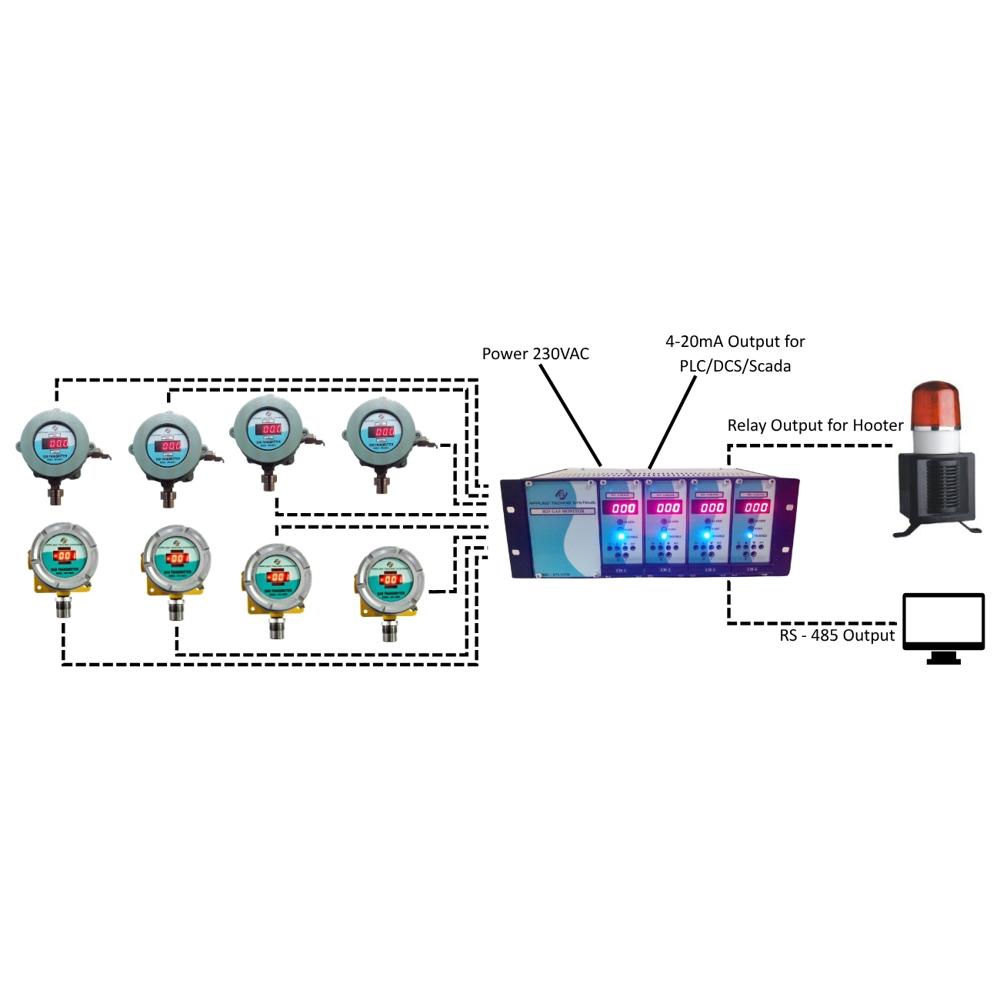
- 230V AC, 50 Hz or as required
- Output Formats
- Relay outputs for alarms, analog 4-20mA output
- Display Type
- Digital, channel-wise
- Weight
- Approx. 7 kg
- Sensor Input
- Compatible with remote H2S gas sensors
- Protection
- Short circuit and overload protection
- Model
- ATS-107M
- Number of Channels
- 4 (expandable as per model)
- Enclosure Material
- Powder coated metal
- Gas Detected
- Hydrogen Sulfide (H2S)
- Calibration
- On-site calibration supported
- Operating Temperature
- -10C to 55C
- Humidity
- 0-95% RH (non-condensing)
- Alarm Indication
- LED indication and buzzer for Alarm, Warn, Trouble states
- Measuring Range
- 0-100 ppm (per channel)
- Reset Function
- Manual reset button on the front panel
About Gas Detection Control System
The Multi Channel Gas Monitoring System is an industrial gas detection and monitoring solution designed for the continuous and simultaneous monitoring of multiple gas detection points across industrial plants and hazardous areas. The system can be configured with multiple gas sensor transmitters to detect gases such as Oxygen (O), Hydrogen Sulfide (HS), Carbon Monoxide (CO), Sulfur Dioxide (SO), Hydrogen (H), Methane (CH), combustible gases, VOCs, and other toxic or flammable gases, depending on the application and sensor configuration. It provides centralized real-time monitoring of multiple channels with digital gas concentration display, high and low alarm indication, audible and visual alarms, relay outputs, and 420 mA signal integration, depending on system configuration. The multi channel gas monitoring system is suitable for continuous gas monitoring, gas leak detection, process safety, plant safety, storage area monitoring, confined-space monitoring, and emergency alarm applications. It can be used across Oil Refineries, Petrochemical, Chemical, Oil & Gas, Natural Gas, LNG/LPG, Fertilizer, Coal Mining, Power Plants, Iron & Steel, Foundries, Pharmaceutical, Battery Manufacturing, and other industrial environments, providing centralized and reliable monitoring of hazardous gases for improved workplace and process safety.Comprehensive Multi-Channel Monitoring
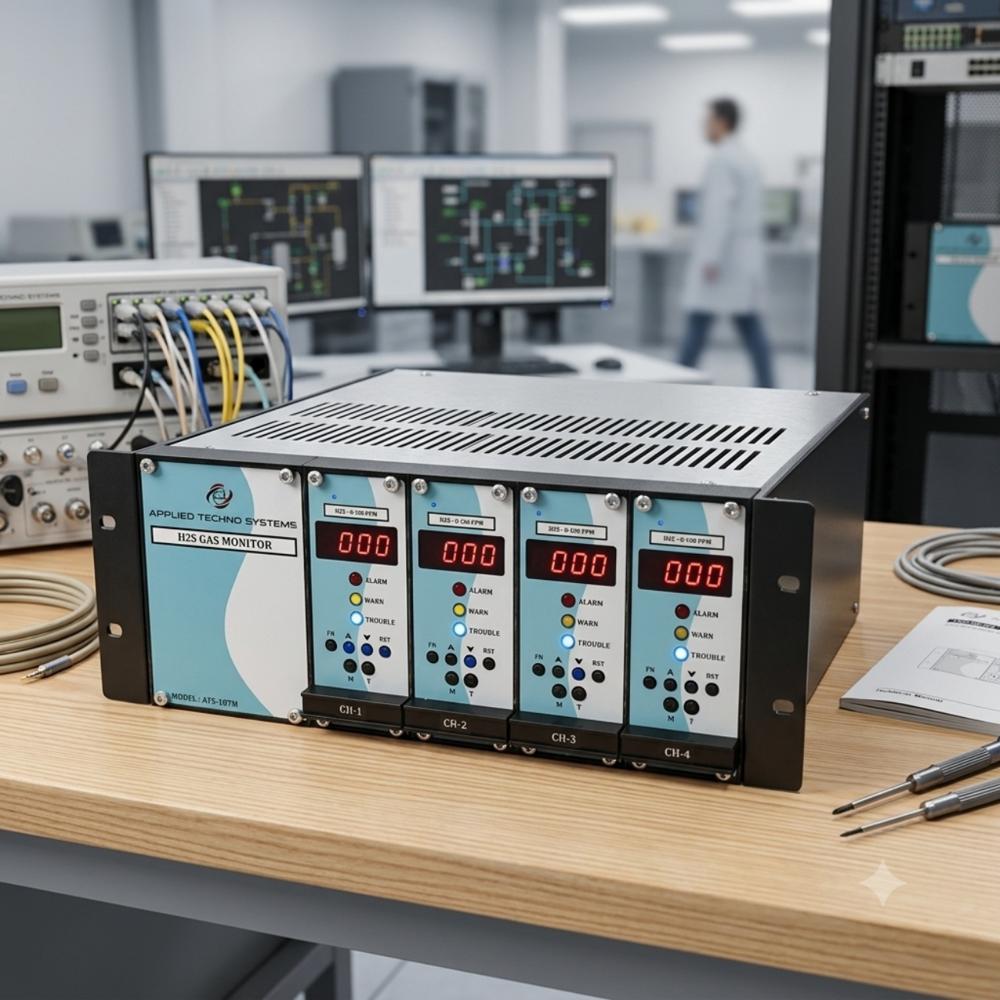
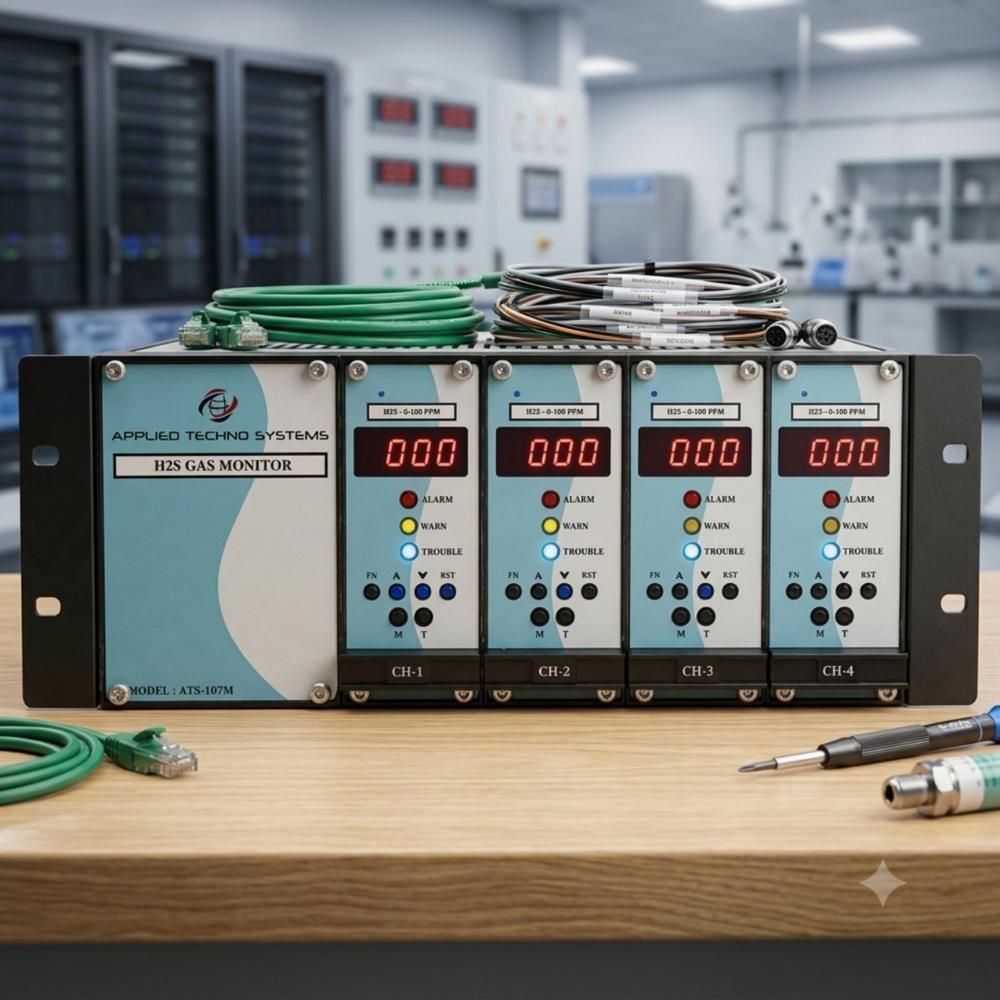
The ATS-107M supports up to four independently monitored channels-each capable of detecting hydrogen sulfide (H2S) with exceptional accuracy. Its channel-wise display and control push buttons allow effortless management, expanding as your facility's gas monitoring demands evolve.
Intuitive Alarm and Notification System
Equipped with vivid LED indicators and a loud buzzer, the ATS-107M provides clear notifications for Alarm, Warn, and Trouble states. The front panel manual reset button and digital interface offer straightforward operation, ensuring quick corrective actions during gas leaks or system faults.
Durable Design, Industrial-Grade Protection
Built with a powder-coated metal enclosure and designed for rack-mount installation, this system delivers outstanding durability in harsh environments. Short circuit and overload protection, along with industrial compliance, guarantee unyielding safety and reliability for continuous operation.
FAQ's of Gas Detection Control System:
Q: How does the ATS-107M Gas Detection Control System detect hydrogen sulfide (H2S)?
A: The system uses compatible remote H2S gas sensors connected to its channels. It continuously monitors H2S concentrations, displaying real-time readings digitally and triggering alarms if gas levels exceed preset thresholds.Q: What is the process for calibrating the ATS-107M, and how often should it be done?
A: On-site calibration is supported by the ATS-107M and is typically recommended at regular intervals set by your facility's safety guidelines-often every 6 to 12 months. Calibration ensures sensor accuracy and system reliability in detecting H2S.Q: Where can the ATS-107M be installed, and what is its recommended mounting method?
A: This system is designed for industrial environments and is suitable for factory and plant installations. It is rack-mountable on standard 19-inch panels, making it ideal for control rooms or equipment racks.Q: What happens when the system detects abnormal H2S gas levels?
A: When H2S levels reach alarm or warning thresholds, the ATS-107M activates LED indicators and a buzzer to promptly alert personnel. Relay outputs can also trigger external devices like ventilation systems or alarms.Q: How can users reset the alarm or warning notifications on the ATS-107M?
A: Alarm and warning notifications can be reset using the manual reset button located on the front panel. This ensures only authorized personnel acknowledge and reset alarms after verifying safety.Q: What are the main benefits of using the ATS-107M in industrial safety monitoring?
A: The ATS-107M enhances workplace safety by providing continuous, multi-channel H2S monitoring, quick alarming, digital visibility, and robust protection features, helping to prevent exposure risks and ensuring compliance with industrial safety norms.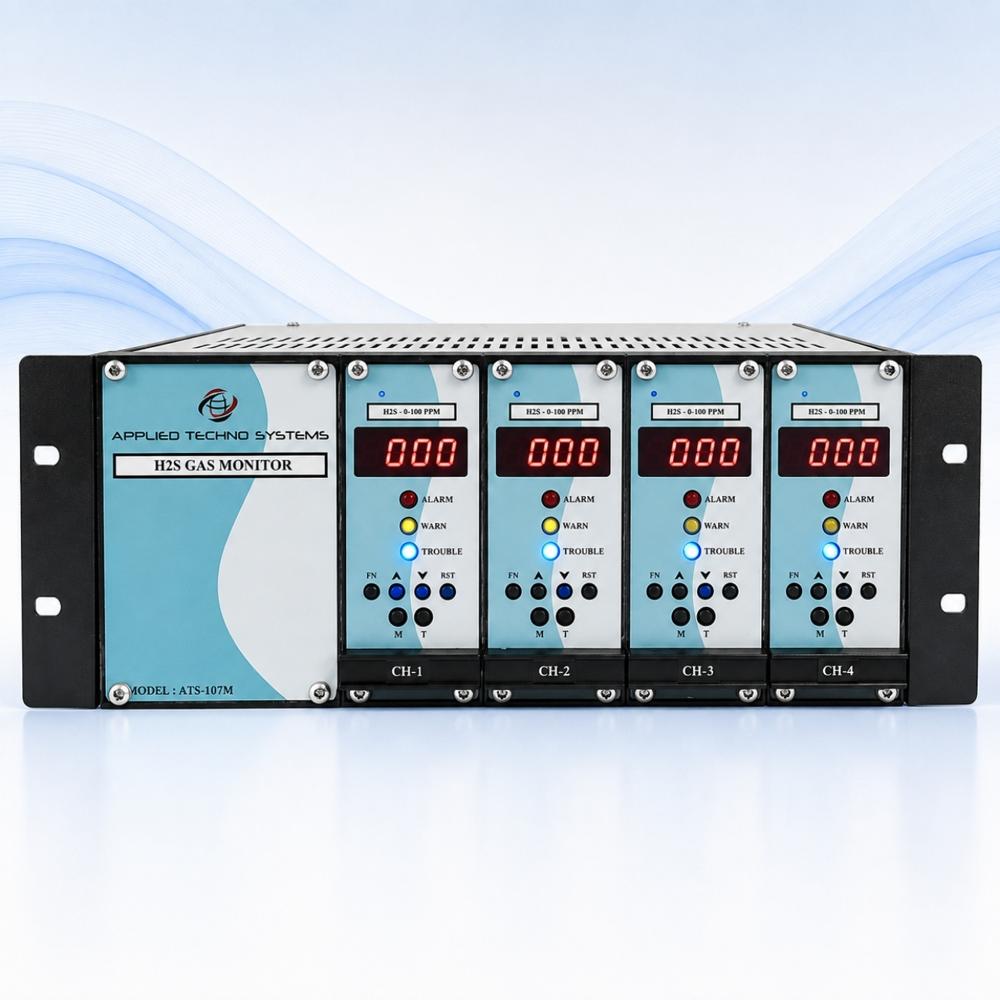

Price:
- 50
- 100
- 200
- 250
- 500
- 1000+

More Products in Gas Monitoring Systems Category

Diboron Gas Monitor
Price 85600.0 INR / Piece
Minimum Order Quantity : 1 Piece
Power Supply : Electric
Application : Industrial
Screen Resolution : 0.01%
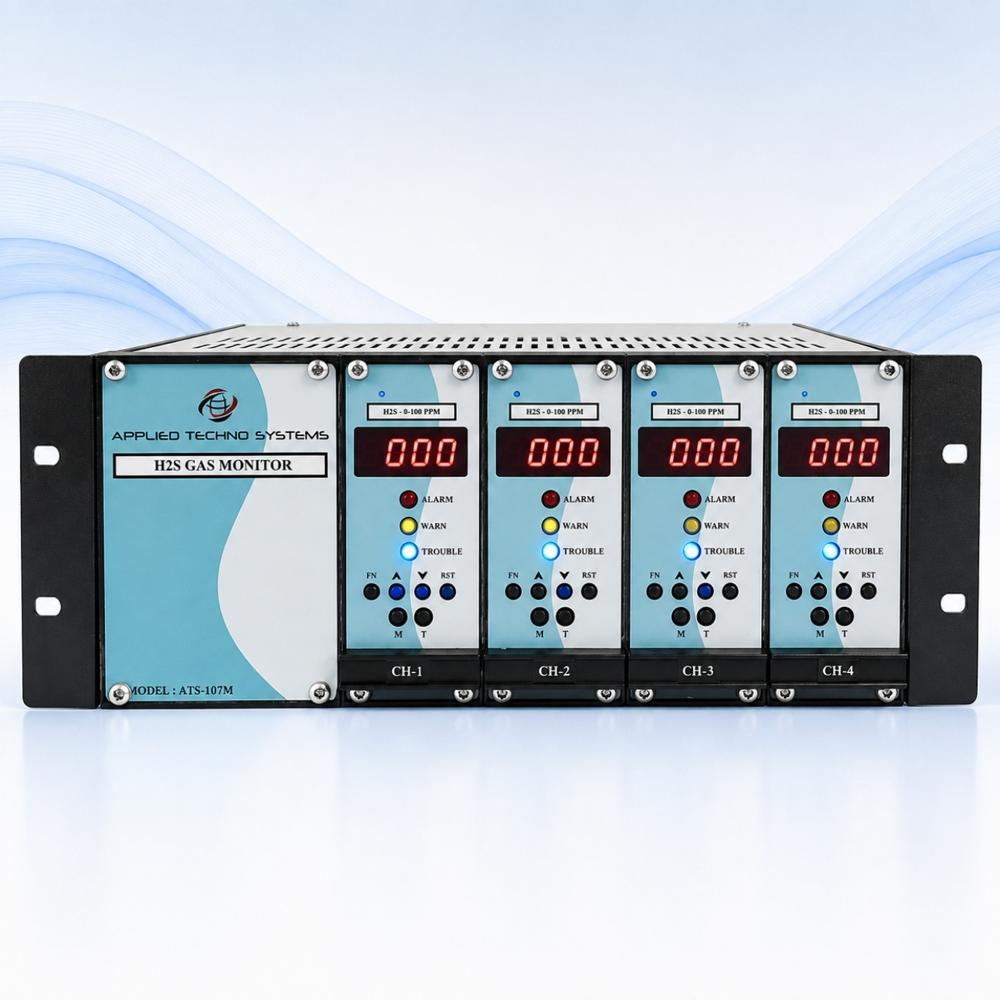
Industrial Multi Point Gas Monitoring System
Price 200500.0 INR / Piece
Minimum Order Quantity : 1 Piece
Power Supply : 230V AC, 50Hz (Optional 24V DC)
Application : Industrial Gas Detection, MultiPoint Gas Monitoring, Safety Systems
Screen Resolution : 4Digit 7segment Digital Display per Channel
Output Formats : 420mA Analog, RS485, Relay Output
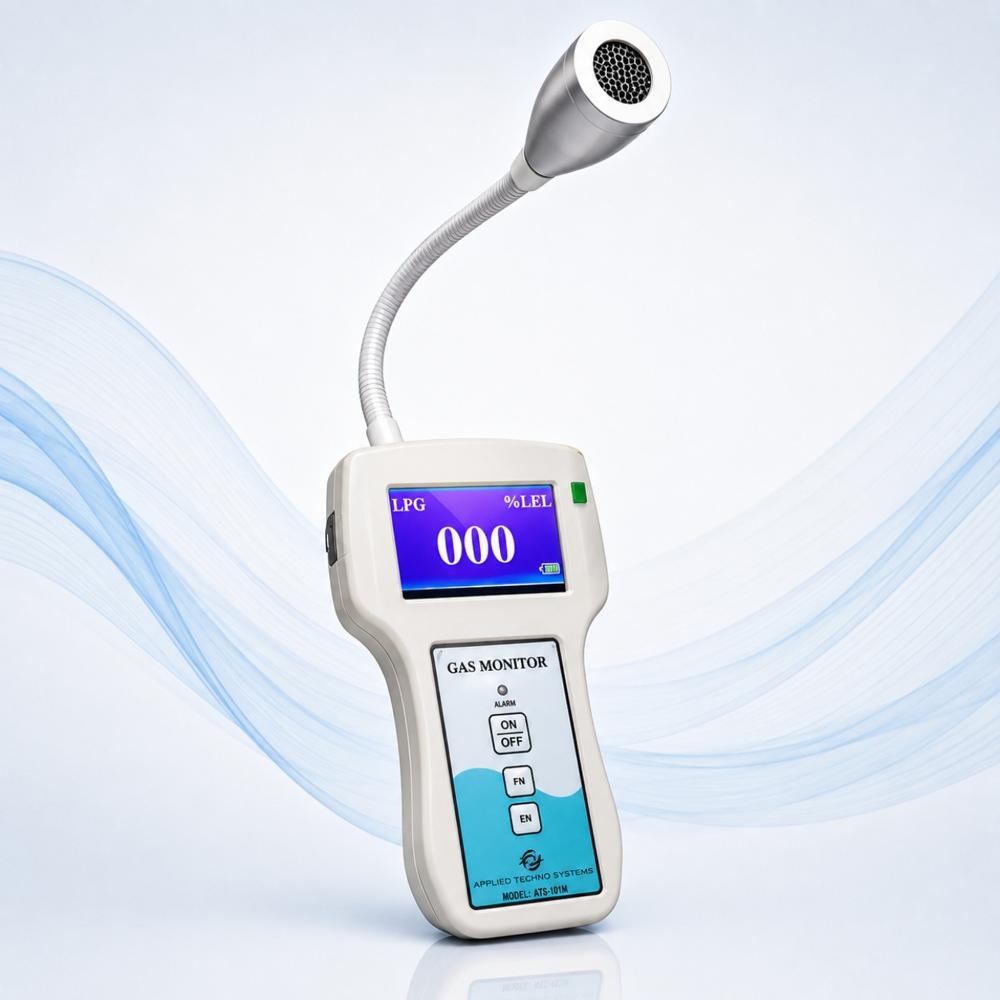
Portable Gas Detection Equipment
Price 29500.0 INR / Unit
Minimum Order Quantity : 1 Unit
Power Supply : Rechargeable battery or replaceable batteries (AA/AAA type)
Application : Detection of combustible gases such as LPG, Methane, and other hydrocarbons in industries, laboratories, and confined spaces
Screen Resolution : Highcontrast LCD digital display
Output Formats : Digital numeric display, Audible alarm output
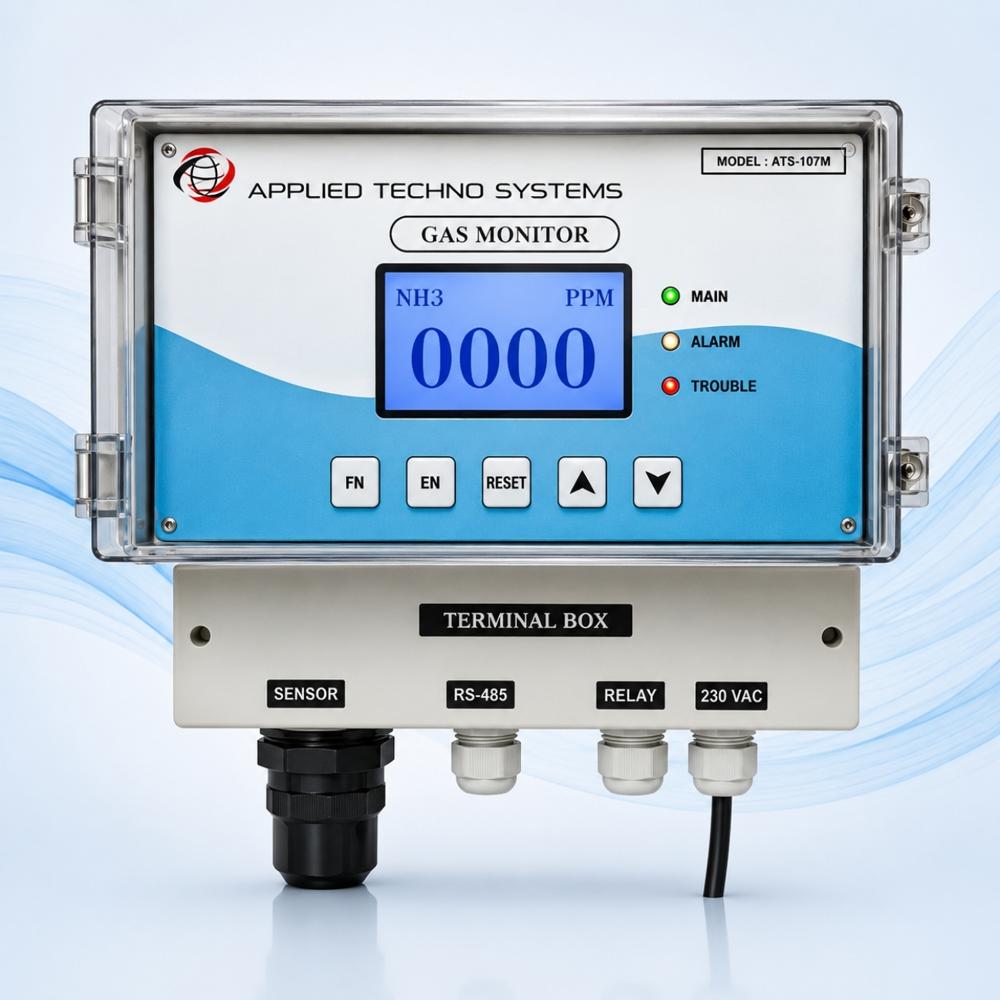
Gas Detection Monitoring System
Price 61500.0 INR / Piece
Minimum Order Quantity : 1 Piece
Power Supply : 230 VAC
Application : Industrial gas monitoring, Ammonia (NH3) detection
Screen Resolution : High contrast LCD, numeric display
Output Formats : RS485 communication, Relay output


- 104, Delta Industrial Estate, Building No 1, Gokhivare, Sativali Road, Vasai East, Dist-Palghar,Vasai - 401208, Maharashtra, India
- Phone : 08045814504
GST : 27AAVCA1127G1ZN

- Mr M L YADAV (Marketing Manager)
- Mobile : 08045814504
- Send Inquiry
 Send Inquiry

|


- Dew Point Meters
- Gas Analysers
- Portable Gas Detector
- Moisture And Dew Point Analyzer
- Dust/Opacity Monitor
- Gas Monitoring Systems
- Gas Leak Detectors
- Gas Transmitters
- VOC Leak Detector
- Air Quality Monitoring System
- Online Continuous Emission Monitoring System-OCEMS
- Dew Point Monitors
- Gas Detector
- Opacity Monitor
- Portable Flue Gas Analyzer
- Online SOX & NOX Gas Analyzer
- Methane Gas Leak Detector
- Hydrogen Purity Analyzer
- Gas Purity Analyzer
- Effluent Monitoring Systems
- Producer Gas Analyzer
- Gas Detector Calibration Service
- Portable Gas Monitors
- Gas Sensor Transmitter

Developed and Managed by Infocom Network Private Limited.


 English
 Spanish
 French
 German
 Italian
 Chinese (Simplified)
 Japanese
 Korean
 Arabic
 Portuguese
