 Chat with us

- Dew Point Meters
- Gas Analysers
- Portable Gas Detector
- Moisture And Dew Point Analyzer
- Dust/Opacity Monitor
- Gas Monitoring Systems
- Gas Leak Detectors
- Gas Transmitters
- VOC Leak Detector
- Air Quality Monitoring System
- Online Continuous Emission Monitoring System-OCEMS
- Dew Point Monitors
- Gas Detector
- Opacity Monitor
- Portable Flue Gas Analyzer
- Online SOX & NOX Gas Analyzer
- Methane Gas Leak Detector
- Hydrogen Purity Analyzer
- Gas Purity Analyzer
- Effluent Monitoring Systems
- Producer Gas Analyzer
- Gas Detector Calibration Service
- Portable Gas Monitors
- Gas Sensor Transmitter

 Send Inquiry
Portable Gas Monitoring Instrument
Price 46000.0 INR/ Piece
Portable Gas Monitoring Instrument Specification
- Port Size
- Standard Sensor Ports
- Interface Type
- Micro USB
- Application
- Industrial Safety, Mining, Environmental Monitoring
- Operating Voltage
- 3.7V (Battery)
- Temperature
- -20C to +50C
- Display Type
- LCD Digital Display
- Response Time
- 30 seconds
- Test Range
- CH4: 0-100%LEL, O2: 0-30%VOL, CO: 0-1000 PPM, H2S: 0-100 PPM
- Mounting Type
- Handheld/Portable
- Resolution
- 0.01 / 0.1 (depends on gas type)
- Humidity
- 0-95% RH (non-condensing)
- Automation Grade
- Automatic
- Gas Pressure
- Atmospheric
- Equipment Type
- Portable Gas Monitoring Instrument
- Max Height
- 150 mm
- Features
- Real-time detection, Audible and visual alarm, Compact design
- Measuring Range
- Multiple Gas Types (CH4, O2, CO, H2S)
- Accuracy
- 3% F.S.
- Power Supply
- Rechargeable Lithium Battery
- Usage
- Gas Concentration Detection
- Machine Weight
- 230 g
- Control Mode
- Button Operated
- Dimensions
- 150 x 75 x 35 mm
- Data Storage
- Up to 1000 records
- IP Rating
- IP65 (Dustproof and Waterproof)
- Charging Time
- About 4 hours
- Working Time
- Up to 8 hours continuous operation
- Alarm Mode
- Sound, Light, and Vibration
- Language Support
- Multi-Language Menu
- Sensor Life
- 2 years (typical)
- Sampling Method
- Diffusion
About Portable Gas Monitoring Instrument
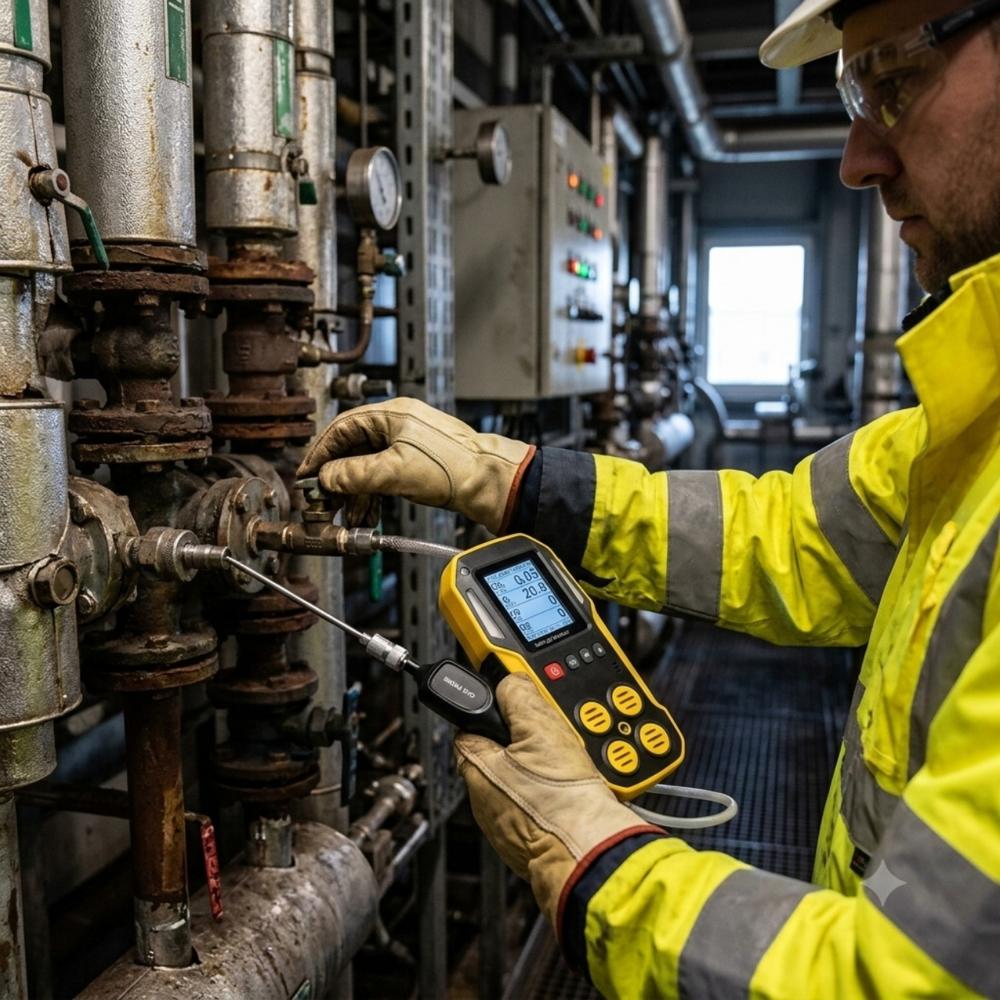
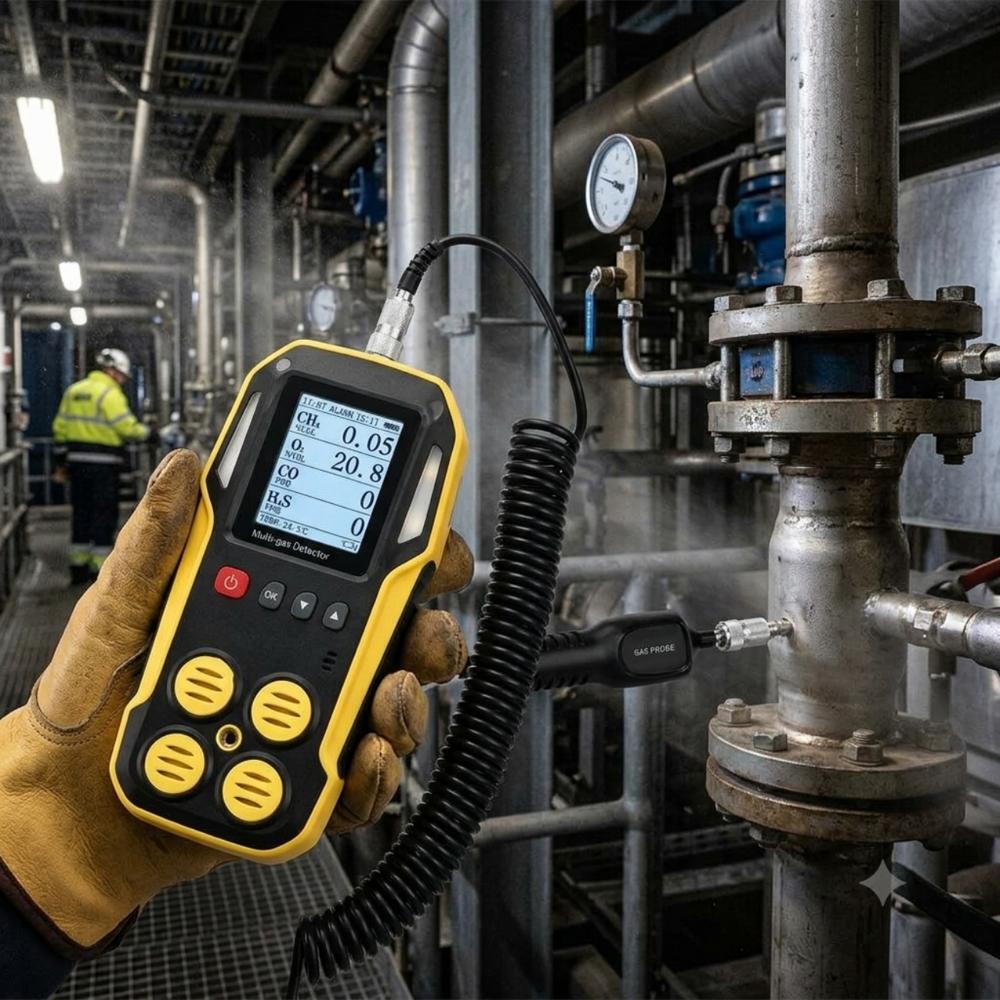
The Handheld Multi Gas Detector is a compact, portable, and reliable gas monitoring instrument designed for the simultaneous detection and measurement of multiple hazardous gases in industrial and commercial environments. Depending on the sensor configuration, it can detect gases such as Oxygen (O), Hydrogen Sulfide (HS), Carbon Monoxide (CO), Sulfur Dioxide (SO), Hydrogen (H), combustible gases, VOCs, and other toxic or flammable gases. The detector provides fast and accurate gas concentration monitoring with a clear digital display and audible, visual, and vibration alarms for effective hazard notification. Its handheld design makes it suitable for personal safety, gas leak detection, confined-space entry, plant inspection, maintenance, process monitoring, emergency response, and workplace safety. The multi gas detector is suitable for use in Oil Refineries, Petrochemical, Chemical, Oil & Gas, Natural Gas, LNG/LPG, Fertilizer, Coal Mining, Power Plants, Iron & Steel, Foundries, Pharmaceutical, Battery Manufacturing, and other industrial applications, helping users identify hazardous gas conditions and maintain safer working environments.Comprehensive Multi-Gas Detection
This portable gas monitoring instrument detects a variety of hazardous gases-including methane (CH4), oxygen (O2), carbon monoxide (CO), and hydrogen sulfide (H2S)-to ensure a safer environment in industrial, mining, and environmental applications. With automatic, real-time monitoring, users are promptly alerted to unsafe conditions.
Built for Rugged Environments
Constructed with an IP65-rated enclosure, the instrument resists dust and water intrusion, making it well-suited for challenging job sites. The compact, handheld design is lightweight at only 230 grams, yet robust, supporting continuous use in various field conditions with minimal downtime.
Easy Operation and Reliable Alerts
Equipped with an LCD digital display and intuitive button controls, users can quickly access monitoring data and device settings. Alarms utilize sound, light, and vibration to ensure critical warnings are noticed, while up to 1000 records can be stored for later review and compliance reporting.
FAQ's of Portable Gas Monitoring Instrument:
Q: How does the alarm notification system work on the portable gas monitor?
A: The instrument features a multi-mode alarm system-utilizing sound, light, and vibration-to promptly alert users when gas levels exceed safe thresholds, ensuring immediate awareness even in noisy or visually complex environments.Q: What is the process for recharging the device, and how long does it take?
A: To recharge the device, simply connect it to a power source using the Micro USB interface. It requires about 4 hours to achieve a full charge, after which it supports up to 8 hours of continuous operation.Q: Where can this gas monitor be effectively used?
A: Designed with IP65 dust and water resistance, the monitor is ideal for a range of environments, including industrial plants, mining operations, and field environmental surveys where atmospheric hazards are a concern.Q: What types of gases can the instrument detect and what are its detection ranges?
A: The instrument detects methane (CH4: 0-100%LEL), oxygen (O2: 0-30%VOL), carbon monoxide (CO: 0-1000 PPM), and hydrogen sulfide (H2S: 0-100 PPM), offering comprehensive monitoring for key hazardous gases.Q: How is data stored and accessed on the instrument?
A: The device automatically records up to 1000 measurement data points, which can be accessed directly via the LCD digital display for review, tracking, or compliance reporting.Q: What are the benefits of the instrument's multi-language support?
A: Multi-language menu options allow operators from diverse language backgrounds to conveniently use and configure the device, reducing setup errors and improving ease of operation in multinational teams.Q: When should the sensor be replaced?
A: The sensors typically have a lifespan of 2 years under standard operating conditions. Replacement is recommended when accuracy declines or upon reaching the end of sensor life to maintain reliable operation.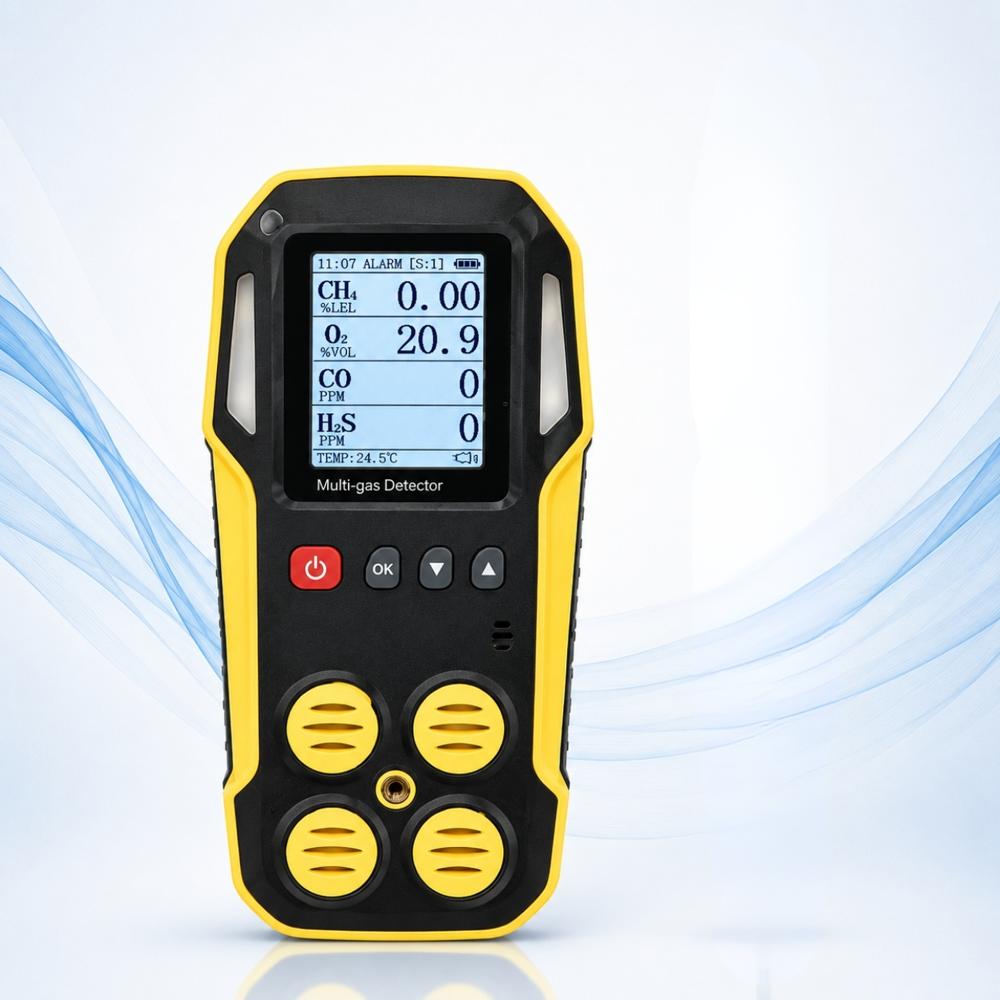

Price:
- 50
- 100
- 200
- 250
- 500
- 1000+

More Products in Gas Detector Category

Online Hydrogen Gas Leak Detector with multi Channel Control Unit Model ATS 109TD & 107M
Price 42500.0 INR / Unit
Minimum Order Quantity : 1 Unit
Application : Industrial
Control Mode : Manual
Usage : Industrial
Display Type : LED
Single Gas Detection Instrument With Pump
Price 44000.0 INR / Unit
Minimum Order Quantity : 1 Unit
Application : Personal safety, industrial safety, confined space monitoring
Control Mode : Microprocessorbased control
Usage : Personal or portable gas detection
Display Type : Large LCD digital display

Oxygen Gas Meters
Price 25000.0 INR / Number
Minimum Order Quantity : 1 Number
Application : Industrial
Control Mode : Manual
Usage : Industrial
Display Type : Digital
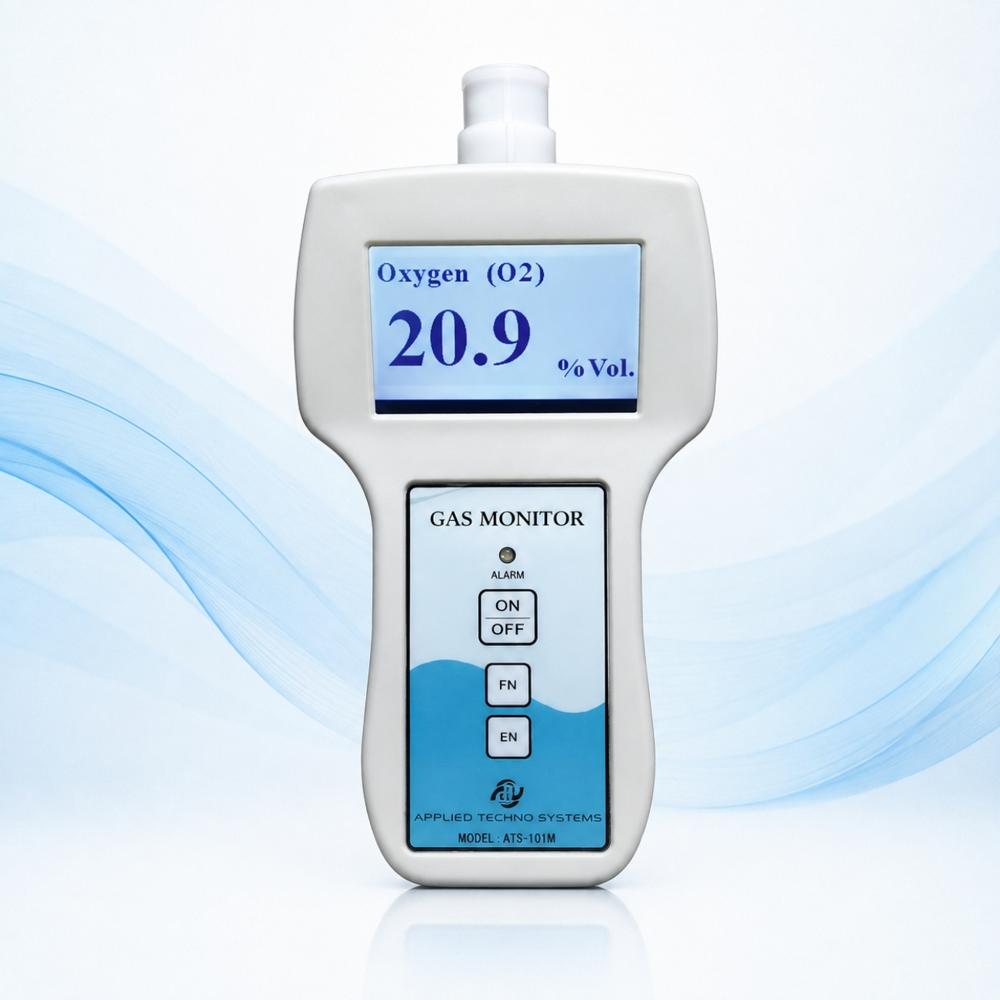
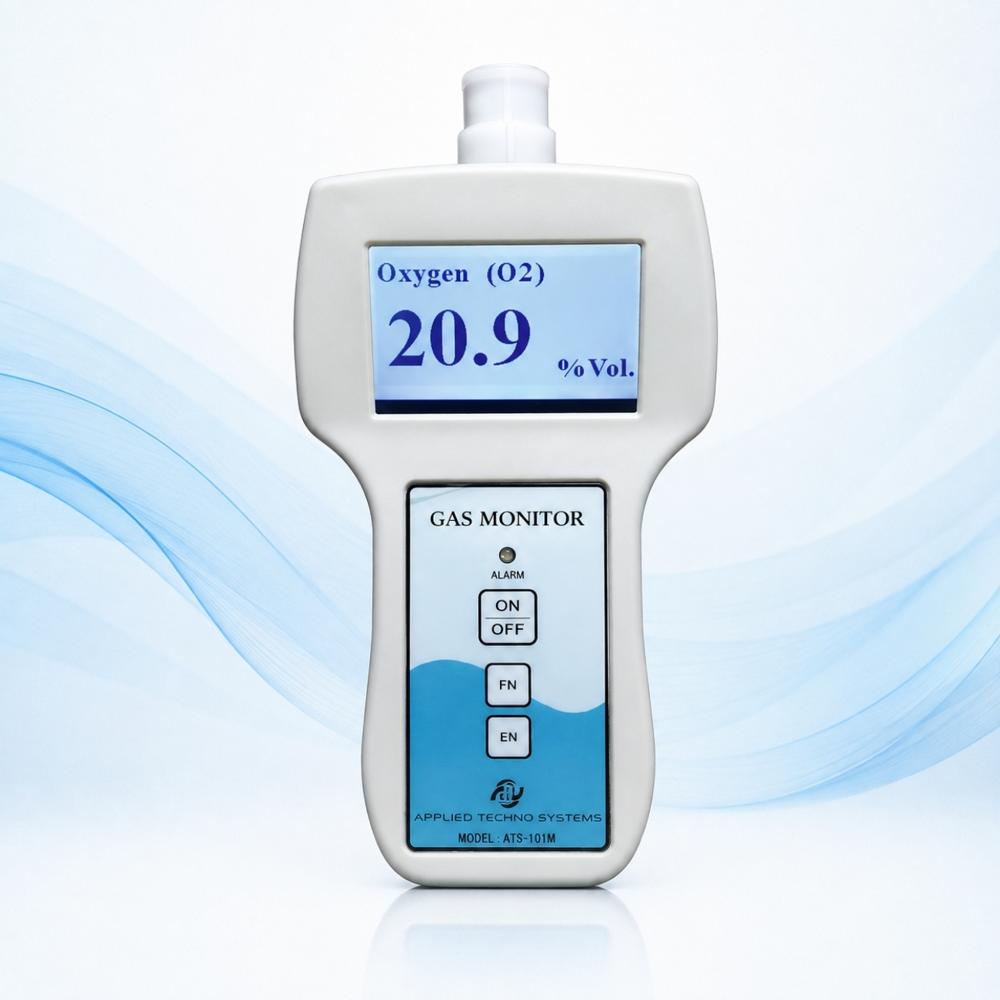
Handheld Single Gas Monitor
Price 42000.0 INR / Piece
Minimum Order Quantity : 1 Piece
Application : Detection and measurement of single gas concentration (e.g., Oxygen)
Control Mode : Manual
Usage : Personal Safety / Industrial Gas Monitoring
Display Type : Large Digital LCD Display


- 104, Delta Industrial Estate, Building No 1, Gokhivare, Sativali Road, Vasai East, Dist-Palghar,Vasai - 401208, Maharashtra, India
- Phone : 08045814504
GST : 27AAVCA1127G1ZN

- Mr M L YADAV (Marketing Manager)
- Mobile : 08045814504
- Send Inquiry
 Send Inquiry

|


- Dew Point Meters
- Gas Analysers
- Portable Gas Detector
- Moisture And Dew Point Analyzer
- Dust/Opacity Monitor
- Gas Monitoring Systems
- Gas Leak Detectors
- Gas Transmitters
- VOC Leak Detector
- Air Quality Monitoring System
- Online Continuous Emission Monitoring System-OCEMS
- Dew Point Monitors
- Gas Detector
- Opacity Monitor
- Portable Flue Gas Analyzer
- Online SOX & NOX Gas Analyzer
- Methane Gas Leak Detector
- Hydrogen Purity Analyzer
- Gas Purity Analyzer
- Effluent Monitoring Systems
- Producer Gas Analyzer
- Gas Detector Calibration Service
- Portable Gas Monitors
- Gas Sensor Transmitter

Developed and Managed by Infocom Network Private Limited.


 English
 Spanish
 French
 German
 Italian
 Chinese (Simplified)
 Japanese
 Korean
 Arabic
 Portuguese
