 Chat with us

- Dew Point Meters
- Gas Analysers
- Portable Gas Detector
- Moisture And Dew Point Analyzer
- Dust/Opacity Monitor
- Gas Monitoring Systems
- Gas Leak Detectors
- Gas Transmitters
- VOC Leak Detector
- Air Quality Monitoring System
- Online Continuous Emission Monitoring System-OCEMS
- Dew Point Monitors
- Gas Detector
- Opacity Monitor
- Portable Flue Gas Analyzer
- Online SOX & NOX Gas Analyzer
- Methane Gas Leak Detector
- Hydrogen Purity Analyzer
- Gas Purity Analyzer
- Effluent Monitoring Systems
- Producer Gas Analyzer
- Gas Detector Calibration Service
- Portable Gas Monitors
- Gas Sensor Transmitter

 Send Inquiry
Portable Oxygen Monitoring Instrument
Price 355500.0 INR/ Piece
Portable Oxygen Monitoring Instrument Specification
- Response Time
- <10 seconds
- Accuracy
- 2% of reading
- Resolution
- 1 ppm
- Operating Voltage
- 230V AC
- Power Supply
- 230V AC, 50/60Hz
- Frequency
- 50/60 Hz
- Port Size
- 1/4 inch
- Test Range
- 1 ppm to 1000 ppm Oxygen
- Features
- Portable, Digital, Fast Response, Microprocessor Controlled
- Equipment Type
- Portable Oxygen Monitoring Instrument
- Gas Pressure
- 0.2 to 1 bar
- Mounting Type
- Portable
- Display Type
- Digital LCD
- Measuring Range
- 1 ppm to 1000 ppm
- Application
- Oxygen monitoring in industrial gases
- Humidity
- 0-95% RH (non-condensing)
- Interface Type
- Output signal 4-20mA, RS232
- Automation Grade
- Automatic
- Temperature
- 0C to 50C
- Usage
- Trace oxygen detection
- Machine Weight
- Approx. 2.5 kg
- Control Mode
- Microprocessor Based
- Calibration
- User Calibratable
- Sensor Type
- Electrochemical Oxygen Sensor
- Operating Principle
- Trace Oxygen Measurement
- Alarm Output
- Programmable Alarm
- Model Number
- ATS-208A
- Data Logging
- Optional
- Enclosure Material
- Stainless Steel Casing
About Portable Oxygen Monitoring Instrument
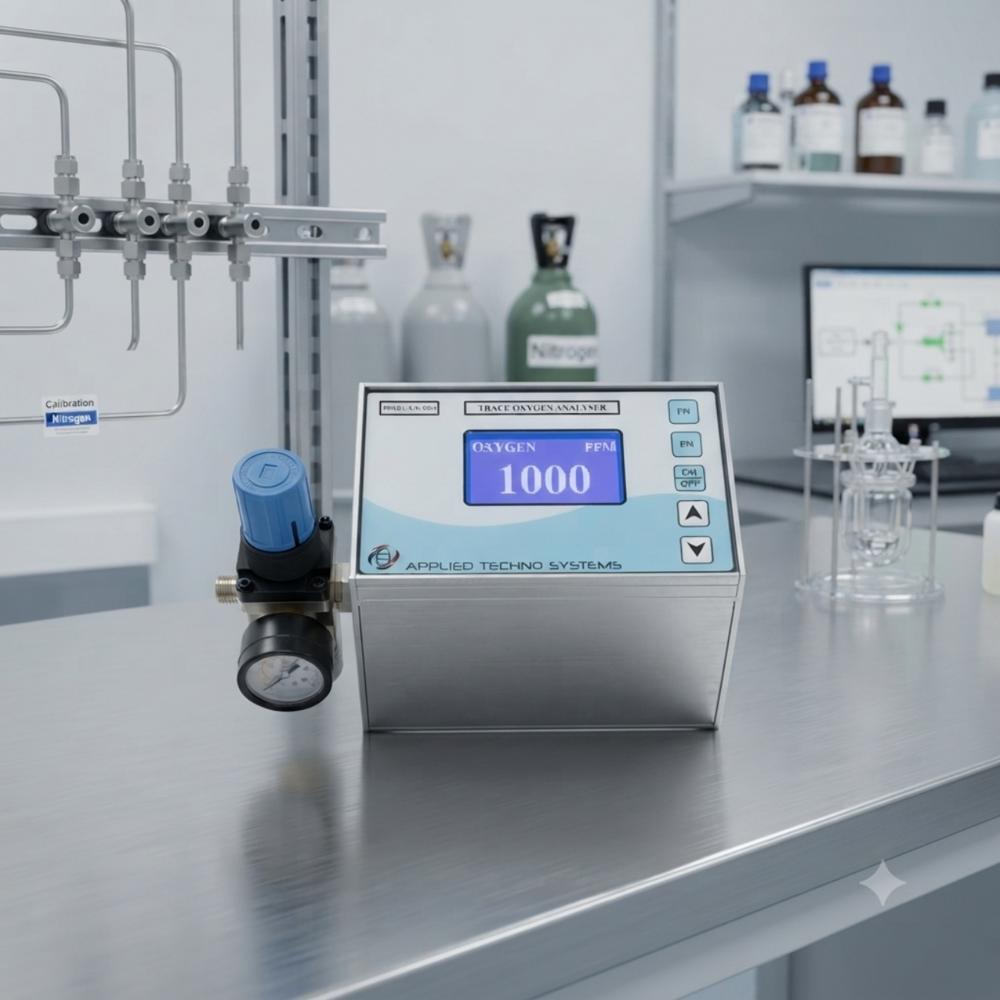
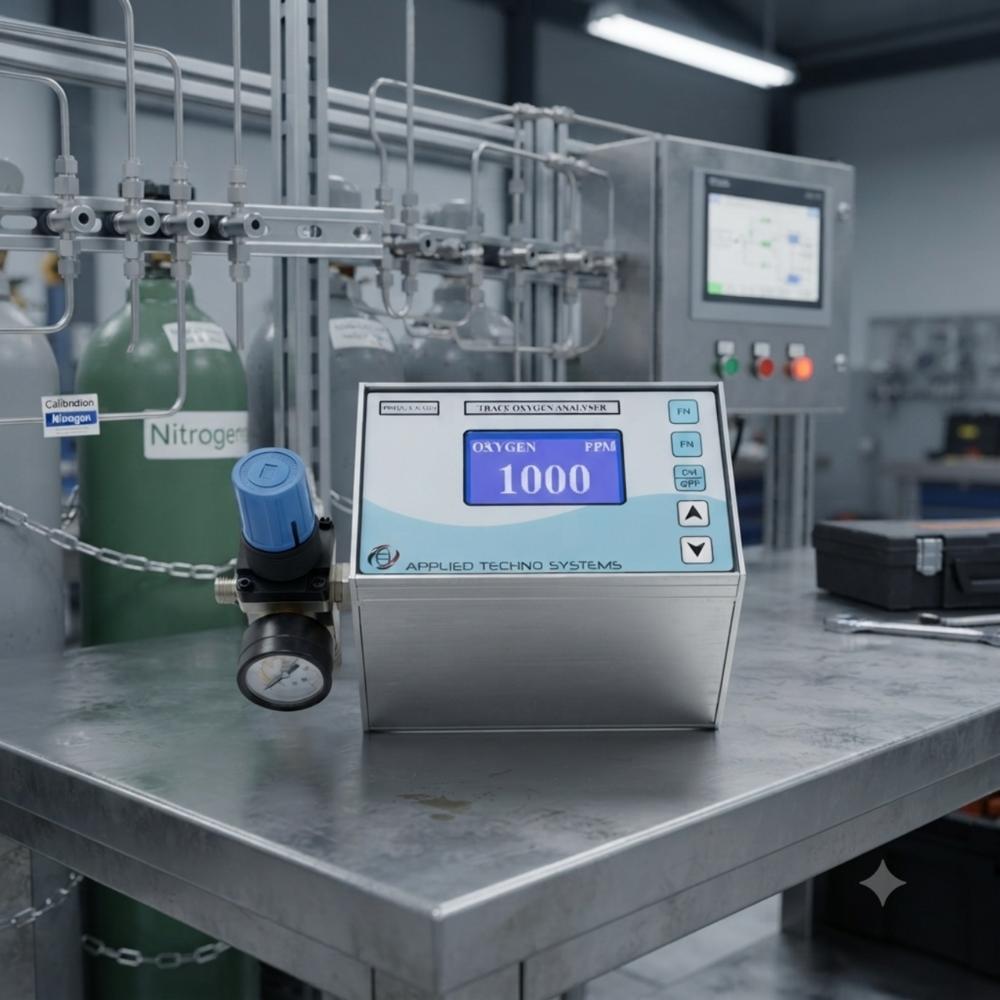
The Portable Trace Oxygen Analyser is a compact and reliable gas analysis instrument designed for accurate measurement of very low concentrations of Oxygen (O) in industrial, process, and specialty gas applications. It is suitable for trace oxygen measurement where precise monitoring of oxygen levels is important for gas purity control, process monitoring, quality assurance, inerting, purging, leak detection, and operational safety. Depending on the configuration, the analyser can provide measurement across trace oxygen ranges from PPM levels to higher oxygen concentrations, making it suitable for a wide range of gas analysis requirements. Its portable design enables convenient on-site testing, routine inspection, commissioning, maintenance, troubleshooting, and verification at different sampling points. The Portable Trace Oxygen Analyser is suitable for applications involving Nitrogen (N), Hydrogen (H), Argon (Ar), Helium (He), industrial gases, specialty gases, gas cylinders, gas pipelines, laboratories, chemical processing, petrochemical plants, power generation, metal processing, and other industries requiring accurate trace oxygen monitoring. It provides a practical solution for field-based oxygen purity and low-level oxygen concentration measurement.Advanced Trace Oxygen Measurement
The ATS-208A utilizes a high-quality electrochemical sensor and microprocessor-based control for accurate trace oxygen monitoring in industrial gases. Its advanced sensing technology ensures rapid and reliable measurement, enabling users to detect oxygen concentrations from 1 ppm to 1000 ppm with excellent precision. Ideal for applications requiring stringent quality control and safety measures.
User-Friendly Design and Operation
Portability is at the core of the ATS-208A. It comes in a robust stainless steel enclosure and weighs approximately 2.5 kg, making transportation and handling straightforward. The digital LCD display, programmable alarms, and user calibratable setup make it practical for both routine checks and emergency responses. Automation and fast response time streamline workflow and enhance productivity.
Comprehensive Data Interface and Connectivity
The instrument offers multiple connectivity options, including 4-20mA output and RS232 interface, which facilitate integration with process control systems. Optional data logging capability supports detailed record keeping and traceability. Operating with 230V AC power at 50/60 Hz, it fits seamlessly into various industrial environments, providing consistent monitoring and peace of mind.
FAQ's of Portable Oxygen Monitoring Instrument:
Q: How does the ATS-208A Portable Oxygen Monitoring Instrument measure trace oxygen levels?
A: The ATS-208A uses an electrochemical oxygen sensor, managed by a microprocessor, to accurately detect oxygen concentrations in industrial gases. It analyzes samples within a test range of 1 ppm to 1000 ppm, providing results on a digital LCD display.Q: What benefits does the programmable alarm output provide?
A: The programmable alarm allows users to set customizable oxygen thresholds. When the levels exceed these limits, the instrument alerts personnel, enhancing safety and preventing potential hazards associated with abnormal oxygen content in industrial environments.Q: When should calibration be performed on the ATS-208A instrument?
A: Calibration can be conducted by the user whenever system accuracy needs to be verified or when process requirements change. Regular calibration-especially before critical measurements-ensures the sensor maintains optimal performance and reliability.Q: Where can the ATS-208A be used for oxygen monitoring?
A: This portable instrument is suitable for various industrial settings, including gas production facilities, laboratories, and storage or processing centers. Its design allows use in environments with humidity from 0 to 95% RH and temperatures between 0C and 50C.Q: What is the process for connecting the ATS-208A to external systems?
A: The ATS-208A features 1/4 inch port size for gas connections and offers output through a 4-20mA signal and RS232 interface. These options enable easy integration with process control systems, data loggers, or monitoring software for seamless reporting and control.Q: How is the instrument operated and maintained?
A: Operation involves powering the unit with 230V AC, connecting the gas sample, and configuring settings via the digital display. Maintenance focuses on sensor calibration and periodic inspection, supported by the instrument's user-friendly design and automatic operation features.Q: What advantage does the portable mounting type offer?
A: The portable mounting enables convenient relocation and deployment across different workstations or process lines. This flexibility improves efficiency by allowing immediate accessibility to oxygen monitoring whenever and wherever needed.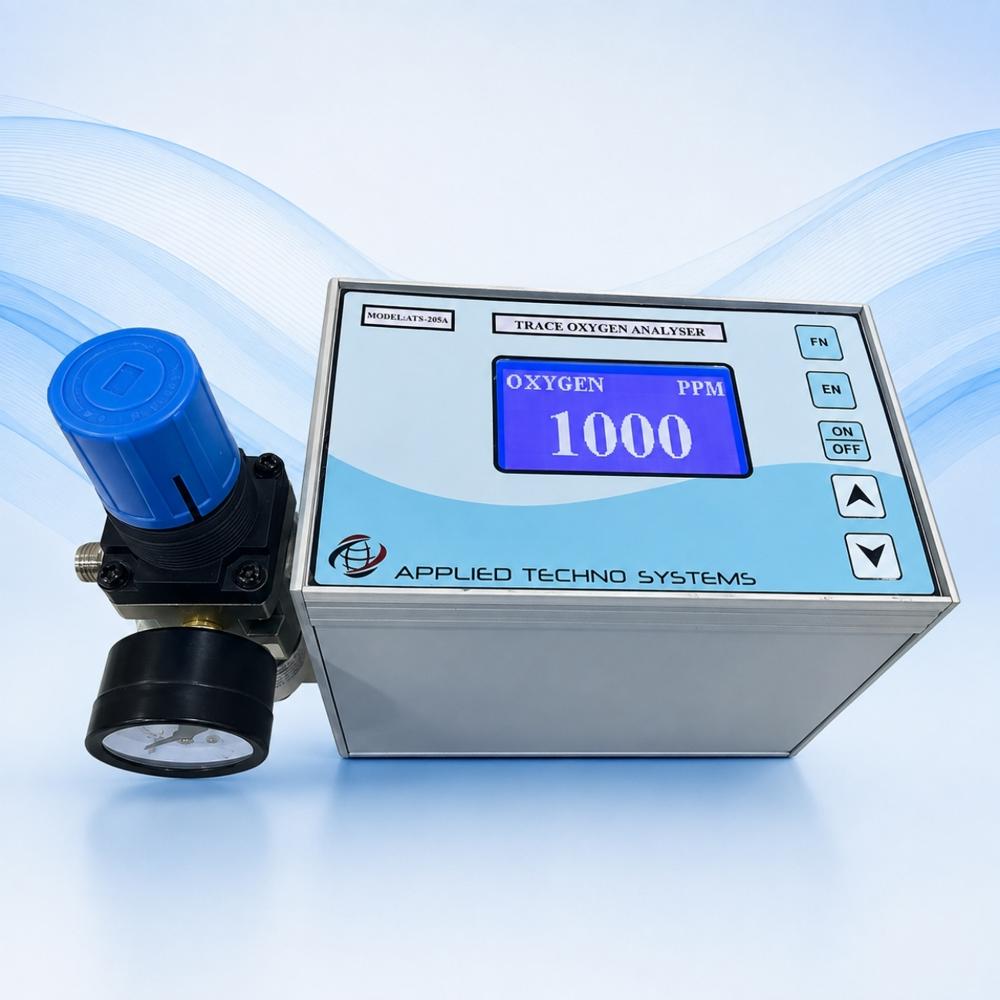

Price:
- 50
- 100
- 200
- 250
- 500
- 1000+

More Products in Gas Analysers Category
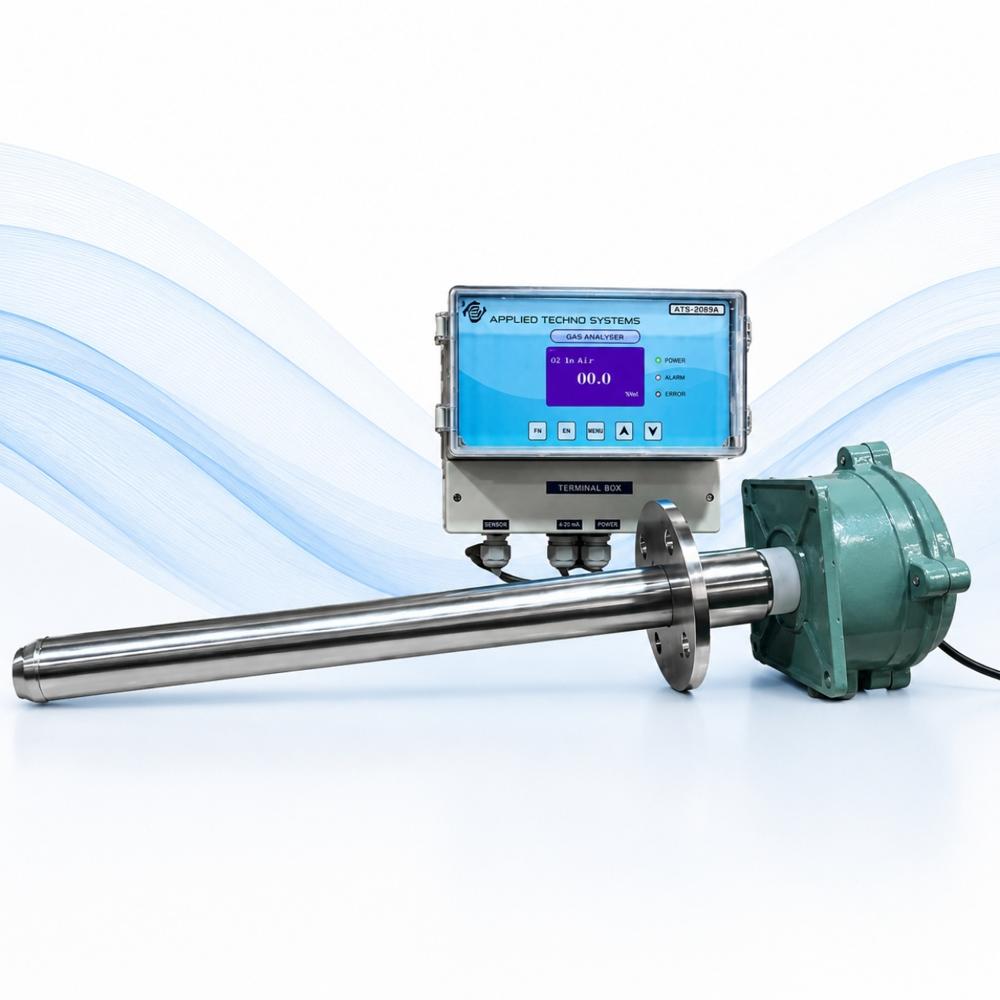
Continuous Oxygen Analyzer
Price 330500.0 INR / Piece
Minimum Order Quantity : 1 Piece
Usage : Industrial Oxygen Monitoring
Power Supply : 230V AC, 50Hz
Machine Weight : Approx. 15 kg
Display Type : Large LCD/LED Digital Display
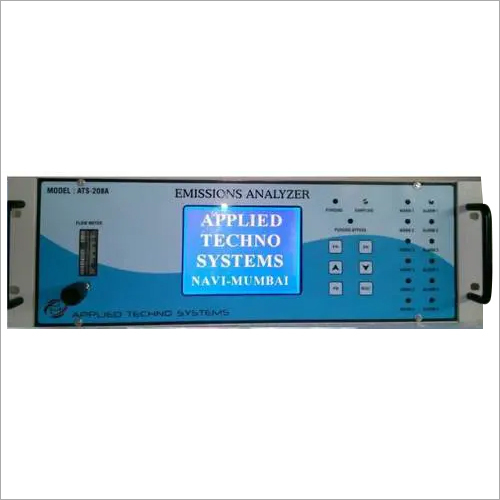
Online Gas Analyzer
Price 185000.0 INR / Set
Minimum Order Quantity : 1 Set
Usage : Gas Analysis
Power Supply : 230
Machine Weight : 2.5 Kilograms (kg)
Display Type : Graphic
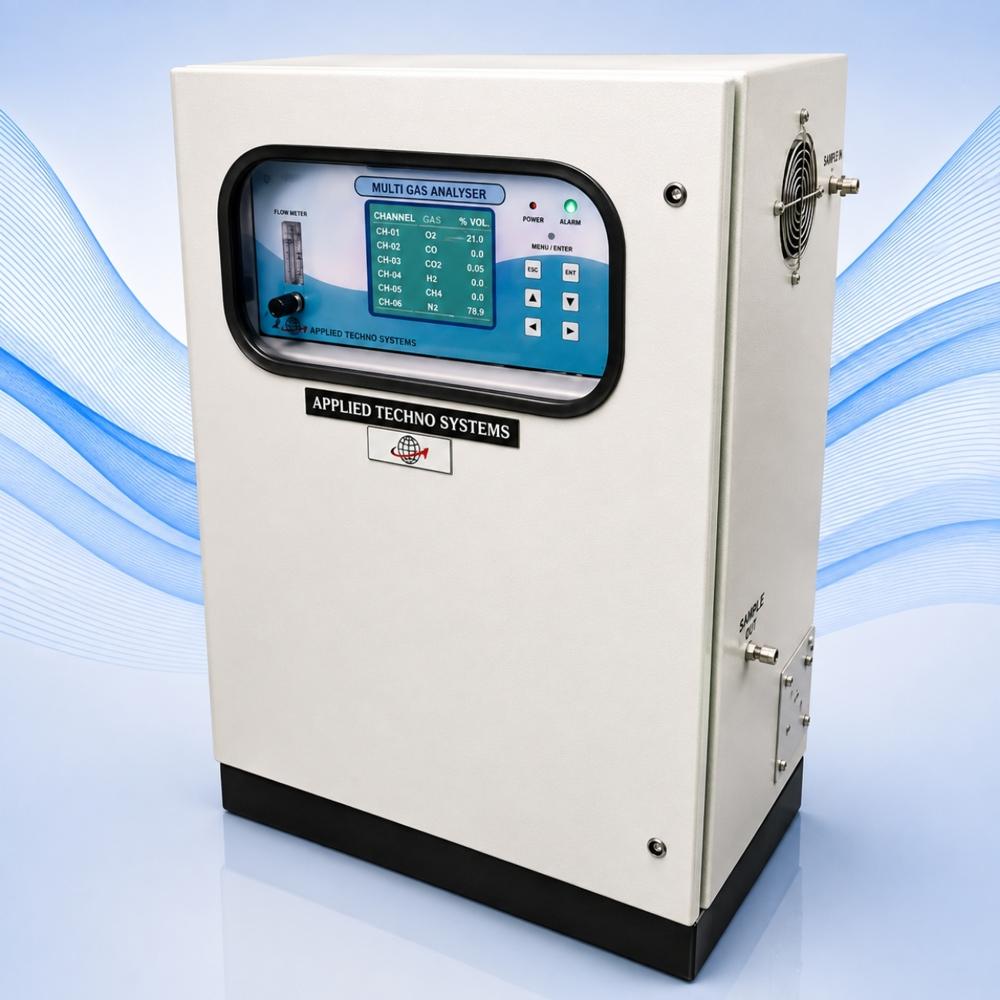
Online Producer Gas Analyzer
Price 1075500.0 INR / Piece
Minimum Order Quantity : 1 Piece
Usage : Industrial Gas Analysis
Power Supply : 230V AC, 50 Hz
Machine Weight : 45 kg
Display Type : Digital LCD Display
Producer Gas Analyzer
Price 478500.0 INR / Set
Minimum Order Quantity : 1 Set
Usage : Industrial
Power Supply : Electric
Machine Weight : 3 Kilograms (kg)
Display Type : Graphic


- 104, Delta Industrial Estate, Building No 1, Gokhivare, Sativali Road, Vasai East, Dist-Palghar,Vasai - 401208, Maharashtra, India
- Phone : 08045814504
GST : 27AAVCA1127G1ZN

- Mr M L YADAV (Marketing Manager)
- Mobile : 08045814504
- Send Inquiry
 Send Inquiry

|


- Dew Point Meters
- Gas Analysers
- Portable Gas Detector
- Moisture And Dew Point Analyzer
- Dust/Opacity Monitor
- Gas Monitoring Systems
- Gas Leak Detectors
- Gas Transmitters
- VOC Leak Detector
- Air Quality Monitoring System
- Online Continuous Emission Monitoring System-OCEMS
- Dew Point Monitors
- Gas Detector
- Opacity Monitor
- Portable Flue Gas Analyzer
- Online SOX & NOX Gas Analyzer
- Methane Gas Leak Detector
- Hydrogen Purity Analyzer
- Gas Purity Analyzer
- Effluent Monitoring Systems
- Producer Gas Analyzer
- Gas Detector Calibration Service
- Portable Gas Monitors
- Gas Sensor Transmitter

Developed and Managed by Infocom Network Private Limited.


 English
 Spanish
 French
 German
 Italian
 Chinese (Simplified)
 Japanese
 Korean
 Arabic
 Portuguese
