 Chat with us

- Dew Point Meters
- Gas Analysers
- Portable Gas Detector
- Moisture And Dew Point Analyzer
- Dust/Opacity Monitor
- Gas Monitoring Systems
- Gas Leak Detectors
- Gas Transmitters
- VOC Leak Detector
- Air Quality Monitoring System
- Online Continuous Emission Monitoring System-OCEMS
- Dew Point Monitors
- Gas Detector
- Opacity Monitor
- Portable Flue Gas Analyzer
- Online SOX & NOX Gas Analyzer
- Methane Gas Leak Detector
- Hydrogen Purity Analyzer
- Gas Purity Analyzer
- Effluent Monitoring Systems
- Producer Gas Analyzer
- Gas Detector Calibration Service
- Portable Gas Monitors
- Gas Sensor Transmitter

 Send Inquiry
Portable Producer Gas Monitoring Equipment
Portable Producer Gas Monitoring Equipment Specification
- Gas Pressure
- 1 bar
- Humidity
- 0-90% RH (non-condensing)
- Resolution
- 0.1% Vol
- Temperature
- Operating: 0C to 50C
- Application
- Producer gas composition analysis
- Display Type
- LCD digital display
- Frequency
- 50 Hz
- Port Size
- Standard sampling inlet port
- Mounting Type
- Portable (Bench or Carry)
- Measuring Range
- O2: 0-25% Vol, N2: 0-100% Vol, CO2: 0-100% Vol, CH4: 0-100% Vol, H2: 0-100% Vol
- Response Time
- < 30 seconds
- Number of Specimens
- Single sample inlet
- Automation Grade
- Semi-Automatic
- Test Range
- Multi-gas detection (see Measuring Range)
- Power Supply
- 230V AC, 50 Hz
- Accuracy
- 2% of reading
- Operating Voltage
- 230V AC
- Interface Type
- RS232/USB for data transfer
- Features
- Portable, real-time monitoring, integrated printer, LCD display, multi-gas analysis
- Usage
- Industrial, laboratory, field
- Capacity
- Continuous measurement
- Machine Weight
- Approx. 4.5 kg
- Control Mode
- Microprocessor-based
- Model Name
- ATS-206A
- Alarm Function
- Visual and audible alarms
- Start-up Time
- < 2 min
- Sensor Type
- Electrochemical & Infrared
- Data Logging
- Onboard memory & printout
- Enclosure Type
- Stainless steel with handle
- Dimensions
- 350mm x 180mm x 220mm (approx)
- Calibration
- Automatic/Manual
- Display Language
- English
- Sampling Method
- Direct sample inlet
- Equipment Type
- Portable Gas Monitoring Equipment
- Power Backup
- Optional battery pack
- Protection Class
- IP55
- Power Consumption
- < 30W
- Printer Type
- Integrated thermal printer
- Service Support
- Provided by manufacturer
- Maintenance
- Low maintenance design
About Portable Producer Gas Monitoring Equipment
The Portable Producer Gas Analyser is a reliable gas analysis instrument designed for accurate measurement and monitoring of the composition of producer gas, syngas, biomass gas, and other process gases. Depending on the configuration, the analyser can measure key gas components such as Carbon Monoxide (CO), Carbon Dioxide (CO), Methane (CH), Hydrogen (H), Oxygen (O), and Nitrogen (N), providing valuable information for gas quality assessment and process monitoring. Its portable design enables convenient on-site analysis, routine testing, troubleshooting, and performance monitoring at different sampling points. The analyser is suitable for gasification plants, biomass gasification, producer gas systems, syngas generation, waste-to-energy applications, industrial furnaces, thermal processes, and other process gas applications. It can be used for producer gas analysis, syngas composition monitoring, gas quality measurement, gasifier performance evaluation, combustion optimization, process control, troubleshooting, and efficiency monitoring. The Portable Producer Gas Analyser provides a practical solution for field-based analysis of combustible and process gases across a wide range of industrial and energy applications.Precision Multi-Gas Analysis
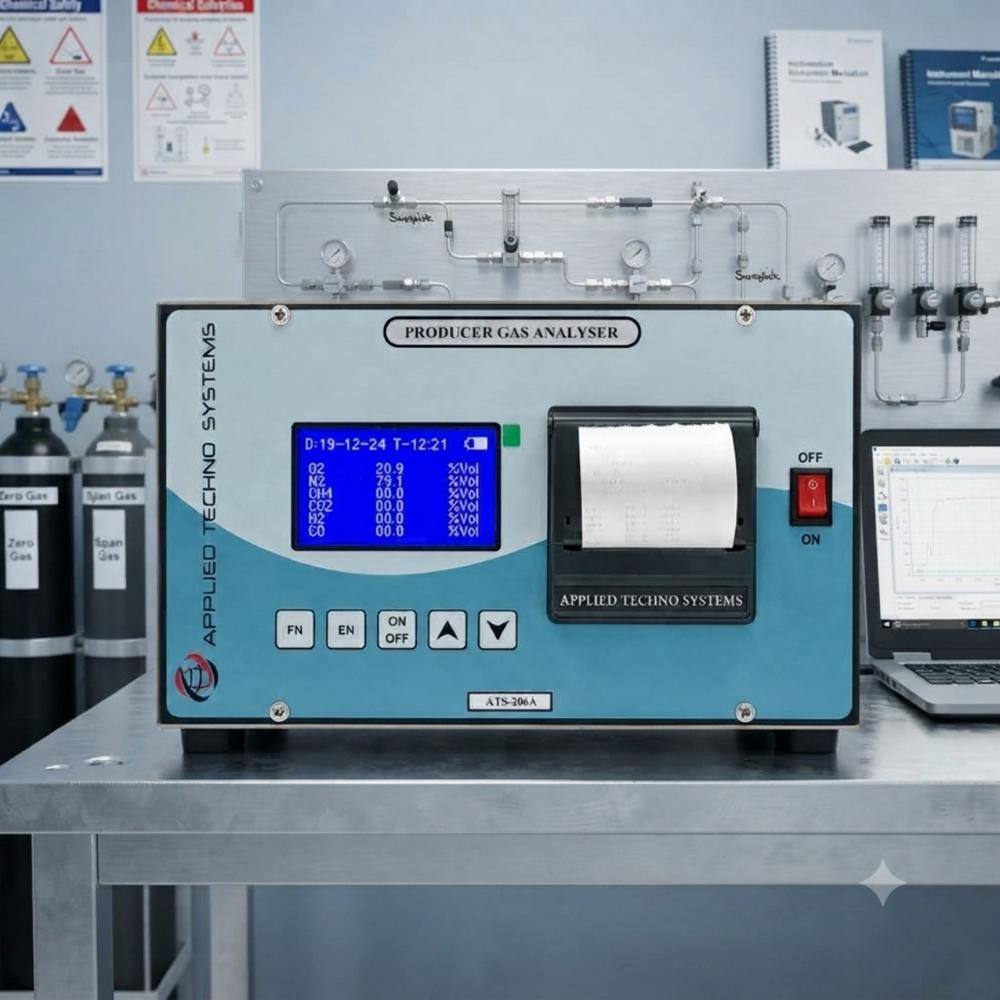
The ATS-206A excels in measuring various gas components-O2, N2, CO2, CH4, and H2-within a broad range, ensuring reliable data acquisition for producer gas composition studies. Its advanced sensors and microprocessor-based control deliver high accuracy and rapid response times suited for both continuous monitoring and spot checks.
Effortless Portability and Durability
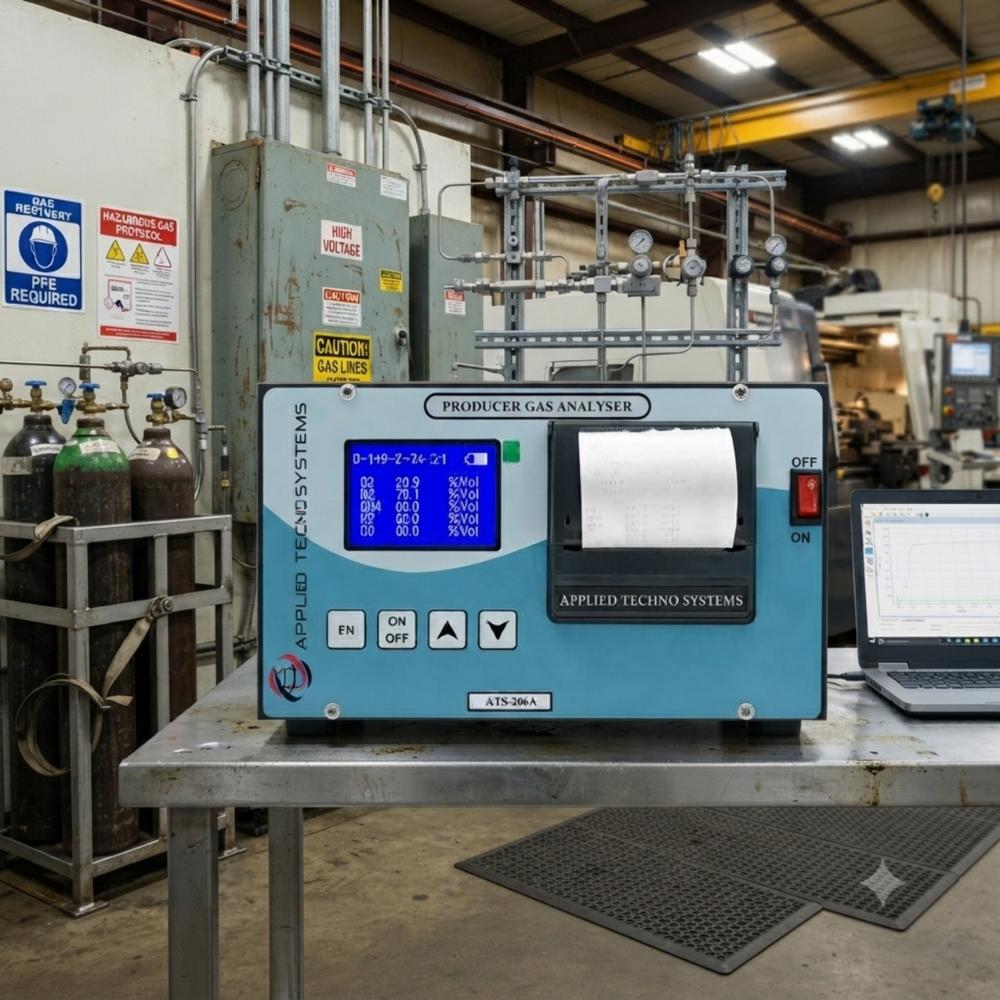
Constructed with a stainless steel enclosure and ergonomic handle, the ATS-206A is purpose-built for portability. Its compact footprint and rugged design offer ease of transport and resilience, making it suitable for deployment in industrial plants, laboratories, and challenging field locations.
Comprehensive Data Management
The integrated memory and thermal printer allow for instant data logging and printouts onsite. Data can also be exported via RS232/USB interfaces for further analysis or record keeping, supporting thorough documentation and compliance processes in gaseous environment assessments.
FAQ's of Portable Producer Gas Monitoring Equipment:
Q: How is calibration performed on the ATS-206A gas monitor?
A: The ATS-206A supports both automatic and manual calibration, enabling users to maintain measurement accuracy conveniently. Calibration can be initiated through the microprocessor-based control menu, following the on-screen prompts for a smooth process.Q: What is the primary benefit of using ATS-206A for producer gas analysis?
A: Its primary benefit is rapid, real-time analysis of multiple gases with high accuracy, facilitating immediate decision-making in industrial, laboratory, and field settings. The device's portable design and robust build also make it highly adaptable for diverse monitoring requirements.Q: Where can the ATS-206A be used effectively?
A: This equipment is suitable for a variety of environments such as industrial facilities, research laboratories, and onsite field locations. Its IP55 protection, stainless steel case, and temperature and humidity tolerances make it reliable in diverse conditions.Q: What is the process for collecting a gas sample with the ATS-206A?
A: Gas sampling is straightforward with the direct sample inlet method. Users simply connect the sample line to the inlet port, and the device automatically commences gas analysis, displaying results on the LCD within 30 seconds.Q: When should the onboard printer be utilized?
A: The integrated thermal printer should be used when instant documentation of results is required onsite. After completing a measurement, users can print data logs directly for immediate reference or compliance records.Q: How does the alarm function ensure safety during operation?
A: The ATS-206A features visual and audible alarms that promptly alert operators to abnormal gas readings, promoting immediate response to potentially hazardous situations and enhancing onsite safety.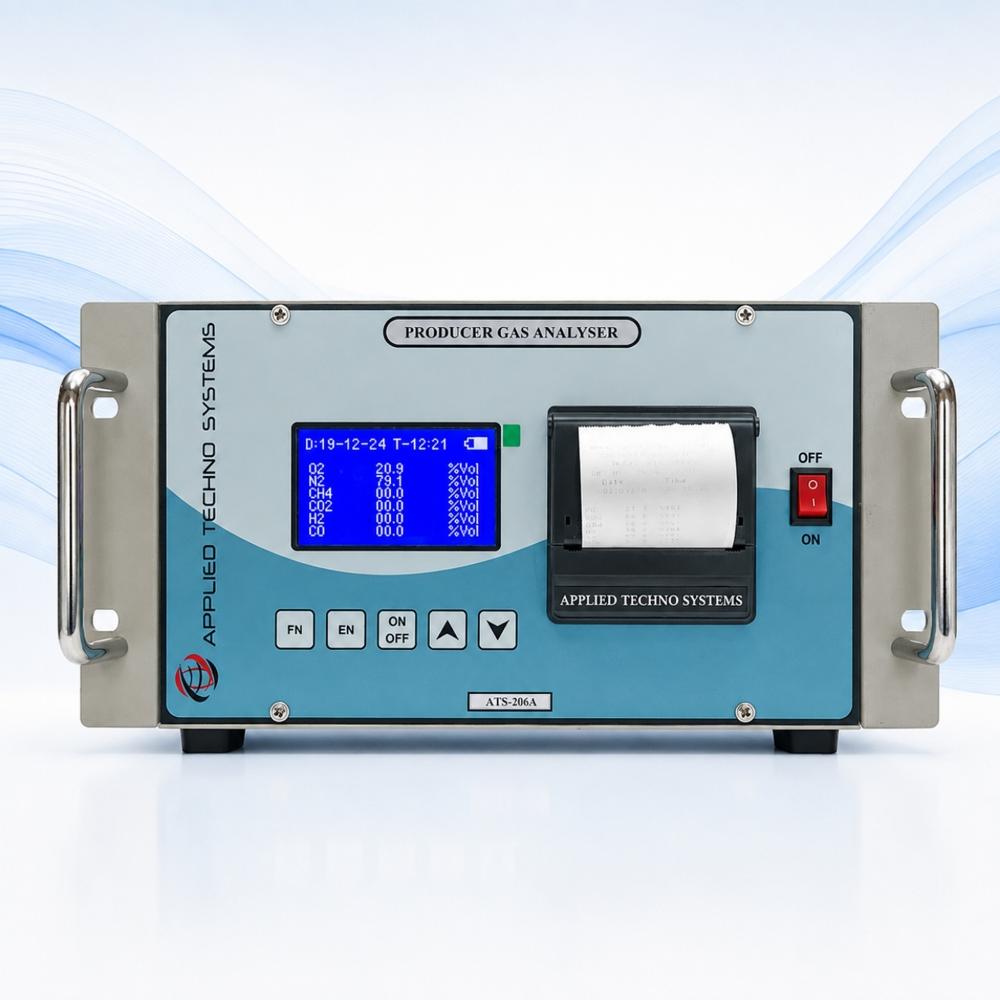

Price:
- 50
- 100
- 200
- 250
- 500
- 1000+

More Products in Producer Gas Analyzer Category
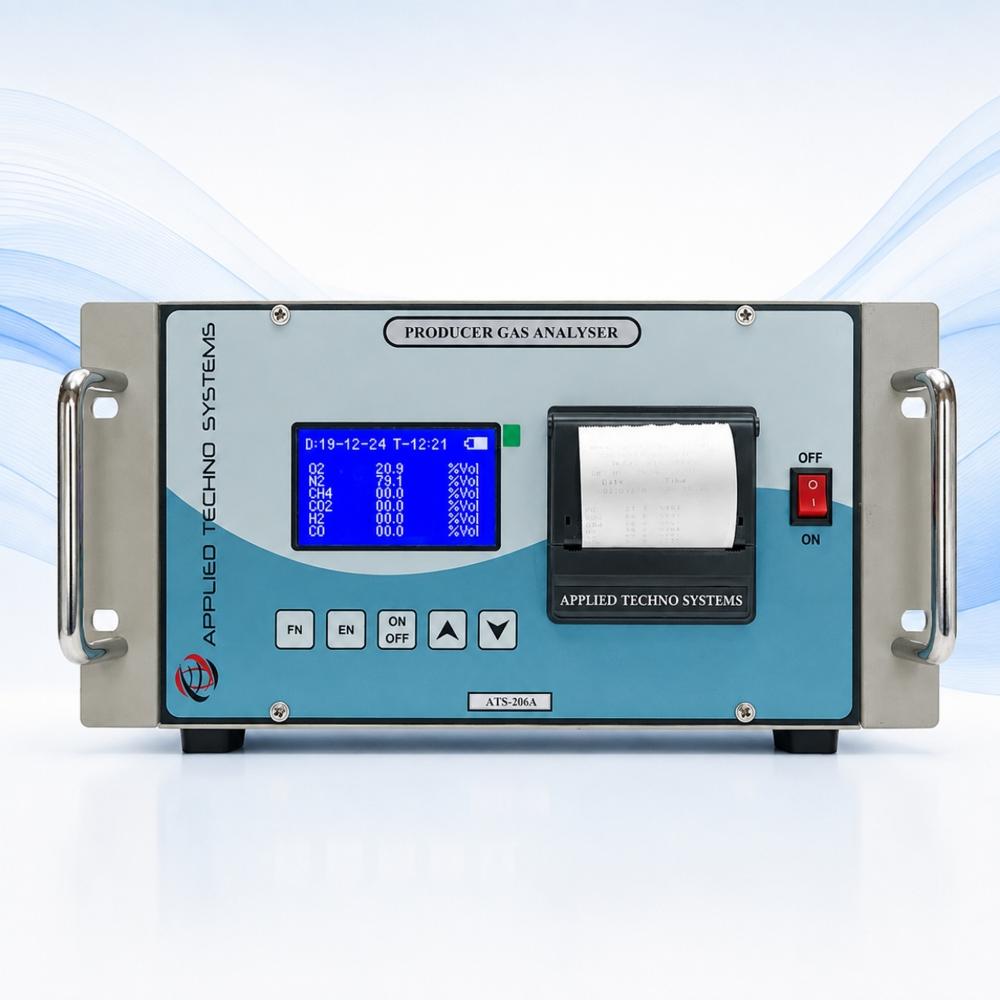
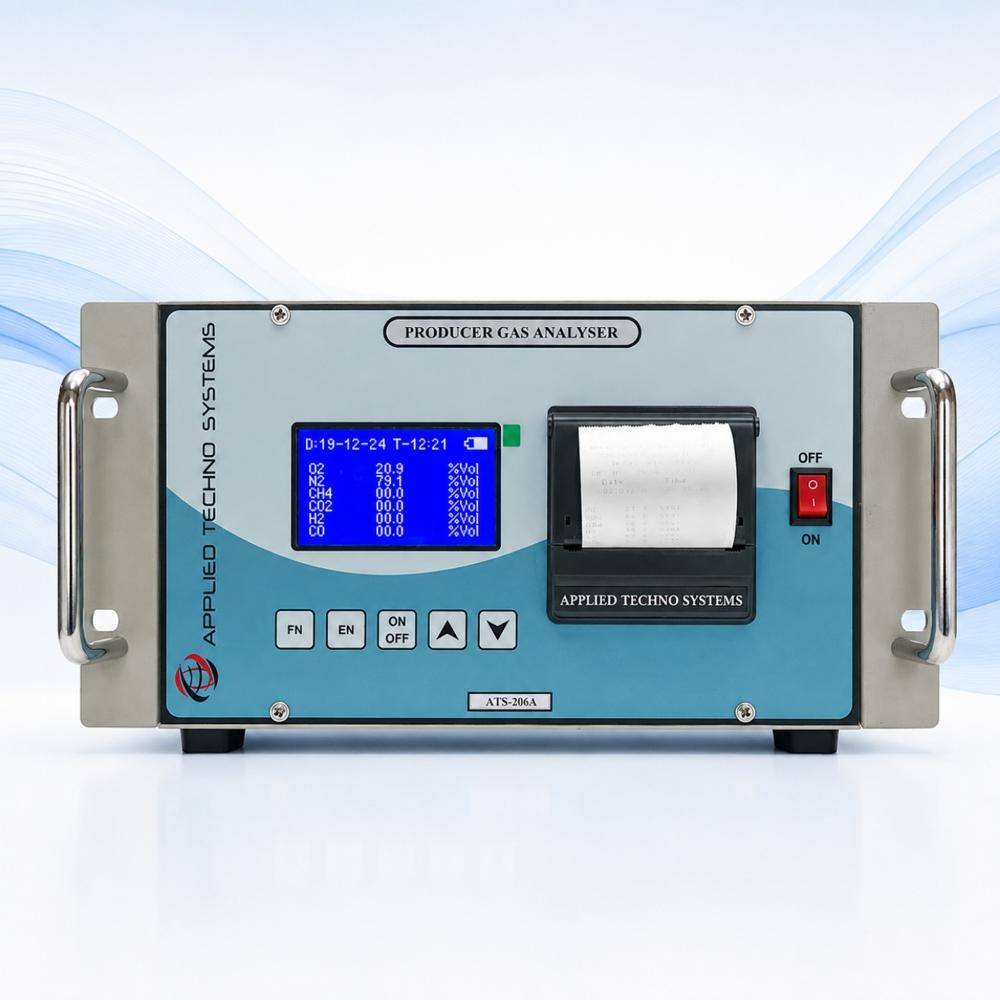
Portable Producer Gas Quality Analyzer
Price 955500.0 INR / Piece
Minimum Order Quantity : 1 Piece
Temperature : 050C (Operating temperature)
Resolution : 0.01% VOL
Equipment Type : Portable Producer Gas Quality Analyzer
Gas Pressure : 0.1 to 0.5 Bar
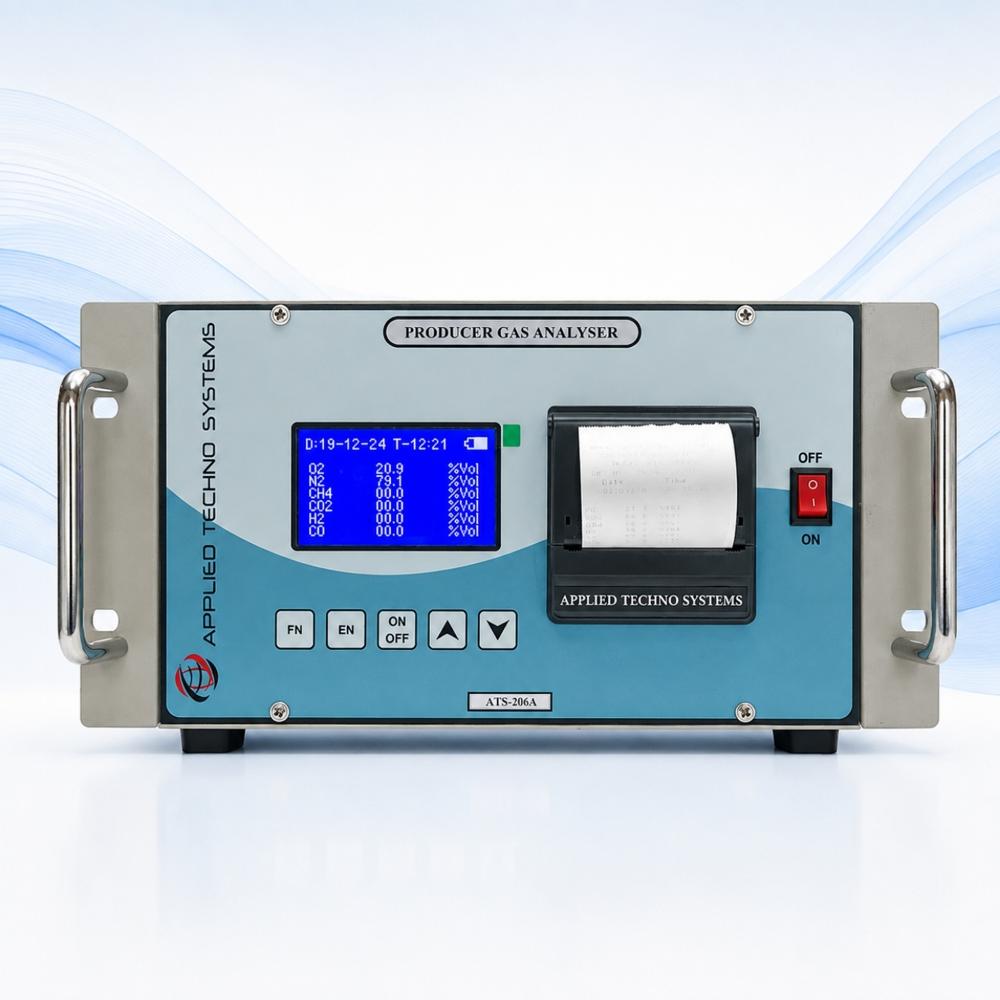
Portable Syngas Gas Analyser
Price 945500.0 INR / Piece
Minimum Order Quantity : 1 Piece
Temperature : Operating: 0C to 50C
Resolution : 0.01% Vol (depends on configuration)
Equipment Type : Portable Syngas Gas Analyser
Gas Pressure : Sampled at Atmospheric Pressure (0.8 bar to 1.2 bar)
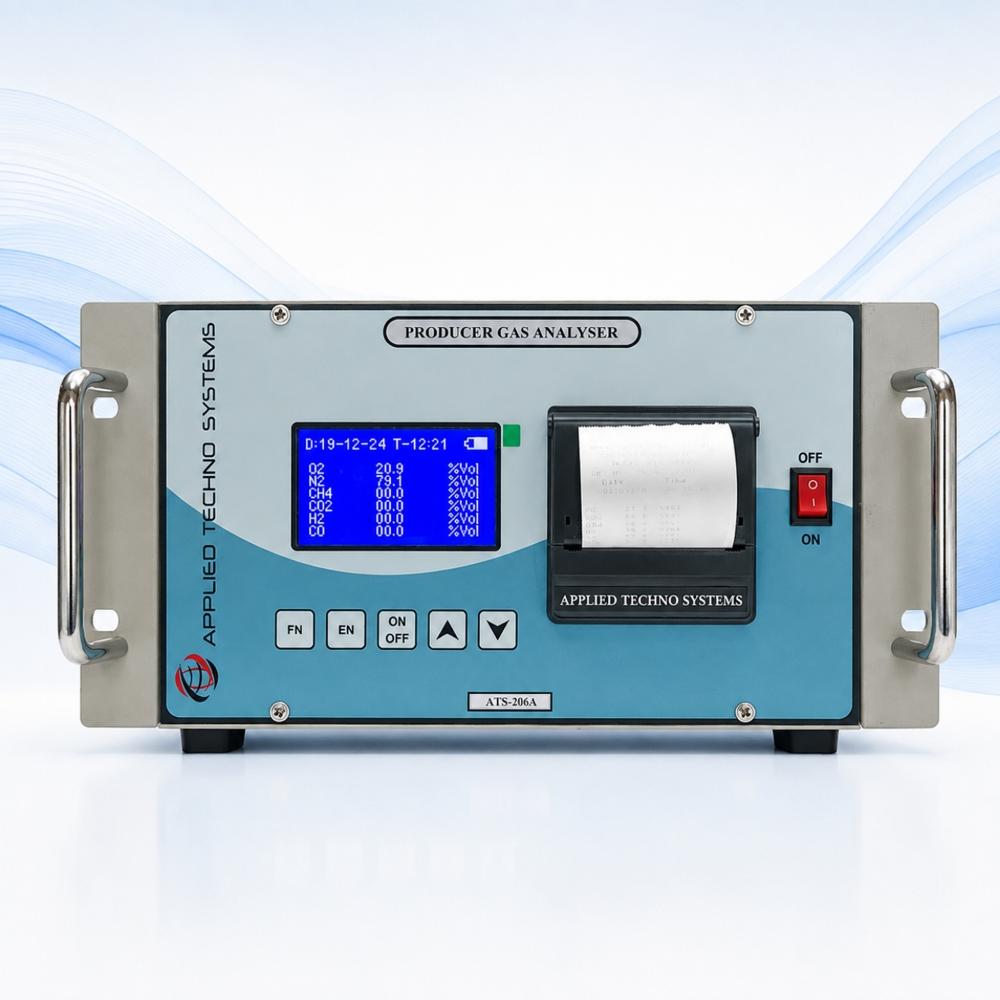
Producer Gas Quality Analyzer
Price 955500.0 INR / Unit
Minimum Order Quantity : 1 Unit
Temperature : 0C to 50C
Resolution : 0.01% vol
Equipment Type : Producer Gas Quality Analyzer
Gas Pressure : 0.2 1 bar
Portable Syngas Monitoring Instrument
Price 950500.0 INR / Piece
Minimum Order Quantity : 1 Piece
Temperature : 0C to 50C (Operating)
Resolution : 0.1% Vol
Equipment Type : Portable Syngas Monitoring Instrument
Gas Pressure : 0.050.5 bar


- 104, Delta Industrial Estate, Building No 1, Gokhivare, Sativali Road, Vasai East, Dist-Palghar,Vasai - 401208, Maharashtra, India
- Phone : 08045814504
GST : 27AAVCA1127G1ZN

- Mr M L YADAV (Marketing Manager)
- Mobile : 08045814504
- Send Inquiry
 Send Inquiry

|


- Dew Point Meters
- Gas Analysers
- Portable Gas Detector
- Moisture And Dew Point Analyzer
- Dust/Opacity Monitor
- Gas Monitoring Systems
- Gas Leak Detectors
- Gas Transmitters
- VOC Leak Detector
- Air Quality Monitoring System
- Online Continuous Emission Monitoring System-OCEMS
- Dew Point Monitors
- Gas Detector
- Opacity Monitor
- Portable Flue Gas Analyzer
- Online SOX & NOX Gas Analyzer
- Methane Gas Leak Detector
- Hydrogen Purity Analyzer
- Gas Purity Analyzer
- Effluent Monitoring Systems
- Producer Gas Analyzer
- Gas Detector Calibration Service
- Portable Gas Monitors
- Gas Sensor Transmitter

Developed and Managed by Infocom Network Private Limited.


 English
 Spanish
 French
 German
 Italian
 Chinese (Simplified)
 Japanese
 Korean
 Arabic
 Portuguese
