 Chat with us

- Dew Point Meters
- Gas Analysers
- Portable Gas Detector
- Moisture And Dew Point Analyzer
- Dust/Opacity Monitor
- Gas Monitoring Systems
- Gas Leak Detectors
- Gas Transmitters
- VOC Leak Detector
- Air Quality Monitoring System
- Online Continuous Emission Monitoring System-OCEMS
- Dew Point Monitors
- Gas Detector
- Opacity Monitor
- Portable Flue Gas Analyzer
- Online SOX & NOX Gas Analyzer
- Methane Gas Leak Detector
- Hydrogen Purity Analyzer
- Gas Purity Analyzer
- Effluent Monitoring Systems
- Producer Gas Analyzer
- Gas Detector Calibration Service
- Portable Gas Monitors
- Gas Sensor Transmitter

 Send Inquiry
Portable Tri Gas Analyzer
Price 450500.0 INR/ Piece
Portable Tri Gas Analyzer Specification
- Accuracy
- 1% of reading
- Measuring Range
- O2: 0-25%, CO2: 0-10%, CO: 0-1000 ppm
- Gas Pressure
- 0.5 to 6 bar
- Features
- Portable, digital display, fast response, multiple gas analysis
- Automation Grade
- Semi-automatic
- Temperature
- 0C to 50C
- Test Range
- See Measuring Range
- Display Type
- LCD Digital Display
- Port Size
- 1/4 inch NPT
- Mounting Type
- Bench/Desktop
- Frequency
- 50 Hz
- Resolution
- O2: 0.1%, CO2: 0.01%, CO: 1 ppm
- Power Supply
- 230V AC, 50Hz
- Interface Type
- RS232/RS485/USB
- Response Time
- <15 seconds
- Humidity
- 0-95% RH (non-condensing)
- Application
- Measurement and analysis of O2, CO2, and CO gases
- Max Height
- 160 mm
- Operating Voltage
- 230V AC
- Usage
- Gas composition analysis in labs, industry, and field
- Machine Weight
- 6.5 kg
- Control Mode
- Digital Control
- Calibration
- Automated/Manual
- Operating Principle
- Non-dispersive infrared for CO2, electrochemical for O2 and CO
- Sensor Type
- Electrochemical & Infrared sensors
- Sampling Method
- Manual/continuous sampling
- Data Logging
- Built-in memory, downloadable
- Protection Level
- IP54
- Sampling Flow Rate
- 0.2 to 2 LPM
- Alarm
- Visual and audible warning
- Enclosure Material
- Stainless Steel
- Dimensions
- 370 x 300 x 160 mm
- Equipment Type
- Portable Tri Gas Analyzer
About Portable Tri Gas Analyzer
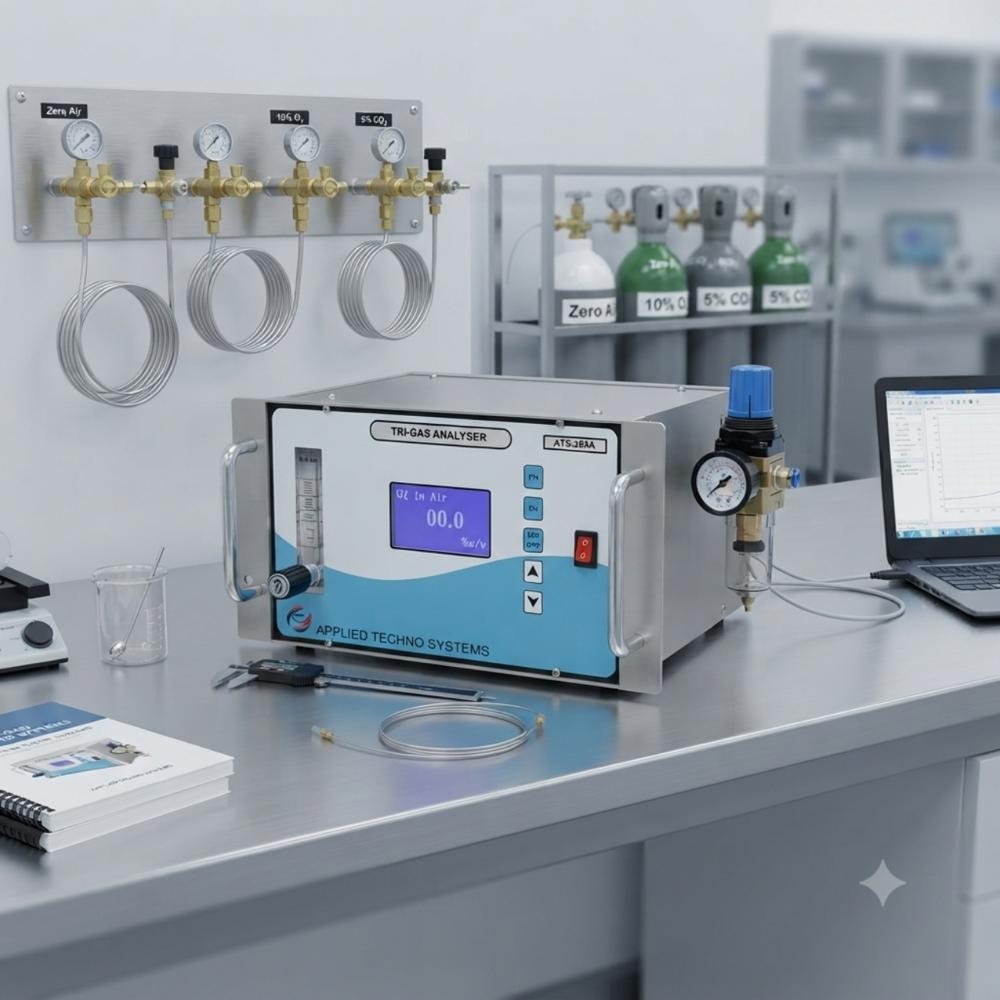
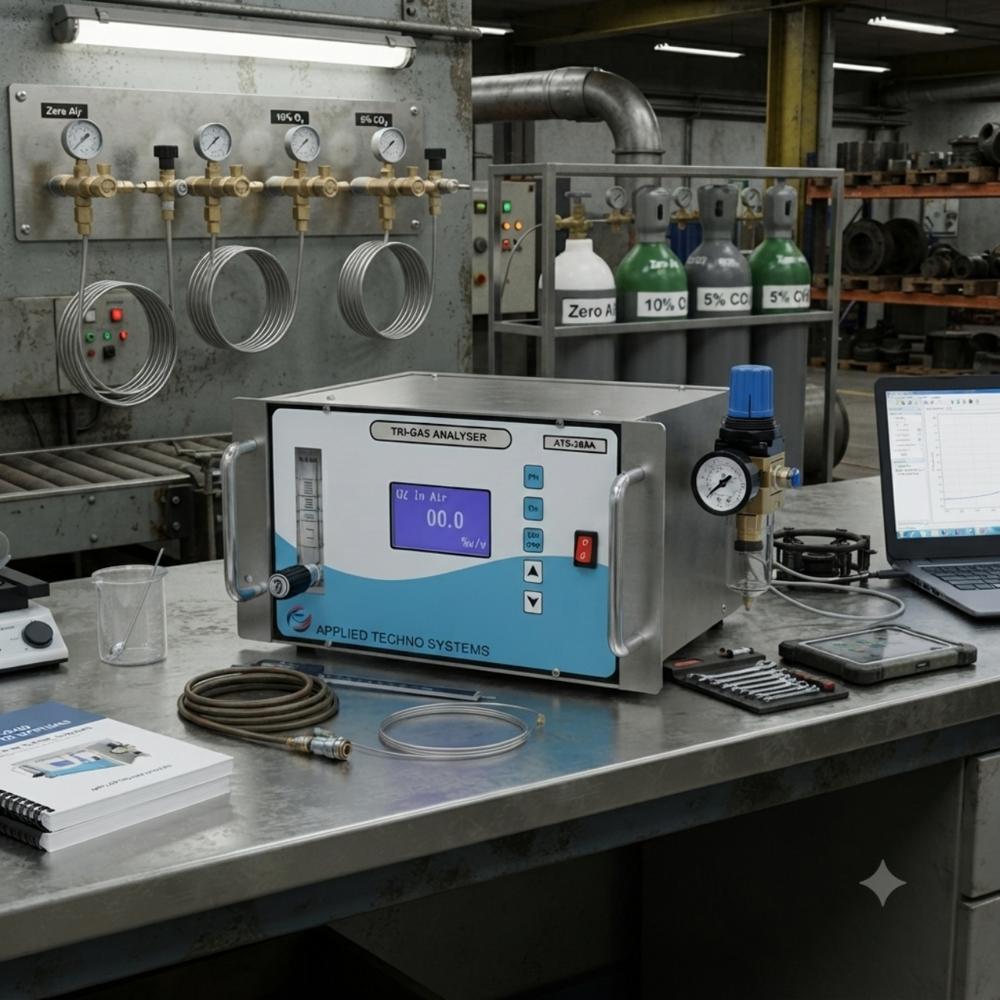
The Tri Gas Analyser is a portable and reliable gas analysis instrument designed for accurate measurement and monitoring of gas composition in power generation and other industrial applications. It is particularly suitable for measuring Hydrogen (H), Air, and Carbon Dioxide (CO) during generator filling, purging, shutdown, startup, and normal operating conditions, helping users monitor gas purity and ensure safe and efficient operation. The analyser uses a reliable gas measurement system with temperature compensation for stable and accurate readings and can be configured with suitable sampling components for convenient field analysis. Its portable design makes it suitable for generator gas purity testing, hydrogen cooling system monitoring, gas replacement and purging operations, maintenance, commissioning, troubleshooting, and routine inspection. The Tri Gas Analyser can be used in power plants, electrical power generation facilities, turbine-generator systems, industrial plants, hydrogen-cooled generators, and other applications requiring reliable measurement of hydrogen, air, and carbon dioxide gas composition. It provides a practical solution for on-site gas analysis, helping operators verify gas purity, monitor generator conditions, and support safe and efficient plant operation.Advanced Sensor Technology
This analyzer employs non-dispersive infrared and electrochemical sensors for comprehensive detection and analysis of oxygen, carbon dioxide, and carbon monoxide gases. Its technology ensures precise, stable measurements suitable for a wide range of environments and requirements.
User-Friendly Operation
With its digital control system, intuitive LCD display, and automated or manual calibration options, the Portable Tri Gas Analyzer is easy to operate even for users with minimal training. The bench-top design and lightweight structure allow for hassle-free transport and setup.
Robust Construction and Versatile Application
Constructed from stainless steel with an IP54 protection rating, the analyzer withstands challenging conditions, making it suitable for laboratories, industrial plants, or field operations. Its semi-automatic automation grade streamlines gas analysis processes efficiently.
FAQ's of Portable Tri Gas Analyzer:
Q: How does the Portable Tri Gas Analyzer measure O2, CO2, and CO gases?
A: The analyzer uses a non-dispersive infrared sensor for CO2 detection and electrochemical sensors for O2 and CO measurements, ensuring accurate and reliable results across its specified measuring ranges.Q: What are the main benefits of using this analyzer in industrial or laboratory environments?
A: Key benefits include fast response times (under 15 seconds), high accuracy (1% of reading), portability, durable stainless steel construction, visual and audible alarms, and straightforward digital controls, making it versatile and efficient for diverse applications.Q: When should the analyzer be calibrated, and how is calibration performed?
A: Calibration can be set to automated or performed manually, depending on usage frequency and application requirements. Regular calibration ensures sustained accuracy. The device offers onboard prompts and straightforward steps for efficient calibration.Q: Where can this equipment be utilized effectively?
A: This analyzer is suitable for gas composition analysis in laboratories, industrial sites, and fieldwork, offering dependable performance wherever O2, CO2, and CO measurements are required.Q: What data logging and connectivity options does the analyzer provide?
A: The instrument includes built-in memory for data logging, which can be downloaded for later analysis. It is equipped with RS232, RS485, and USB interfaces for seamless data transfer to external devices.Q: What is the sampling process for gas measurement?
A: The device supports both manual and continuous sampling methods, with a flow rate adjustable between 0.2 to 2 LPM. This versatility accommodates various monitoring protocols and user needs.Q: How does the alarm system alert users to gas hazards?
A: Visual and audible alarms are built in to provide immediate alerts when gas concentrations exceed preset thresholds, ensuring user safety during operation.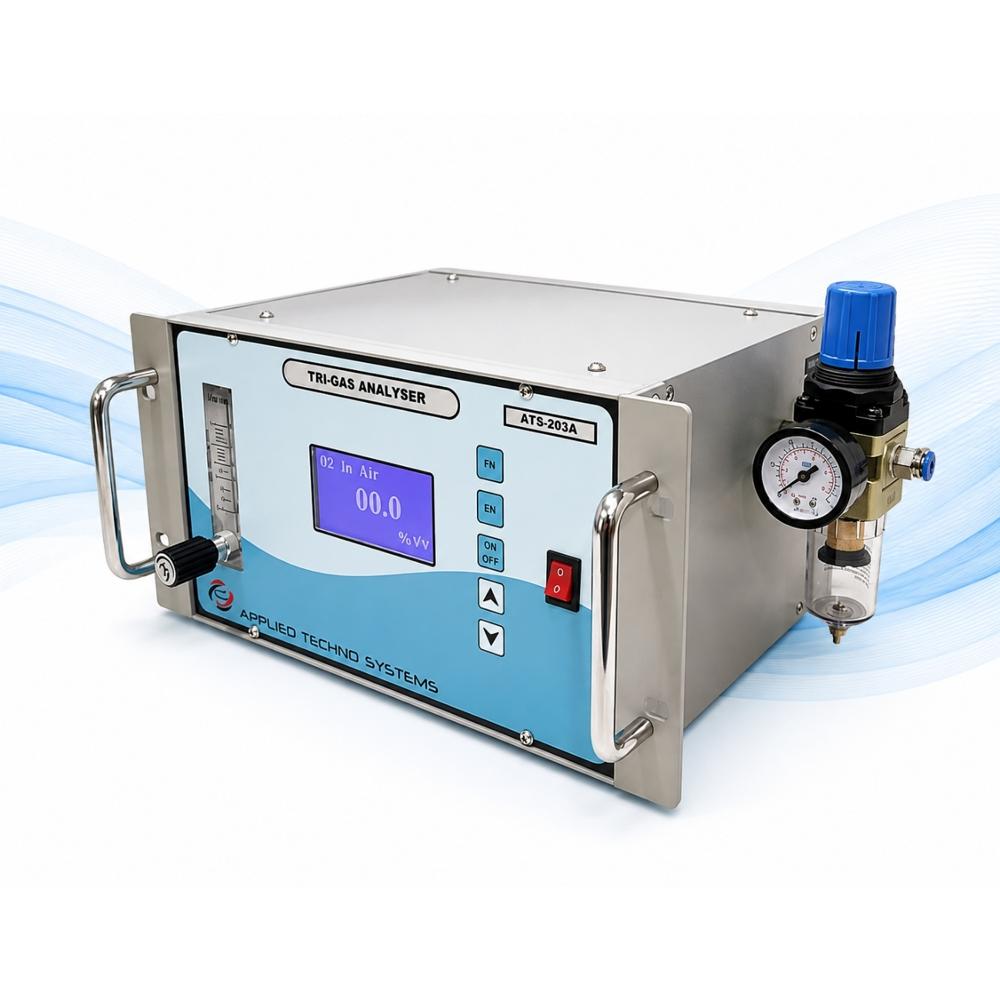

Price:
- 50
- 100
- 200
- 250
- 500
- 1000+

More Products in Gas Analysers Category
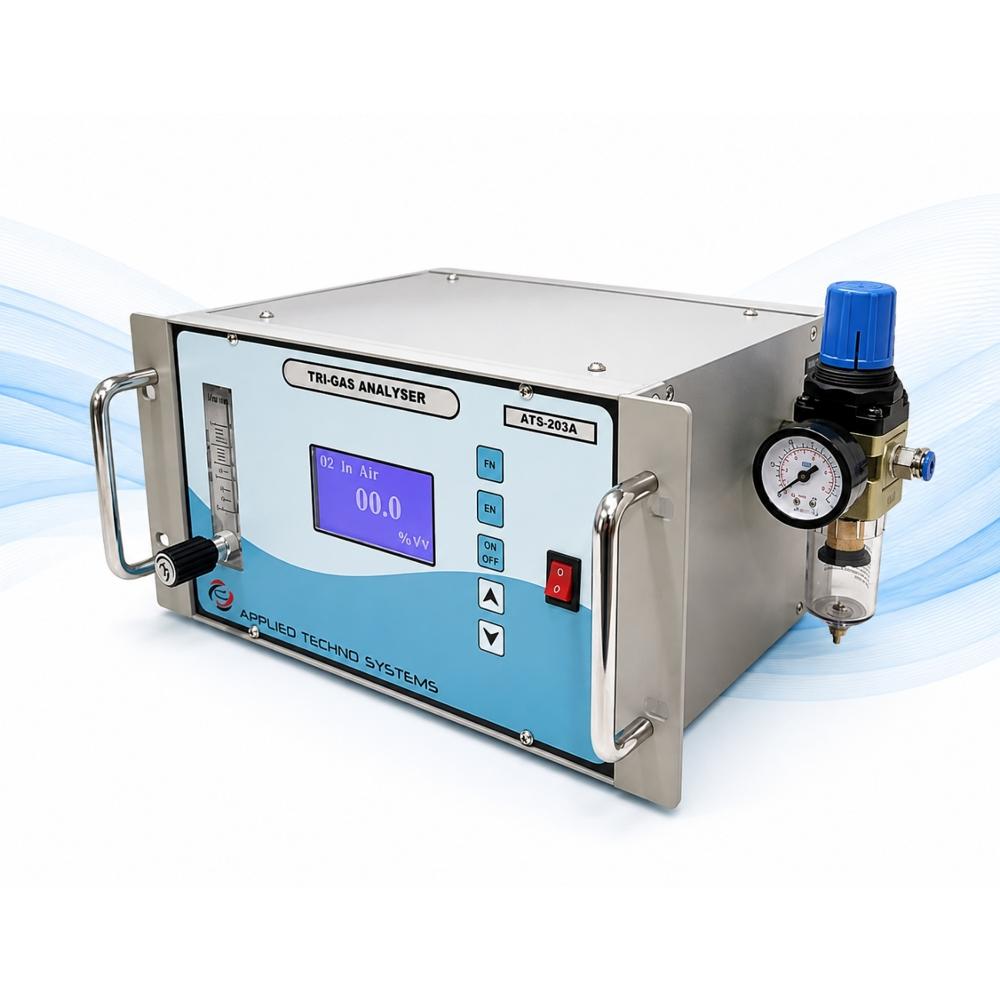
Portable Tri Gas Analyser
Price 450500.0 INR / Piece
Minimum Order Quantity : 1 Piece
Response Time : <10 seconds
Resolution : O2: 0.01%, CO2: 0.01%, CO: 1 ppm
Control Mode : Digital
Machine Weight : Approx. 5 kg
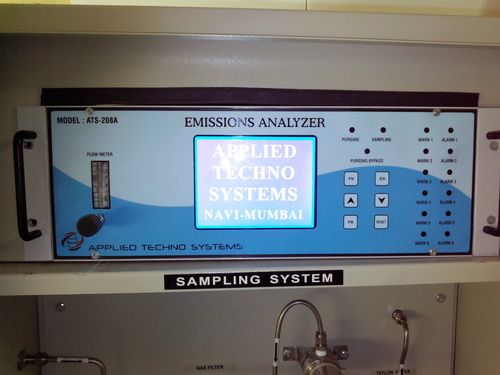
SO2 Gas Analyzer
Price 328500.0 INR / Piece
Minimum Order Quantity : 1 Piece
Response Time : 10 Seconds
Resolution : 0.01%
Control Mode : Manual
Machine Weight : 50 Kilograms (kg)
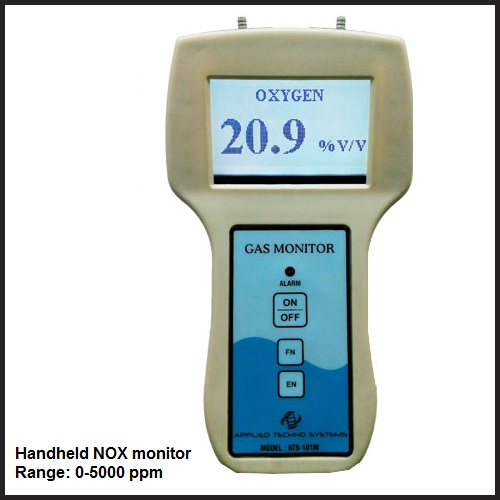
Portable Gas Analyser
Price 154500.0 INR / Number
Minimum Order Quantity : 1 Number
Response Time : 10 Seconds
Resolution : 0.01%
Control Mode : Manual
Machine Weight : 50 Kilograms (kg)
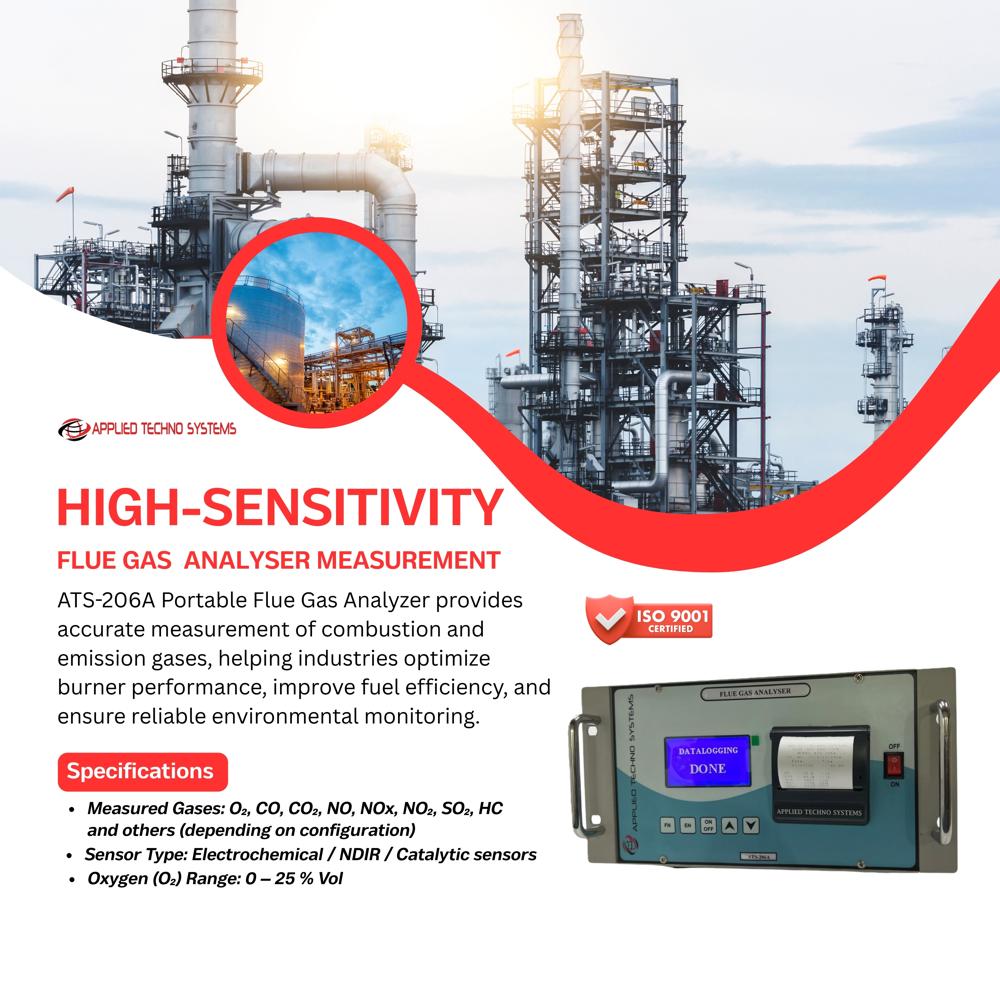
Portable Gas Analyser
Price 620000.0 INR / Piece
Minimum Order Quantity : 1 Piece
Response Time : 10 Seconds
Resolution : 1 PPM
Control Mode : Manual
Machine Weight : 5 Kilograms (kg)


- 104, Delta Industrial Estate, Building No 1, Gokhivare, Sativali Road, Vasai East, Dist-Palghar,Vasai - 401208, Maharashtra, India
- Phone : 08045814504
GST : 27AAVCA1127G1ZN

- Mr M L YADAV (Marketing Manager)
- Mobile : 08045814504
- Send Inquiry
 Send Inquiry

|


- Dew Point Meters
- Gas Analysers
- Portable Gas Detector
- Moisture And Dew Point Analyzer
- Dust/Opacity Monitor
- Gas Monitoring Systems
- Gas Leak Detectors
- Gas Transmitters
- VOC Leak Detector
- Air Quality Monitoring System
- Online Continuous Emission Monitoring System-OCEMS
- Dew Point Monitors
- Gas Detector
- Opacity Monitor
- Portable Flue Gas Analyzer
- Online SOX & NOX Gas Analyzer
- Methane Gas Leak Detector
- Hydrogen Purity Analyzer
- Gas Purity Analyzer
- Effluent Monitoring Systems
- Producer Gas Analyzer
- Gas Detector Calibration Service
- Portable Gas Monitors
- Gas Sensor Transmitter

Developed and Managed by Infocom Network Private Limited.


 English
 Spanish
 French
 German
 Italian
 Chinese (Simplified)
 Japanese
 Korean
 Arabic
 Portuguese
