 Chat with us

- Dew Point Meters
- Gas Analysers
- Portable Gas Detector
- Moisture And Dew Point Analyzer
- Dust/Opacity Monitor
- Gas Monitoring Systems
- Gas Leak Detectors
- Gas Transmitters
- VOC Leak Detector
- Air Quality Monitoring System
- Online Continuous Emission Monitoring System-OCEMS
- Dew Point Monitors
- Gas Detector
- Opacity Monitor
- Portable Flue Gas Analyzer
- Online SOX & NOX Gas Analyzer
- Methane Gas Leak Detector
- Hydrogen Purity Analyzer
- Gas Purity Analyzer
- Effluent Monitoring Systems
- Producer Gas Analyzer
- Gas Detector Calibration Service
- Portable Gas Monitors
- Gas Sensor Transmitter

 Send Inquiry
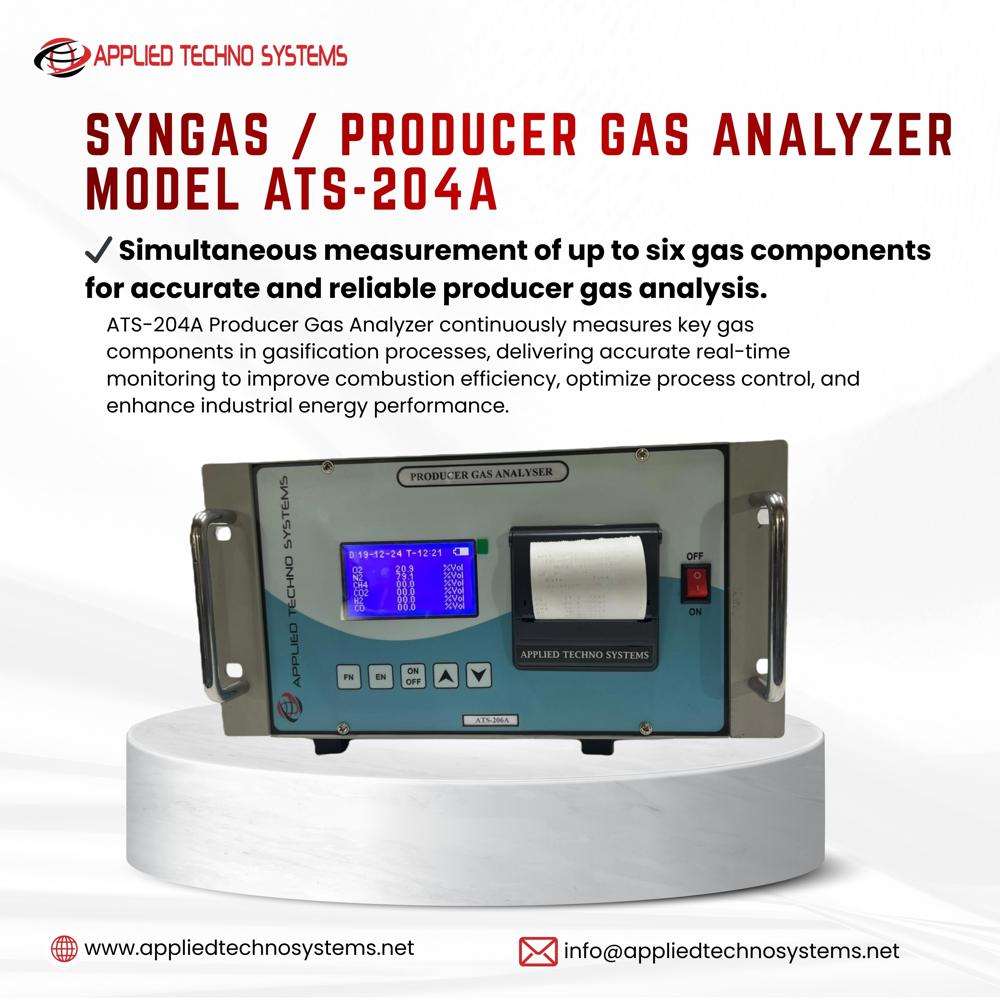
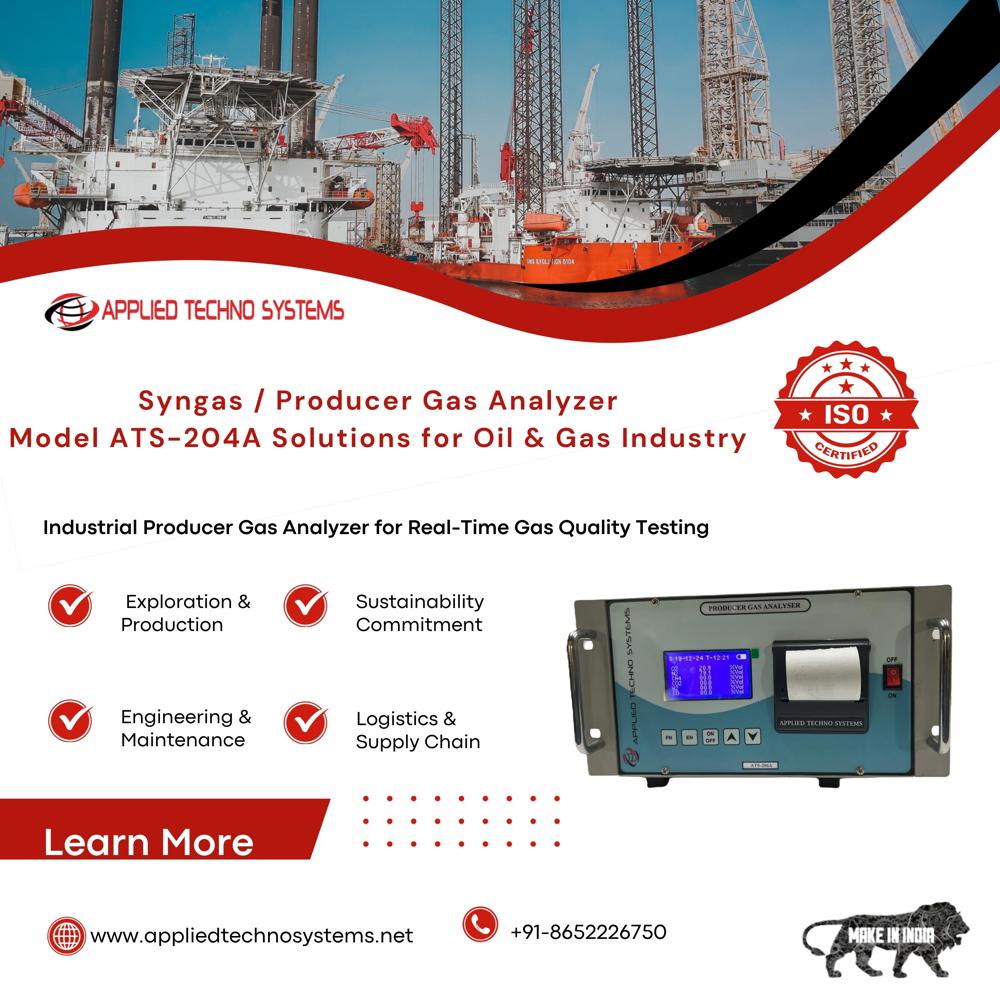
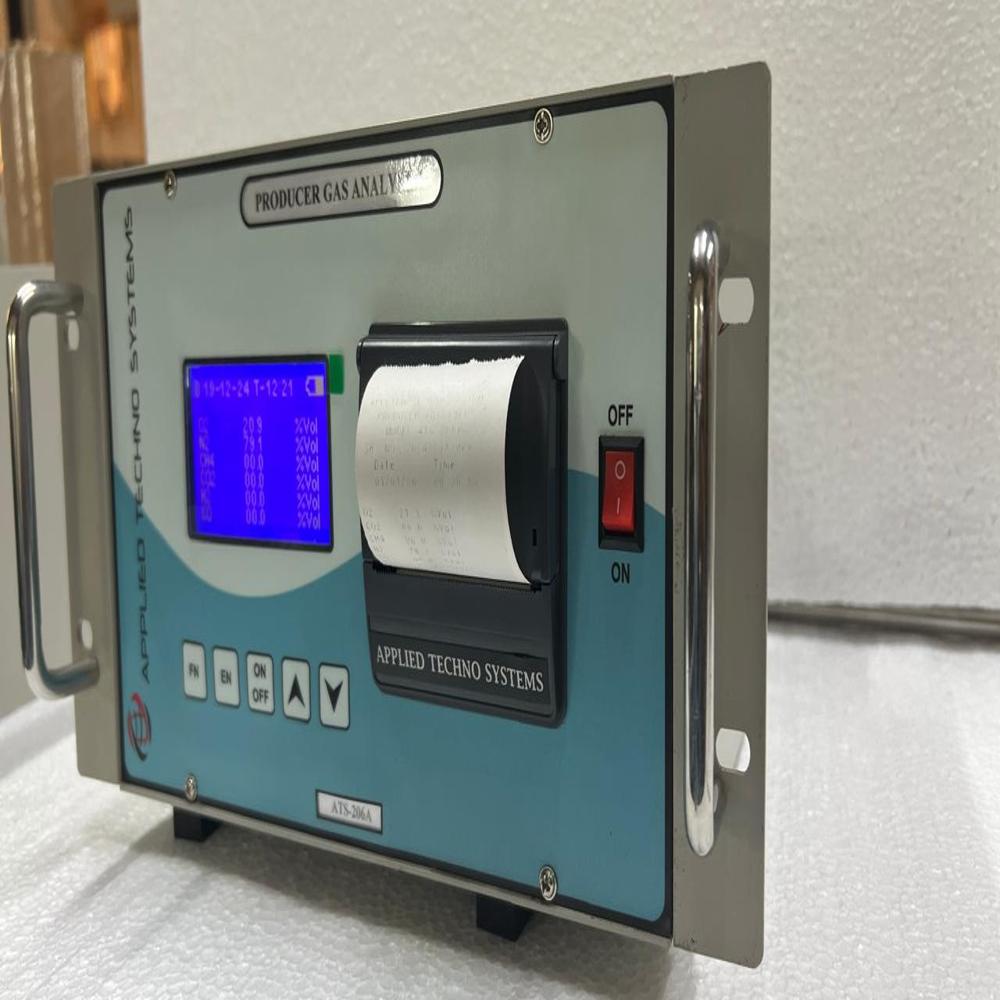
Producer Gas Analyzer With Printer Model ATS 204A
Price 775000.0 INR/ Unit
Producer Gas Analyzer With Printer Model ATS 204A Specification
- Automation Grade
- Semi-automatic
- Material
- MS
- Voltage
- 110-215 Volt (v)
- Features
- Good Quality
- Mounting Type
- Handheld or tripod
- Interface Type
- USB / Bluetooth
- Usage
- Industrial
Producer Gas Analyzer With Printer Model ATS 204A Trade Information
- Minimum Order Quantity
- 1 Unit
- Payment Terms
- Cash Advance (CA), Cash in Advance (CID), Cheque
- Supply Ability
- 2 Units Per Month
- Delivery Time
- 3 Week
- Packaging Details
- As Per Customer Requirement
- Main Export Market(s)
- Asia, Australia, Central America, North America, South America, Eastern Europe, Western Europe, Middle East, Africa
- Main Domestic Market
- All India, South India, Central India, West India, North India, East India, Gujarat, Karnataka, Kerala, Lakshadweep, Mizoram, Meghalaya, Manipur, Andhra Pradesh, Bihar, Chandigarh, Daman and Diu, Goa, Jharkhand, Odisha, Punjab, Assam, Delhi, Dadra and Nagar Haveli, Andaman and Nicobar Islands, Arunachal Pradesh, Chhattisgarh, Haryana, Himachal Pradesh, Jammu and Kashmir, Madhya Pradesh, Maharashtra, Nagaland, Rajasthan, Sikkim, Tamil Nadu, Telangana, Tripura, Pondicherry, Uttar Pradesh, Uttarakhand, West Bengal
- Certifications
- An ISO 9001:2015 Company
About Producer Gas Analyzer With Printer Model ATS 204A
Producer gas analyzer Model ATS 204A is portable type instrument used to determine the composition of producer gas, which is generated through the gasification of various carbonaceous materials like biomass or coalThe primary function is to measure the concentrations of key gases within the producer gas, including:
- Carbon monoxide (CO)
- Carbon dioxide (CO2)
- Hydrogen (H2)
- Methane (CH4)
- Oxygen (O2)
- Nitrogen (N2)
- Applications:
- Biomass Gasification:
- Monitoring the gas quality from biomass gasifiers for heat and power generation.
- Coal Gasification:
- Analyzing the producer gas from coal gasification plants.
- Industrial Processes:
- Used in various industrial applications where producer gas is utilized as a fuel or feedstock.
- Biomass Gasification:
- Specification-:
- NDIR Sensor for CO,CO2 & CH4 Range 0-100% V/V
- TCD Sensor for Hydrogen (H2) Range 0-100% V/V
- Electro Chemical Sensor for Oxygen Range 0-100% V/V
- Sampling Through inbuilt Auto Suction Pump.
- Accuracy : +/- 1%
- Responce time : < 5 Sec.
- LCD Graphics Display
Versatile Mounting for Flexible Operation
The ATS 204A Producer Gas Analyzer is engineered for convenience and adaptability. It can be used either as a handheld device or securely mounted on a tripod, making it suitable for various industrial settings. This flexibility ensures users can perform gas analysis efficiently whether on the factory floor or at remote locations.
Advanced Data Connectivity and Printing
Equipped with both USB and Bluetooth interfaces, the analyzer allows for easy data transfer and connectivity with external devices. The built-in printer delivers immediate analytical reports, streamlining processes and reducing the time from analysis to documentation. This feature enhances workflow efficiency.
Durable Construction for Industrial Use
Constructed with high-quality mild steel (MS), the ATS 204A delivers durability and longevity even in demanding industrial environments. It is designed to maintain optimal performance across a voltage range of 110 to 215 Volts, ensuring consistent results in a variety of operational scenarios.
FAQs of Producer Gas Analyzer With Printer Model ATS 204A:
Q: How is the Producer Gas Analyzer With Printer Model ATS 204A typically used in industrial settings?
A: The analyzer is primarily utilized for measuring and analyzing producer gas in industrial environments. Its robust design, along with both handheld and tripod mounting options, enables accurate readings in on-site applications, supporting quality control and process optimization.Q: What benefits does the integrated printer provide?
A: The built-in printer allows users to obtain immediate, on-site documentation of gas analysis results, which aids in record-keeping and operational transparency, facilitating rapid decision-making without the need for separate report generation.Q: When should I choose USB or Bluetooth as the interface for data transfer?
A: USB is ideal for direct, wired data transfers to computers or data loggers, suitable for stationary operations. Bluetooth is recommended for wireless connectivity, especially when mobility is required or when integrating with mobile devices in the field.Q: Where can the ATS 204A be mounted for optimal performance?
A: It can be securely mounted on a tripod for stationary analysis or operated in handheld mode for mobility. This adaptability allows for use in various locations, from factory floors to remote industrial sites.Q: What process does the gas analyzer follow to deliver accurate results?
A: The analyzer draws a gas sample, initiates semi-automatic analysis, and processes the data before sending the results to the integrated printer or saving/transferring via USB/Bluetooth. This ensures high-quality, reliable analysis with minimal user intervention.Q: Which industrial sectors benefit most from using this analyzer?
A: Industries such as energy, manufacturing, and chemical processing benefit from the ATS 204A, as it helps monitor gas composition, improve process efficiency, and comply with safety regulations.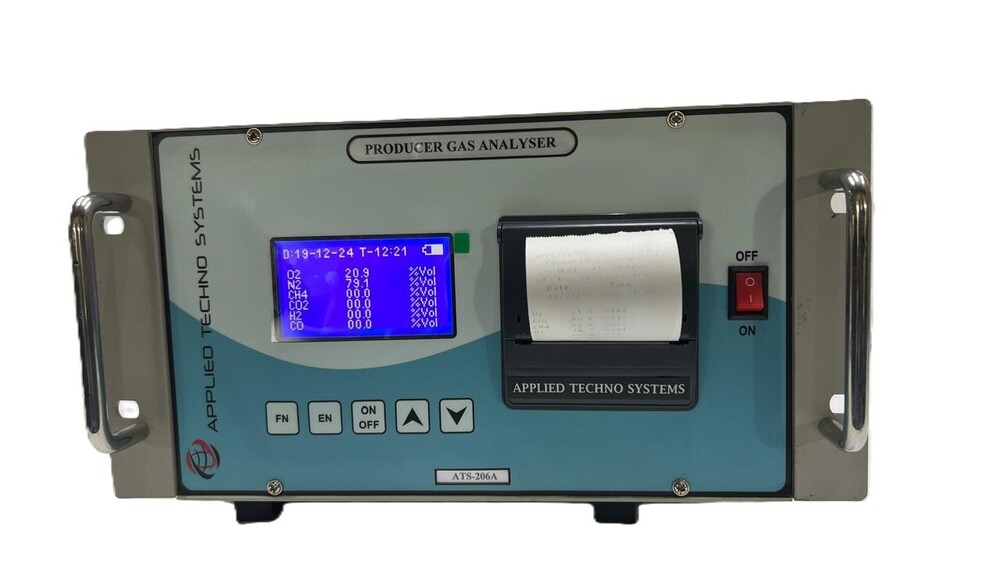



Price:
- 50
- 100
- 200
- 250
- 500
- 1000+

More Products in Gas Analysers Category
Tri Gas Analyzer
Price 425000.0 INR / Number
Minimum Order Quantity : 1 Number
Resolution : 1ppm
Display Type : Digital
Product Type : Analyzer
Classification : IP 65

Portable Trace Oxygen Analyser
Price 425000.0 INR / Number
Minimum Order Quantity : 1 Piece
Resolution : 0.1%
Display Type : 128 x 64 LCD Graphics Display with backlit
Product Type : Analyzer
Classification : IP 65
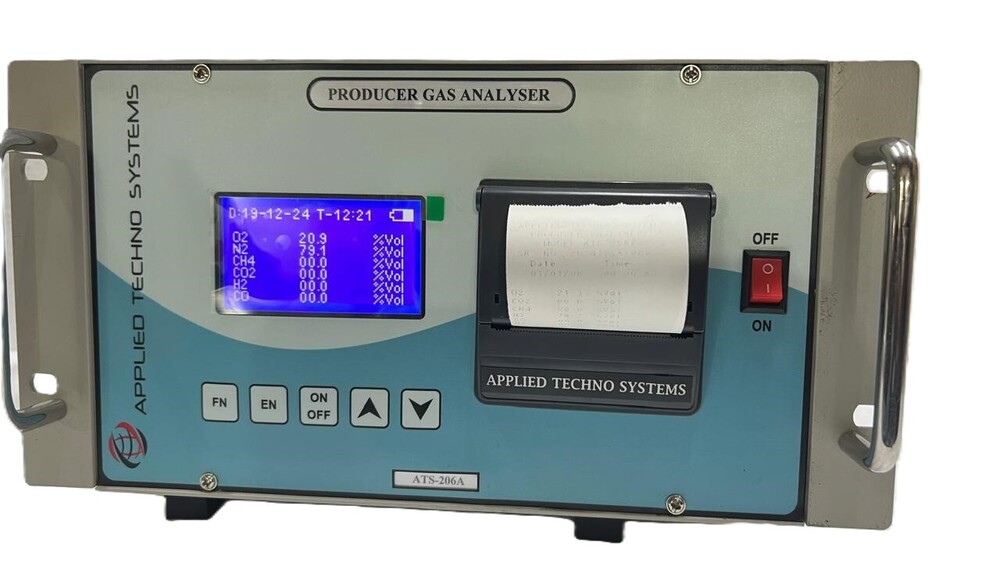
Online Producer Gas Analyzer
Price 750000.0 INR / Unit
Minimum Order Quantity : 1 Unit
Resolution : 0.01% for all gases
Display Type : 128 x 64 Graphics Color LCD Display
Product Type : Gas analysis
Classification : IP 65
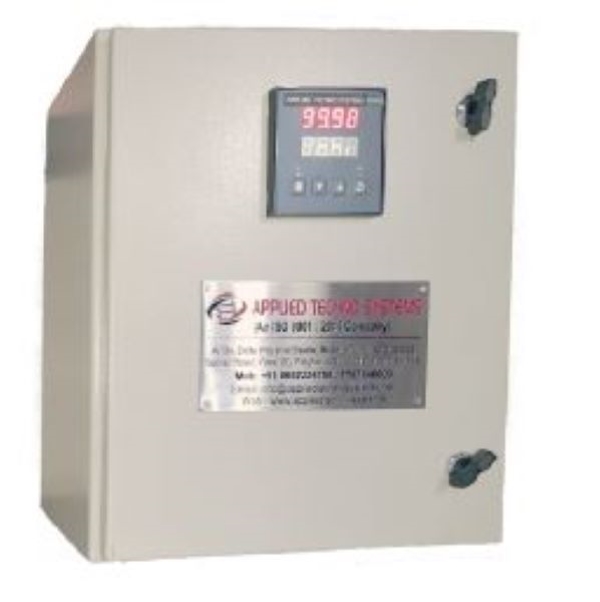
ONLINE OXYGEN GAS PURITY ANALYZER
Price 98000.0 INR / Unit
Minimum Order Quantity : 1 Unit
Resolution : 0.01, 0.1 or 1 PPB, 1 PPM, %V/V, % LEL as applicable
Display Type : 320x264 Graphics High Quality LCD
Product Type : Analyzer


- 104, Delta Industrial Estate, Building No 1, Gokhivare, Sativali Road, Vasai East, Dist-Palghar,Vasai - 401208, Maharashtra, India
- Phone : 08045814504
GST : 27AAVCA1127G1ZN

- Mr M L YADAV (Marketing Manager)
- Mobile : 08045814504
- Send Inquiry
 Send Inquiry
|


- Dew Point Meters
- Gas Analysers
- Portable Gas Detector
- Moisture And Dew Point Analyzer
- Dust/Opacity Monitor
- Gas Monitoring Systems
- Gas Leak Detectors
- Gas Transmitters
- VOC Leak Detector
- Air Quality Monitoring System
- Online Continuous Emission Monitoring System-OCEMS
- Dew Point Monitors
- Gas Detector
- Opacity Monitor
- Portable Flue Gas Analyzer
- Online SOX & NOX Gas Analyzer
- Methane Gas Leak Detector
- Hydrogen Purity Analyzer
- Gas Purity Analyzer
- Effluent Monitoring Systems
- Producer Gas Analyzer
- Gas Detector Calibration Service
- Portable Gas Monitors
- Gas Sensor Transmitter

Developed and Managed by Infocom Network Private Limited.


 English
 Spanish
 French
 German
 Italian
 Chinese (Simplified)
 Japanese
 Korean
 Arabic
 Portuguese