 Chat with us

- Dew Point Meters
- Gas Analysers
- Portable Gas Detector
- Moisture And Dew Point Analyzer
- Dust/Opacity Monitor
- Gas Monitoring Systems
- Gas Leak Detectors
- Gas Transmitters
- VOC Leak Detector
- Air Quality Monitoring System
- Online Continuous Emission Monitoring System-OCEMS
- Dew Point Monitors
- Gas Detector
- Opacity Monitor
- Portable Flue Gas Analyzer
- Online SOX & NOX Gas Analyzer
- Methane Gas Leak Detector
- Hydrogen Purity Analyzer
- Gas Purity Analyzer
- Effluent Monitoring Systems
- Producer Gas Analyzer
- Gas Detector Calibration Service
- Portable Gas Monitors
- Gas Sensor Transmitter

 Send Inquiry
ATS 109T Combustible Gas Sensor Transmitter
Price 32500.0 INR/ Unit
ATS 109T Combustible Gas Sensor Transmitter Specification
- Wireless
- Yes
- Response Time
- 10 Seconds
- Application
- Industrial
- Sensor Type
- Ec
- Product Type
- Photoelectric Sensor
- Usage
- industrial
- Accuracy
- 0.5 %
- Resolution
- 1, 0.5
- Voltage
- 110-215 Volt (v)
- Usage & Applications
- Gas Monitor
- Warranty
- 1 year
- Display Type
- Graphic
- Material
- MS
- Features
- Good Quality
ATS 109T Combustible Gas Sensor Transmitter Trade Information
- Minimum Order Quantity
- 1 Unit
- Supply Ability
- 500 Units Per Month
- Delivery Time
- 7 Days
About ATS 109T Combustible Gas Sensor Transmitter
Combustible Gas Sensor Transmitter incorporates a pellistor or catalytic bead sensor. This sensor consists of a matched pair of elements, one active and the other for compensation. When in contact with a combustible hydrocarbon or solvent causes the gas or vapor to "burn" or oxidize at concentrations below the Lower Explosive Limit (LEL). This oxidization process raises the temperature of the active bead and increases the resistance of the internal wire coil. The second bead does not have the catalytic coating and provides compensation for environmental conditions including temperature and humidity. When these elements are connected to the circuit, a useable signal is produced that is proportional to the gas concentration.
Applications:
- Environmental Monitoring
- Area Monitoring
- Pulp & Paper
- Leak Detection & Monitoring
- Chemical Plants
- Refineries/Petrochemical
- Hazardous Area
- Water/West water Treatment
- Fire Services
- Mines
Features:
- Detection of combustible, toxic Gases and Oxygen
- Non-intrusive calibration
- Smart sensors
- Programmable relays
- 2-wire, 3-wire, ModBus
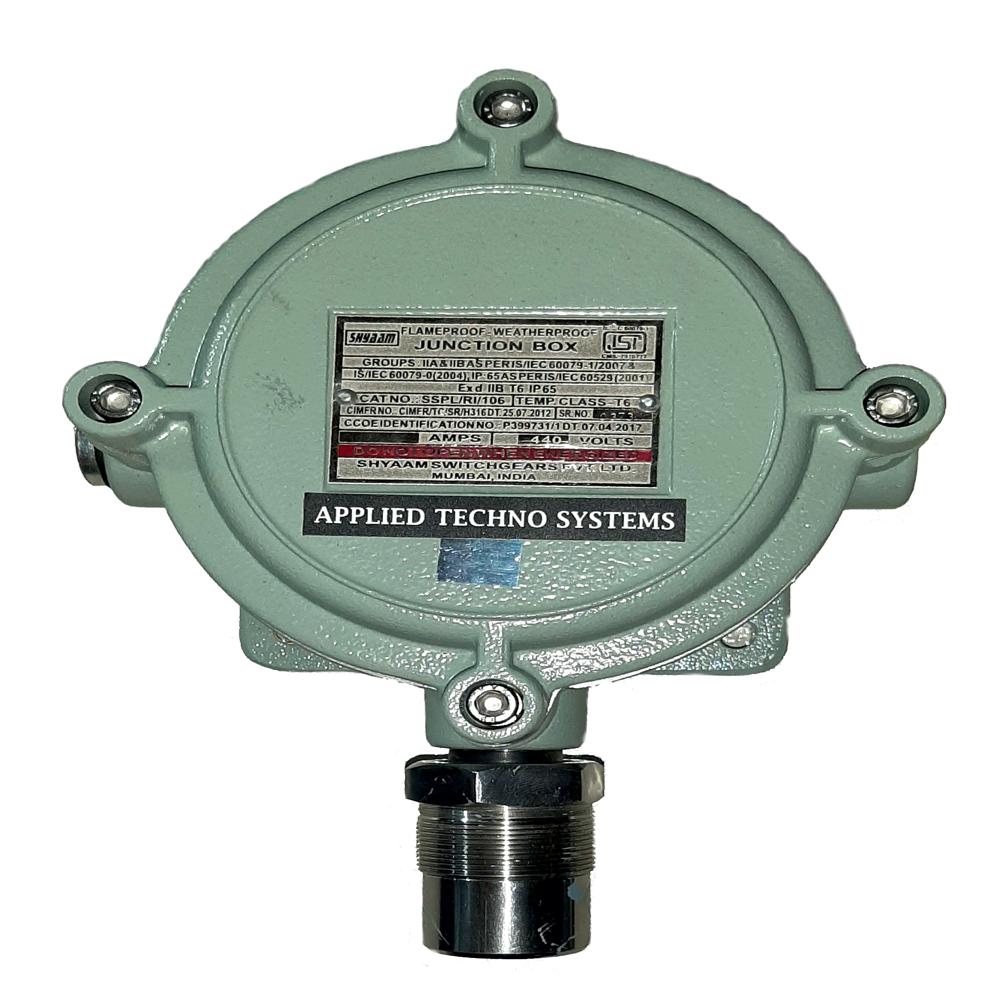
- Flame proof Junction Box
- Available in stainless steel
- Available in wireless version
- Flame proof Junction Box Approval CCOE & CMRI
Robust Industrial-Grade Build
Constructed from durable mild steel, the ATS 109T Combustible Gas Sensor Transmitter is designed to thrive in harsh industrial environments. Its IP65 rating ensures protection against dust and water, making it suitable for both indoor and outdoor applications. The sturdy build enhances longevity and reduces maintenance requirements.
Wide Voltage Compatibility
This transmitter operates efficiently across a range of 110-215 volts, accommodating various industrial electrical standards. This feature allows for versatile installation in different sites without the need for specialized power supplies, simplifying integration into existing systems.
Advanced Wireless Connectivity
Featuring wireless capabilities, the ATS 109T enables seamless data transmission and monitoring without complex wiring. This modern convenience not only reduces installation time but also enables flexible placement in your facility, enhancing overall workflow and safety protocols.
FAQs of ATS 109T Combustible Gas Sensor Transmitter:
Q: How does the ATS 109T Sensor Transmitter detect combustible gas leaks in industrial settings?
A: The ATS 109T uses advanced combustible gas sensing technology to continuously monitor ambient air in industrial environments. When volatile gases are detected, the transmitter sends real-time alerts, helping operators address safety concerns promptly.Q: What materials are used for constructing this gas sensor transmitter?
A: The sensor transmitter is made from high-quality mild steel (MS), providing excellent durability and corrosion resistance suitable for rigorous industrial applications.Q: When should the ATS 109T be maintained or serviced to ensure optimal performance?
A: Regular maintenance checks are recommended as per the manufacturers guidelines, typically every 6 to 12 months, to clean and recalibrate the sensor and ensure consistent accuracy and functionality.Q: Where can this transmitter be installed within an industrial facility?
A: Thanks to its IP65 rating and rugged construction, the ATS 109T can be installed both indoors and outdoors, particularly in areas where combustible gases are present and quick detection is essential for safety.Q: What is the installation process for the ATS 109T and is it complicated?
A: Installation is straightforward; the wireless feature eliminates the need for extensive wiring. Follow the provided setup manual to secure the unit, connect it to a power supply within the 110-215V range, and integrate with your existing safety monitoring system.Q: How does using the ATS 109T benefit industrial operations?
A: Employing the ATS 109T enhances workplace safety by offering rapid gas leak detection, improving operational efficiency, reducing downtime, and ensuring compliance with industrial safety standards.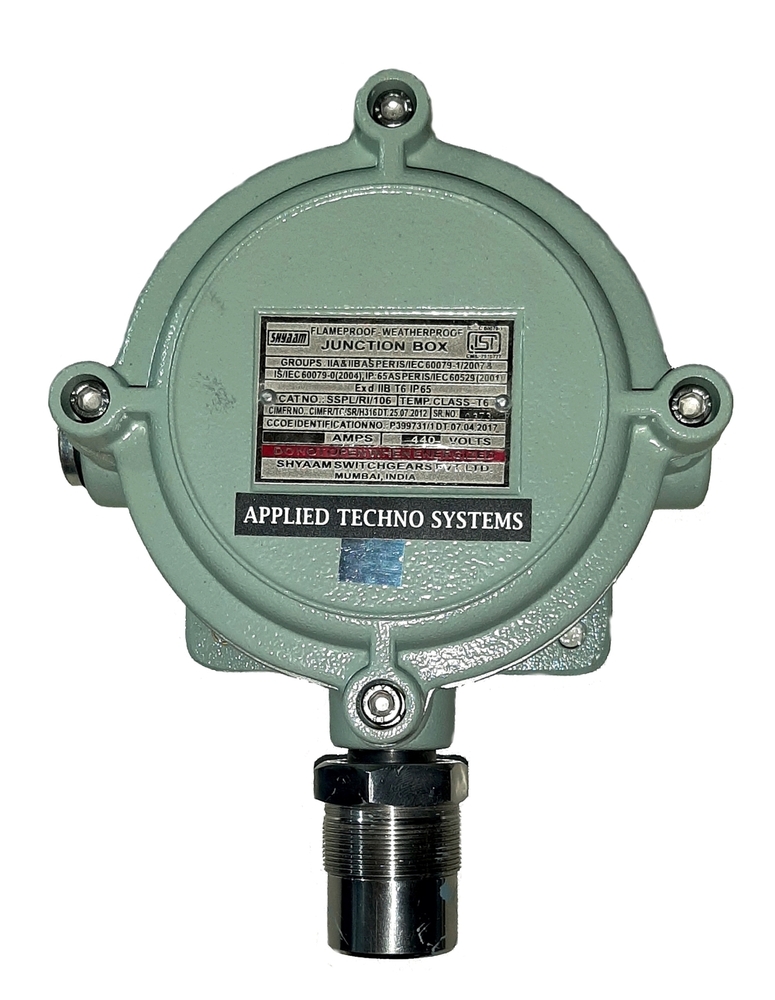

Price:
- 50
- 100
- 200
- 250
- 500
- 1000+

More Products in Gas Sensor Transmitter Category
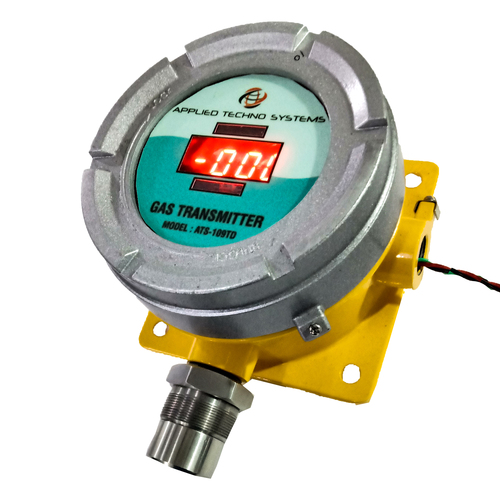
High Accuracy LEL Gas Sensor Transmitter
Price 35000.0 INR / Number
Minimum Order Quantity : 1 Number
Material : Flameproof
Product Type : Electronic
Display Type : Graphic
Sensor Type : EC
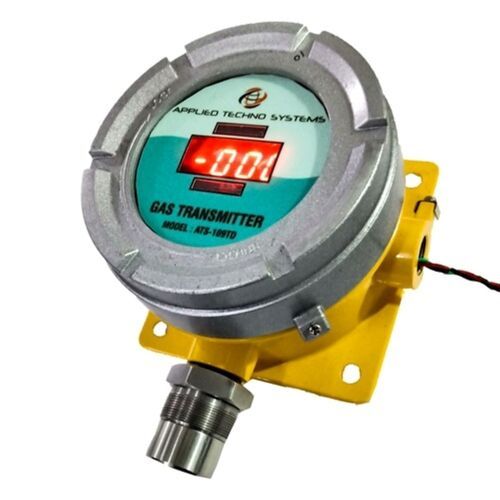
Gas sensor transmitters
Price 40000.0 INR / Unit
Minimum Order Quantity : 1 Unit
Material : ABS Plastic
Product Type : Gas safety
Display Type : Digital
Sensor Type : Ec
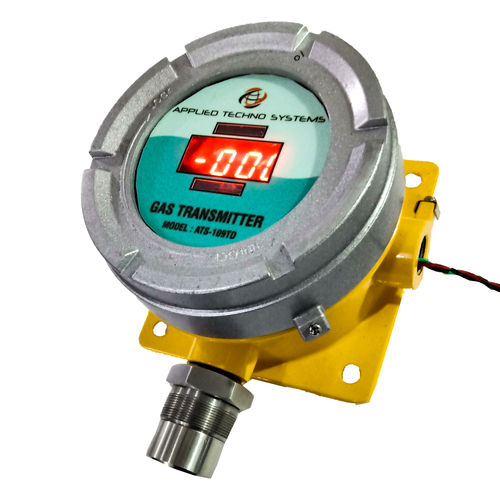
Hydrogen Gas Sensor
Price 25000.0 INR / Number
Minimum Order Quantity : 1 Number
Material : Mild Steel
Product Type : Hydrogen Gas Sensor Transmitter
Display Type : Digital
Sensor Type : Ec
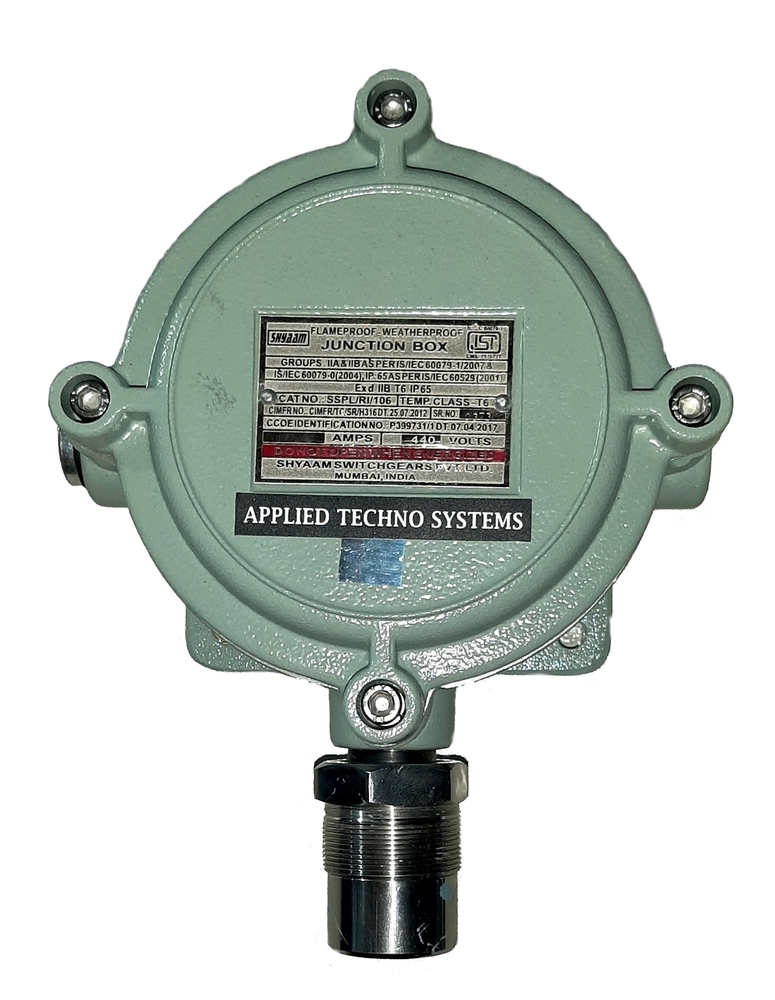
Ammonia Gas Sensor Transmitter without Display
Price 32500.0 INR / Unit
Minimum Order Quantity : 1 Unit
Material : MS
Product Type : Ammonia Gas Sensor
Display Type : Digital
Sensor Type : Ec


- 104, Delta Industrial Estate, Building No 1, Gokhivare, Sativali Road, Vasai East, Dist-Palghar,Vasai - 401208, Maharashtra, India
- Phone : 08045814504
GST : 27AAVCA1127G1ZN

- Mr M L YADAV (Marketing Manager)
- Mobile : 08045814504
- Send Inquiry
 Send Inquiry
|


- Dew Point Meters
- Gas Analysers
- Portable Gas Detector
- Moisture And Dew Point Analyzer
- Dust/Opacity Monitor
- Gas Monitoring Systems
- Gas Leak Detectors
- Gas Transmitters
- VOC Leak Detector
- Air Quality Monitoring System
- Online Continuous Emission Monitoring System-OCEMS
- Dew Point Monitors
- Gas Detector
- Opacity Monitor
- Portable Flue Gas Analyzer
- Online SOX & NOX Gas Analyzer
- Methane Gas Leak Detector
- Hydrogen Purity Analyzer
- Gas Purity Analyzer
- Effluent Monitoring Systems
- Producer Gas Analyzer
- Gas Detector Calibration Service
- Portable Gas Monitors
- Gas Sensor Transmitter

Developed and Managed by Infocom Network Private Limited.


 English
 Spanish
 French
 German
 Italian
 Chinese (Simplified)
 Japanese
 Korean
 Arabic
 Portuguese