 Chat with us

- Dew Point Meters
- Gas Analysers
- Portable Gas Detector
- Moisture And Dew Point Analyzer
- Dust/Opacity Monitor
- Gas Monitoring Systems
- Gas Leak Detectors
- Gas Transmitters
- VOC Leak Detector
- Air Quality Monitoring System
- Online Continuous Emission Monitoring System-OCEMS
- Dew Point Monitors
- Gas Detector
- Opacity Monitor
- Portable Flue Gas Analyzer
- Online SOX & NOX Gas Analyzer
- Methane Gas Leak Detector
- Hydrogen Purity Analyzer
- Gas Purity Analyzer
- Effluent Monitoring Systems
- Producer Gas Analyzer
- Gas Detector Calibration Service
- Portable Gas Monitors
- Gas Sensor Transmitter

 Send Inquiry
Fixed Gas Detection Equipment
Price 62500.0 INR/ Unit
Fixed Gas Detection Equipment Specification
- Mounting Type
- Panel or Wall Mount
- License Free
- Yes
- Interface
- Physical Buttons, RS-485 Interface
- Connectivity Type
- RS-485, Relay Output
- Size
- Compact (approx. 260 x 165 x 100 mm)
- Standard
- Industrial Safety Standards Compliant
- Operating Mode
- Continuous Monitoring
- Technology
- Electrochemical Sensor Technology
- Special Features
- LCD display, alarm indicators, trouble indication, parameter setting buttons
- Application
- Industrial Gas Monitoring, Safety in hazardous environments
- Screen Resolution
- 4-digit Numeric LCD Display
- Power Supply
- 230 VAC
- Output Formats
- Relay Output, RS-485 Communication
- Detection Range
- 0-9999 PPM
- Terminal Box
- Integrated for input/output connections
- Protection Level
- IP-65 (Weatherproof enclosure)
- Alarm Indicators
- LED (Main, Alarm, Trouble)
- Model Number
- ATS-107M
- Enclosure Material
- Polycarbonate / Metal
- Reset Function
- Available
- Operating Temperature Range
- -10C to +50C
- Gas Type Detected
- Ammonia (NH3)
- Sensor Input
- Dedicated Connector
- Control Buttons
- FN, EN, RESET, Navigation Arrows
About Fixed Gas Detection Equipment
The Fixed / Continuous Gas Monitoring System is an industrial gas detection and monitoring solution designed for the continuous measurement of hazardous, toxic, combustible, and flammable gases in industrial and commercial environments. The system can be configured with multiple gas sensor transmitters and control units to continuously monitor gases such as Oxygen (O), Hydrogen Sulfide (HS), Carbon Monoxide (CO), Sulfur Dioxide (SO), Hydrogen (H), Methane (CH), combustible gases, VOCs, and other toxic or flammable gases, depending on the application and sensor requirement. It provides real-time gas concentration monitoring with visual, audible, and relay alarm outputs, helping users identify gas leaks and hazardous conditions at an early stage. The system is suitable for continuous gas monitoring, leak detection, process safety, plant safety, confined-area monitoring, and emergency alarm applications and can be configured for single-point or multi-point monitoring. Suitable for applications in Oil Refineries, Petrochemical, Chemical, Oil & Gas, Natural Gas, LNG/LPG, Fertilizer, Coal Mining, Power Plants, Iron & Steel, Foundries, Pharmaceutical, Battery Manufacturing, and other industrial environments, the fixed gas monitoring system provides reliable long-term monitoring and supports safer industrial operations.Advanced Ammonia Detection
The ATS-107M employs state-of-the-art electrochemical sensor technology to accurately detect Ammonia (NH3) concentrations up to 9999 PPM. Its quick response, wide detection range, and LCD readout make it suitable for continuous industrial safety monitoring.
Durable and Weatherproof Design
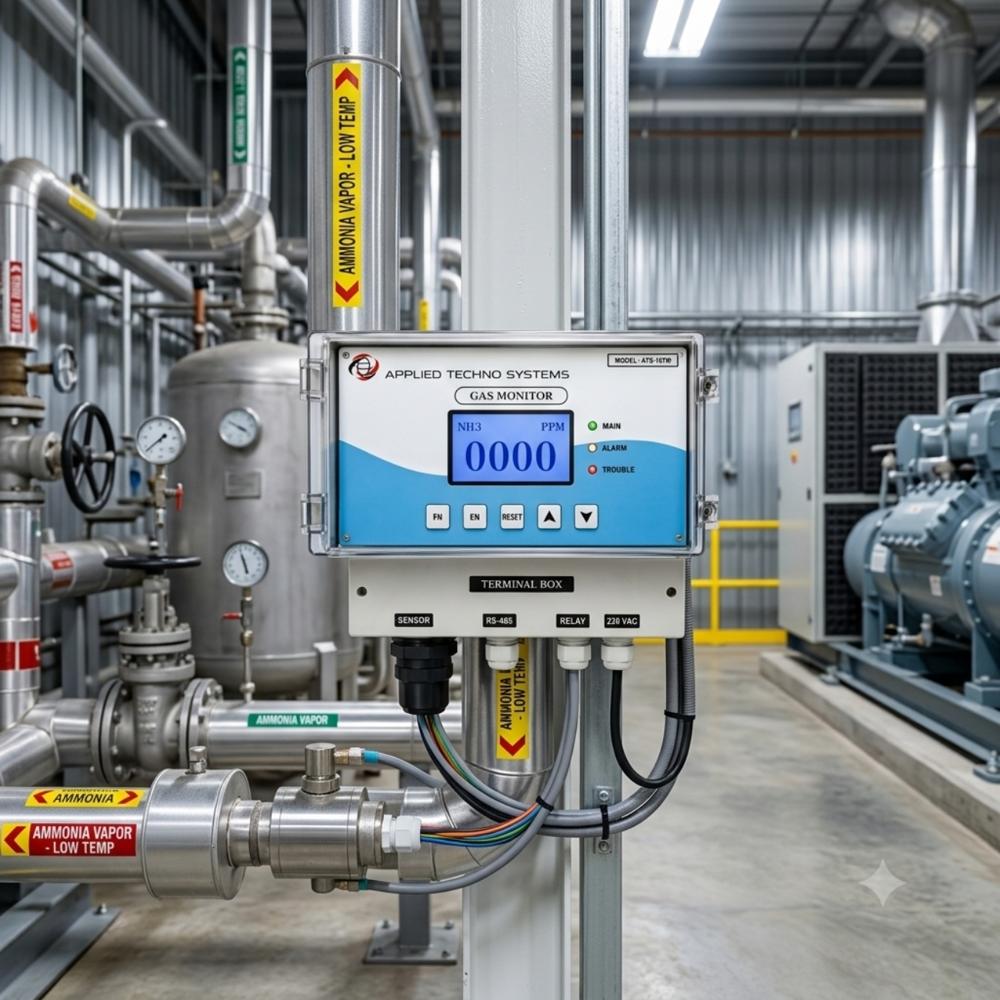
Encased in an IP-65 rated enclosure made of polycarbonate and metal, the ATS-107M is well-suited for harsh industrial environments. Its integrated terminal box and versatile mounting options ensure both easy installation and reliable protection.
User-Friendly Controls and Communication
The equipment is equipped with an intuitive interface featuring physical buttons for navigation, parameter setting, and reset functions. Its relay output and RS-485 connectivity offer seamless integration with industrial automation and monitoring systems.
FAQ's of Fixed Gas Detection Equipment:
Q: How does the ATS-107M detect ammonia gas in industrial environments?
A: The ATS-107M uses advanced electrochemical sensor technology to continuously monitor ammonia (NH3) levels, ranging from 0 to 9999 PPM. The integrated sensor reliably measures concentrations, while alarms and notifications alert personnel to unsafe conditions.Q: What advantages does the IP-65 weatherproof enclosure provide?
A: The IP-65 rated enclosure effectively protects the device from dust, water, and harsh environmental factors, making the ATS-107M suitable for both indoor and outdoor installation in demanding industrial settings.Q: When should the ATS-107M's reset function be used?
A: The reset function should be used after resolving alarm or trouble indications. Pressing the RESET button acknowledges and clears alarms, restoring the equipment to standard monitoring operation.Q: Where can the ATS-107M be installed within an industrial facility?
A: Owing to its compact size and panel or wall mounting options, the ATS-107M can be installed in control rooms, processing areas, and other locations where ammonia exposure risk is present.Q: What is the benefit of the LCD display and LED alarm indicators?
A: The system's LCD display allows for clear, real-time numeric readings of ammonia concentration. LED indicators for main operation, alarm, and trouble states provide immediate visual status updates, enhancing safety and response.Q: How can the ATS-107M be integrated into existing safety or automation systems?
A: The ATS-107M features relay outputs and an RS-485 communication interface, enabling seamless connection to control panels, remote monitoring systems, and industrial networks for automated alerts and system integration.Q: What processes does the ATS-107M support to maintain workplace safety?
A: It continuously monitors ammonia levels, triggers alarms when set thresholds are exceeded, and provides visual and relay-based notifications. This helps industries respond swiftly to leaks, safeguarding personnel and assets.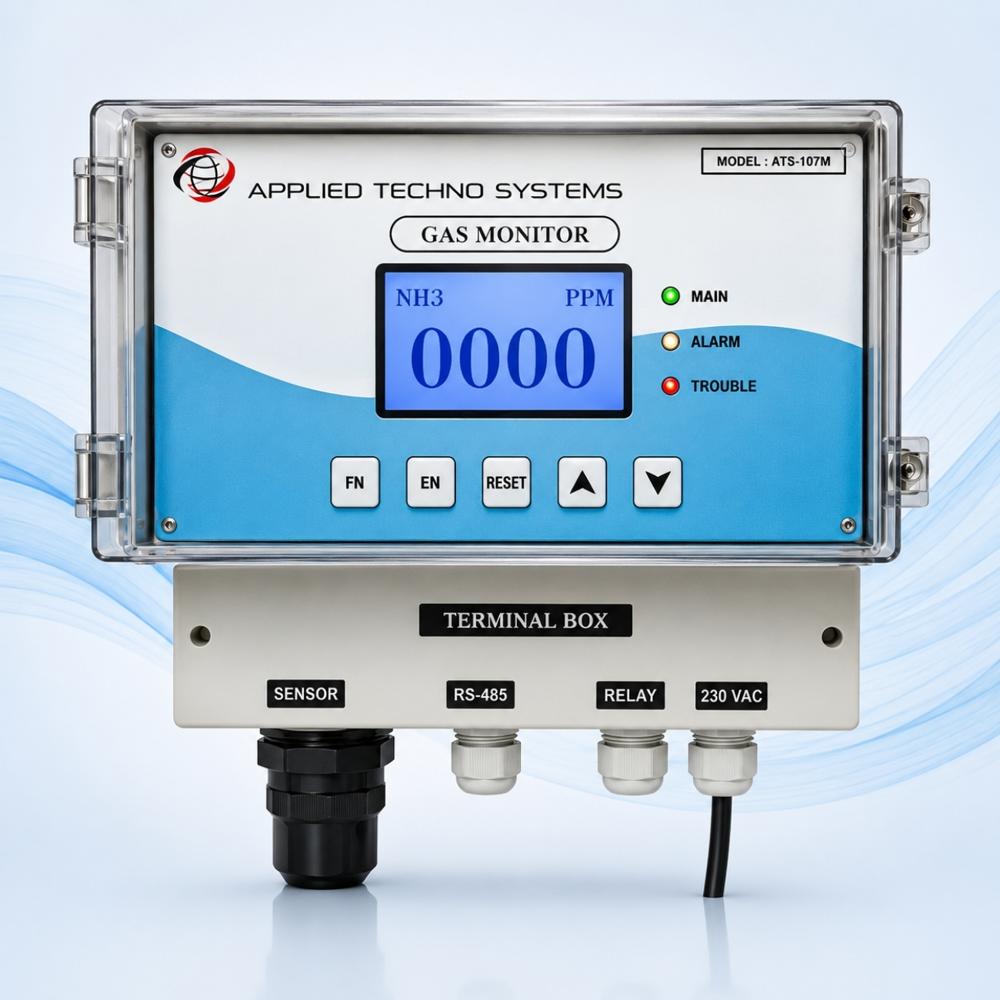

Price:
- 50
- 100
- 200
- 250
- 500
- 1000+

More Products in Gas Monitoring Systems Category
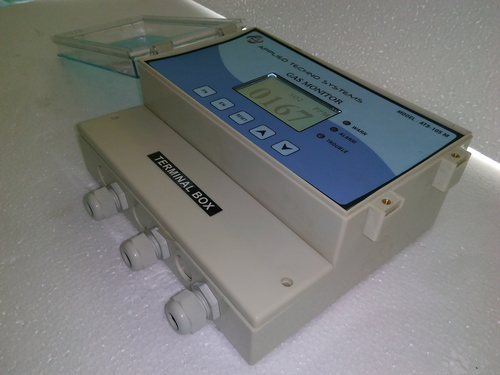
Multi Gas Monitor
Price 12500.0 INR / Number
Minimum Order Quantity : 1 Number
Operating Mode : Manual and automatic
Power Supply : Electric
Screen Resolution : 0.01%
Application : Industrial
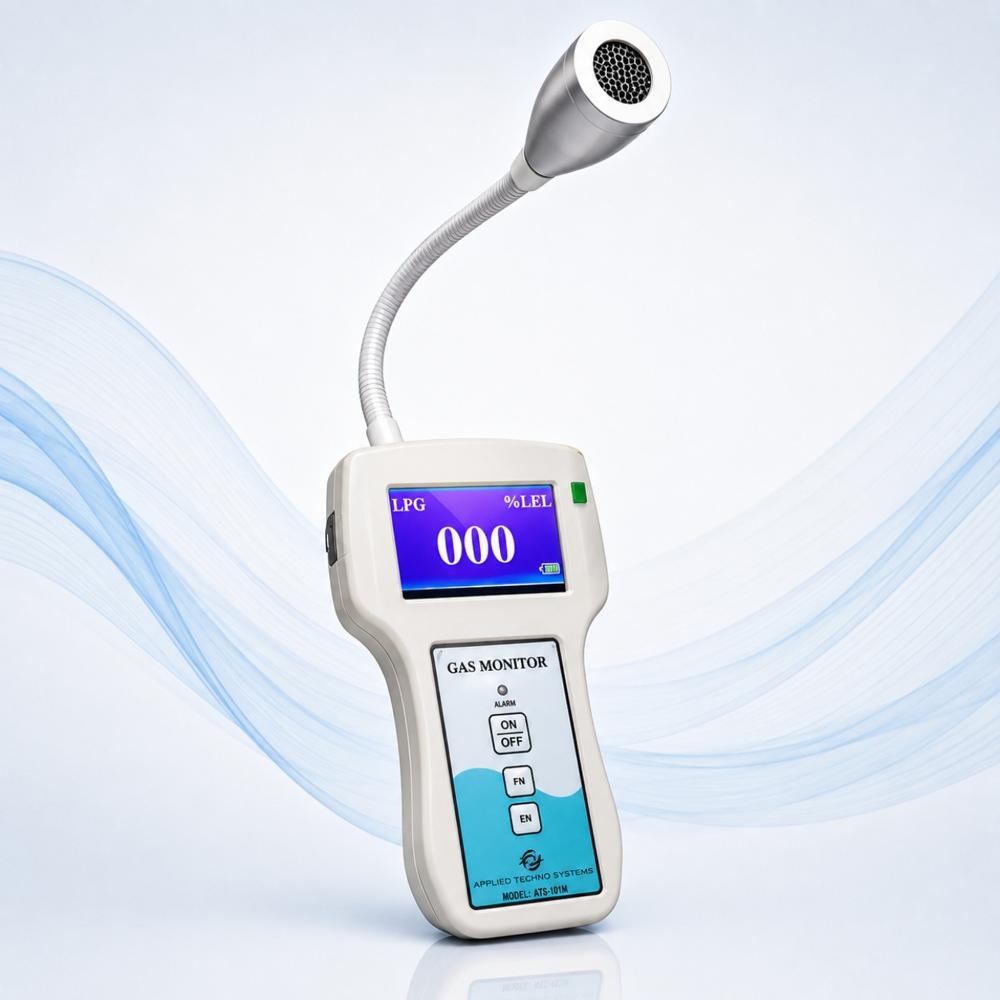
Portable Gas Detection Equipment
Price 29500.0 INR / Unit
Minimum Order Quantity : 1 Unit
Operating Mode : Manual activation, Continuous monitoring
Power Supply : Rechargeable battery or replaceable batteries (AA/AAA type)
Screen Resolution : Highcontrast LCD digital display
Application : Detection of combustible gases such as LPG, Methane, and other hydrocarbons in industries, laboratories, and confined spaces
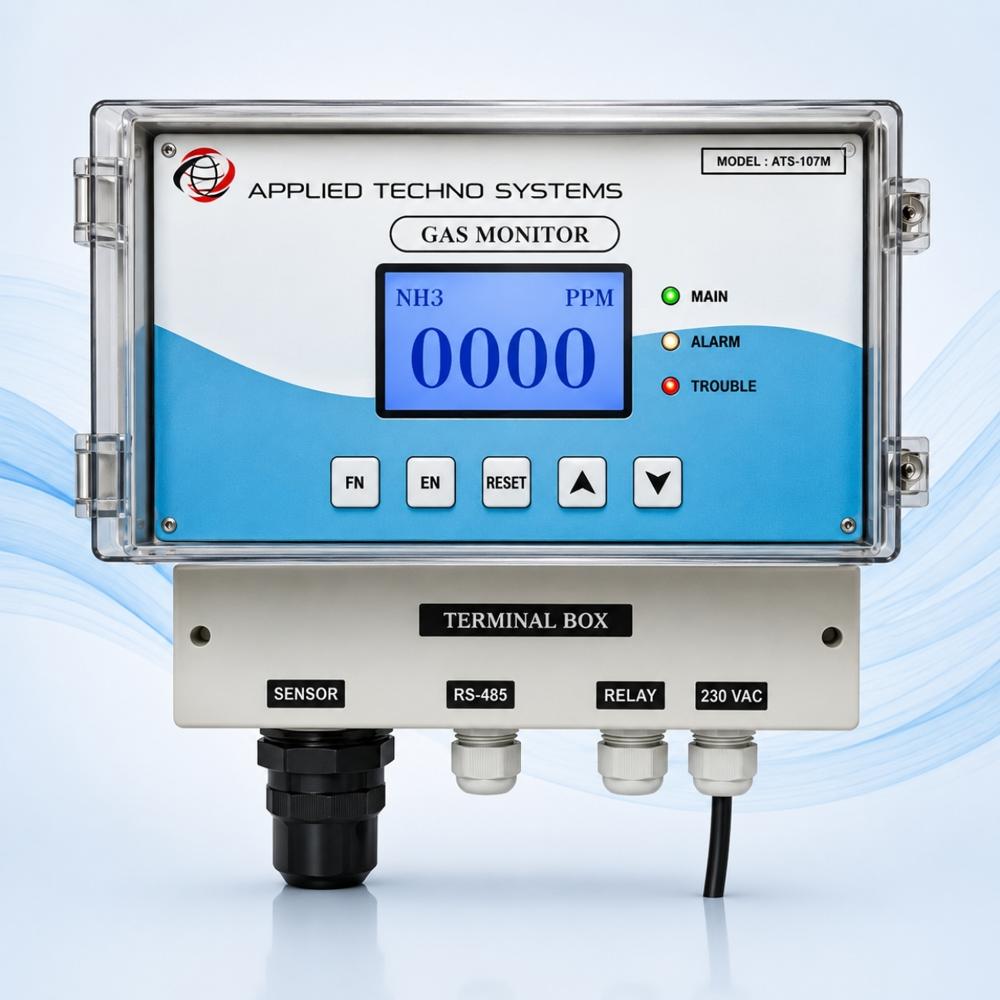
Automatic Gas Detection System
Price 72500.0 INR / Piece
Minimum Order Quantity : 1 Piece
Operating Mode : Continuous monitoring
Power Supply : 230 VAC
Screen Resolution : High contrast LCD display
Application : Industrial safety, hazardous gas detection, environment monitoring, ammonia gas detection
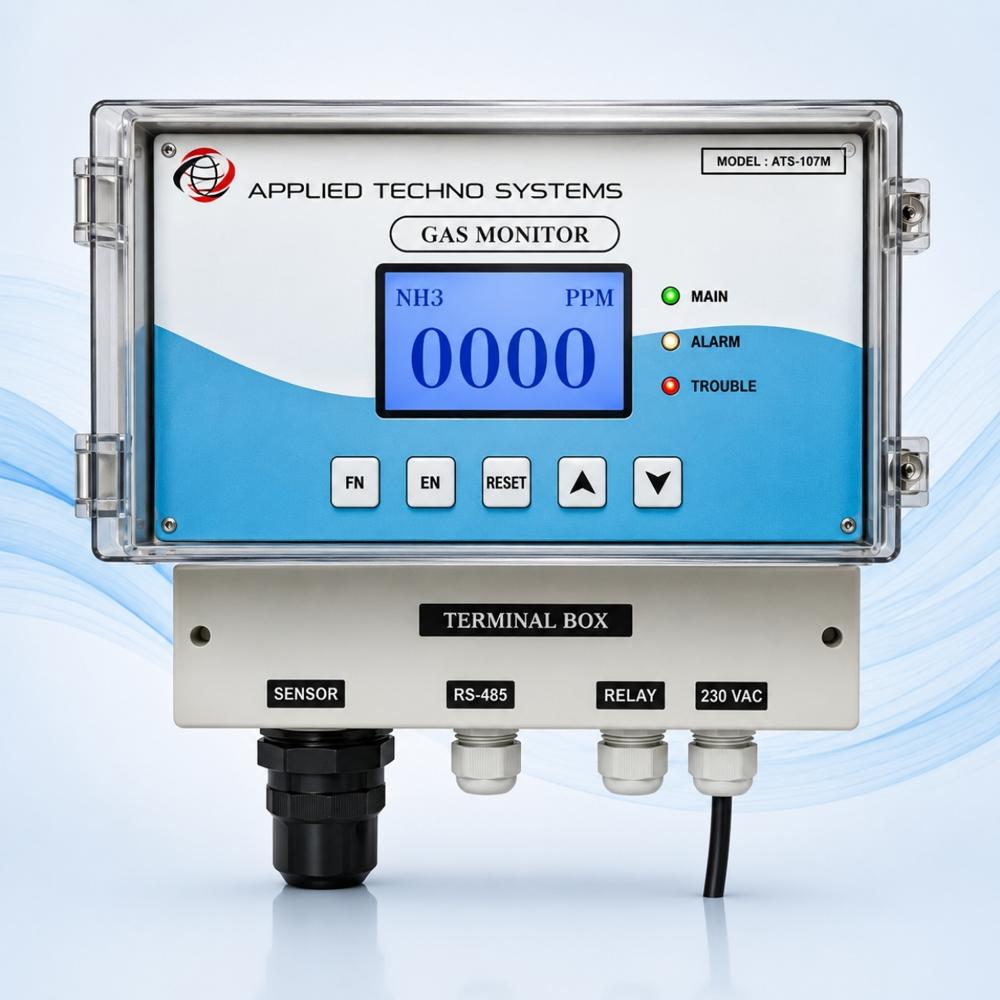
Continuous Gas Leak Monitoring System
Price 69500.0 INR / Piece
Minimum Order Quantity : 1 Piece
Operating Mode : Continuous monitoring, alarm and trouble mode
Power Supply : 230 VAC
Screen Resolution : Backlit digital LCD display with clear numeric output
Application : Industrial plants, laboratories, manufacturing facilities, warehouses, storage areas, confined spaces, ammonia refrigeration systems


- 104, Delta Industrial Estate, Building No 1, Gokhivare, Sativali Road, Vasai East, Dist-Palghar,Vasai - 401208, Maharashtra, India
- Phone : 08045814504
GST : 27AAVCA1127G1ZN

- Mr M L YADAV (Marketing Manager)
- Mobile : 08045814504
- Send Inquiry
 Send Inquiry

|


- Dew Point Meters
- Gas Analysers
- Portable Gas Detector
- Moisture And Dew Point Analyzer
- Dust/Opacity Monitor
- Gas Monitoring Systems
- Gas Leak Detectors
- Gas Transmitters
- VOC Leak Detector
- Air Quality Monitoring System
- Online Continuous Emission Monitoring System-OCEMS
- Dew Point Monitors
- Gas Detector
- Opacity Monitor
- Portable Flue Gas Analyzer
- Online SOX & NOX Gas Analyzer
- Methane Gas Leak Detector
- Hydrogen Purity Analyzer
- Gas Purity Analyzer
- Effluent Monitoring Systems
- Producer Gas Analyzer
- Gas Detector Calibration Service
- Portable Gas Monitors
- Gas Sensor Transmitter

Developed and Managed by Infocom Network Private Limited.


 English
 Spanish
 French
 German
 Italian
 Chinese (Simplified)
 Japanese
 Korean
 Arabic
 Portuguese
