 Chat with us

- Dew Point Meters
- Gas Analysers
- Portable Gas Detector
- Moisture And Dew Point Analyzer
- Dust/Opacity Monitor
- Gas Monitoring Systems
- Gas Leak Detectors
- Gas Transmitters
- VOC Leak Detector
- Air Quality Monitoring System
- Online Continuous Emission Monitoring System-OCEMS
- Dew Point Monitors
- Gas Detector
- Opacity Monitor
- Portable Flue Gas Analyzer
- Online SOX & NOX Gas Analyzer
- Methane Gas Leak Detector
- Hydrogen Purity Analyzer
- Gas Purity Analyzer
- Effluent Monitoring Systems
- Producer Gas Analyzer
- Gas Detector Calibration Service
- Portable Gas Monitors
- Gas Sensor Transmitter

 Send Inquiry
Oxygen Analyzer
Price 325000.0 INR/ Unit
Oxygen Analyzer Specification
- Weight
- 3 Kilograms (kg)
- Display Type
- Digital, LCD Display
- Port Size
- 1/4 inch NPT
- Mounting Type
- Table top / Portable
- Gas Pressure
- 0.5 mpa
- Operating Voltage
- 220V AC Volt (V)
- Accuracy
- 2% of reading %
- Classification
- IP 65
- Application
- Industrial oxygen concentration measurement
- Specimen Size
- 20 Centimeter (cm)
- Equipment Type
- Oxygen Analyzer
- Automation Grade
- Automatic
- Interface Type
- RS232/Analog Output
- Measuring Range
- 100% Kelvin (K)
- Frequency
- 50 Hz Hertz (HZ)
- Power Supply
- 220V AC, 50 Hz
- Response Time
- 15 seconds Seconds
- Features
- Portable, High accuracy, Fast response, Low maintenance
- Number of Specimens
- Single
- Temperature
- 0 C to 50 C Celsius (oC)
- Test Range
- 0 100% O
- Humidity
- 0 95% RH
- Usage
- Gas safety
- Resolution
- 0.1% O
- Product Type
- Gas analysis
- Capacity
- Continuous Ltr
- Machine Weight
- 2.5 kg Kilograms (kg)
- Control Mode
- Microcontroller based
- Sampling Rate
- 1 sample/second
- Sensor Type
- Electrochemical
- Calibration
- Manual/Automatic
- Alarm Output
- Yes, Visual and Audible
- Compliance
- CE Marked
- Data Logging
- Available
- Enclosure Protection
- IP54
- Unit Dimensions
- 240 x 140 x 90 mm
- Operating Principle
- Electrochemical detection
Oxygen Analyzer Trade Information
- Minimum Order Quantity
- 1 Piece
- Delivery Time
- 1 Week
About Oxygen Analyzer
A oxygen analyzer is a type of oxygen analyzer that uses the magnetic properties of oxygen molecules to measure the concentration of oxygen in a gas. The paramagnetic effect refers to the attraction of oxygen molecules to a magnetic field, which can be quantified and used to determine the oxygen level in a sample.
Key Components
- Magnetic Field Source: A magnet or electromagnet is used to generate a stable magnetic field.
- Sample Chamber: This is where the gas sample is introduced and exposed to the magnetic field.
- Magnetic Balance: The device that measures the force exerted by the oxygen molecules within the magnetic field.
- Detection System: Often a quartz fiber or a sensitive displacement transducer detects the movement or force caused by the paramagnetic attraction.
- Electronics and Display: Converts the mechanical movement into a digital or analog output that indicates the concentration of oxygen in the sample.
Advanced Electrochemical Detection
Utilizing electrochemical sensor technology, this Oxygen Analyzer delivers accurate and rapid measurements across a broad range (0-100% O2). Its superior sensitivity and fast response time under 15 seconds make it suitable for real-time industrial monitoring.
Integrated Alarm Systems for Safety
With both audible and visual alarms, the analyzer ensures prompt notification when oxygen levels exceed set thresholds. This feature is vital for maintaining workplace safety by minimizing response times to abnormal gas concentrations.
Flexible Calibration and Data Logging
Users can choose between manual and automatic calibration methods, enhancing operational flexibility. Comprehensive data logging supports long-term analysis and traceability, essential for compliance and process optimization.
FAQ's of Oxygen Analyzer:
Q: How does the electrochemical sensor in the Oxygen Analyzer operate?
A: The electrochemical sensor detects oxygen by generating a small electrical current as oxygen molecules interact with its electrodes. The analyzer's microcontroller interprets this current to provide accurate real-time oxygen concentration readings on the LCD display.Q: What is the process for calibrating the Oxygen Analyzer?
A: Calibration can be performed manually or automatically. For manual calibration, reference gases are introduced following on-screen prompts. The automatic mode enables the analyzer to self-adjust at programmed intervals, ensuring accuracy without frequent manual intervention.Q: When should I use the visual and audible alarms?
A: Visual and audible alarms are designed to activate automatically when measured oxygen levels deviate from preset safe ranges. This feature allows operators to respond immediately, improving safety in gas monitoring environments.Q: Where can this Oxygen Analyzer be installed or used?
A: The analyzer's portable and tabletop design makes it adaptable to various industrial settings. Its IP54 enclosure protection allows use in environments with dust and splashing, while compliance with CE standards ensures suitability for regulated applications.Q: What benefits does data logging provide for industrial users?
A: Data logging enables continuous recording of oxygen concentration data, which is essential for quality assurance, compliance reporting, and process optimization. The stored data can be retrieved through RS232 or analog output interfaces for further analysis.Q: How do I maintain the analyzer for optimal performance?
A: Maintenance is minimal due to the robust sensor and design. Regular inspection of the sensor, periodic calibration, and ensuring the sampling system is clean will sustain high accuracy and extend the instrument's lifespan.




Price:
- 50
- 100
- 200
- 250
- 500
- 1000+

More Products in Gas Analysers Category
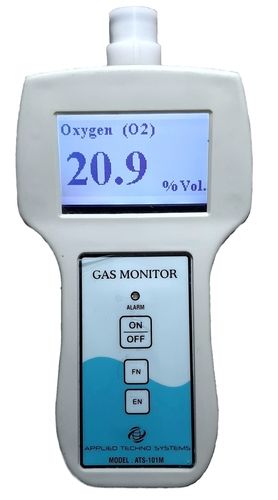
Portable HF Gas Analyser
Price 90000.0 INR / Number
Minimum Order Quantity : 1 Number
Material : ABS Plastic
Display Type : Graphics
Machine Weight : 250 Gram (g)
Accuracy : 0.50 %

Hydrogen purity analyzer
Price 235000.0 INR / Number
Minimum Order Quantity : 1 Number
Material : ABS Plastic
Display Type : Digital
Machine Weight : 5 Kilograms (kg)
Accuracy : +/2 %

Stack Gas Analyzer
Price 620000.0 INR / Piece
Minimum Order Quantity : 1 Piece
Material : ABS Plastic
Display Type : Digital
Machine Weight : 5 Kilograms (kg)
Accuracy : +/2 %
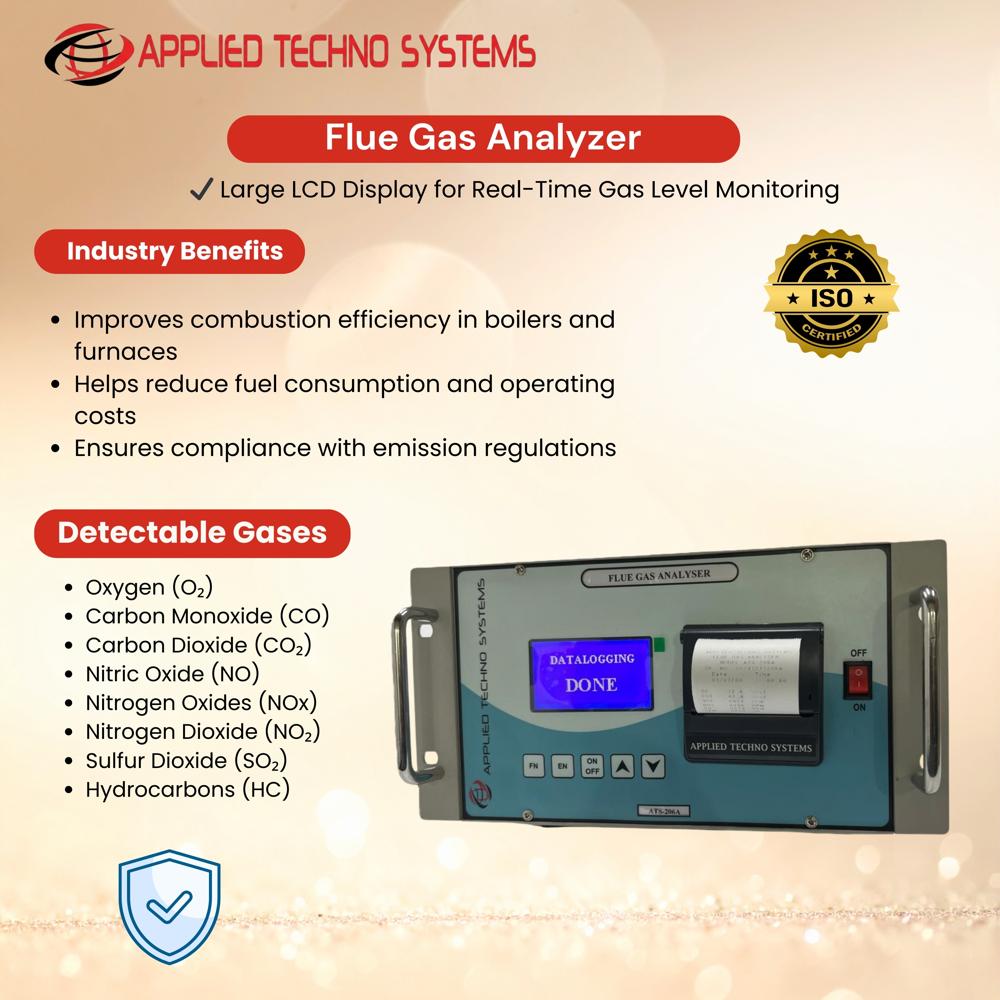
Portable Gas analyzer
Price 250000.0 INR / Piece
Minimum Order Quantity : 1 Number
Material : ABS Plastic
Display Type : Digital
Machine Weight : 5 Kilograms (kg)
Accuracy : +/2 %


- 104, Delta Industrial Estate, Building No 1, Gokhivare, Sativali Road, Vasai East, Dist-Palghar,Vasai - 401208, Maharashtra, India
- Phone : 08045814504
GST : 27AAVCA1127G1ZN

- Mr M L YADAV (Marketing Manager)
- Mobile : 08045814504
- Send Inquiry
 Send Inquiry
|


- Dew Point Meters
- Gas Analysers
- Portable Gas Detector
- Moisture And Dew Point Analyzer
- Dust/Opacity Monitor
- Gas Monitoring Systems
- Gas Leak Detectors
- Gas Transmitters
- VOC Leak Detector
- Air Quality Monitoring System
- Online Continuous Emission Monitoring System-OCEMS
- Dew Point Monitors
- Gas Detector
- Opacity Monitor
- Portable Flue Gas Analyzer
- Online SOX & NOX Gas Analyzer
- Methane Gas Leak Detector
- Hydrogen Purity Analyzer
- Gas Purity Analyzer
- Effluent Monitoring Systems
- Producer Gas Analyzer
- Gas Detector Calibration Service
- Portable Gas Monitors
- Gas Sensor Transmitter

Developed and Managed by Infocom Network Private Limited.


 English
 Spanish
 French
 German
 Italian
 Chinese (Simplified)
 Japanese
 Korean
 Arabic
 Portuguese