 Chat with us

- Dew Point Meters
- Gas Analysers
- Portable Gas Detector
- Moisture And Dew Point Analyzer
- Dust/Opacity Monitor
- Gas Monitoring Systems
- Gas Leak Detectors
- Gas Transmitters
- VOC Leak Detector
- Air Quality Monitoring System
- Online Continuous Emission Monitoring System-OCEMS
- Dew Point Monitors
- Gas Detector
- Opacity Monitor
- Portable Flue Gas Analyzer
- Online SOX & NOX Gas Analyzer
- Methane Gas Leak Detector
- Hydrogen Purity Analyzer
- Gas Purity Analyzer
- Effluent Monitoring Systems
- Producer Gas Analyzer
- Gas Detector Calibration Service
- Portable Gas Monitors
- Gas Sensor Transmitter

 Send Inquiry
Hydrogen Sulphide (H2S) Gas Detector
Price 35000.0 INR/ Unit
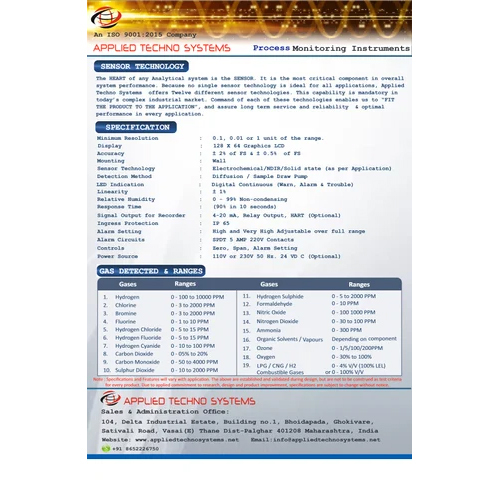
Hydrogen Sulphide (H2S) Gas Detector Specification
- Resolution
- 1, 0.1
- Color
- Blue
- Product Type
- Gas Monitor
- Material
- MS
- Automation Grade
- Semi-automatic
- Power Supply
- Manual
- Voltage
- 110-215 Volt (v)
- Accuracy
- 0.5 %
- Dimension (L*W*H)
- 115 X 180 X 60 Centimeter (cm)
- Mounting Type
- Handheld or tripod
- Operate Method
- Semi Automatic
- Classification
- IP 65
- Hardness
- Yes
- Usage
- Industrial
- Application
- Industrial
- Response Time
- 10 Seconds
- Features
- Good Quality
- Temperature
- 15 Celsius (oC)
- Display Type
- Digital
- Humidity
- < 85% RH
- Control Mode
- Automatic
Hydrogen Sulphide (H2S) Gas Detector Trade Information
- Minimum Order Quantity
- 1 Unit
- Supply Ability
- 500 Units Per Month
- Delivery Time
- 7 Days
About Hydrogen Sulphide (H2S) Gas Detector
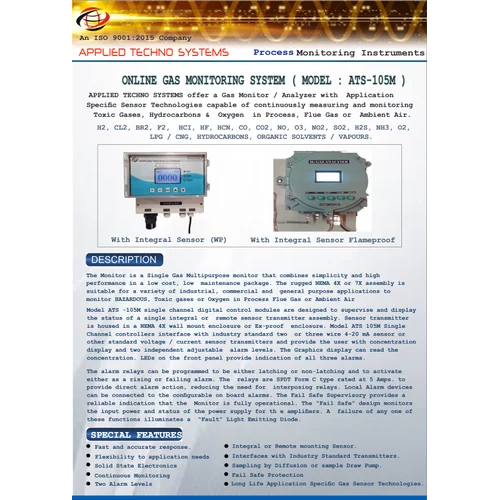
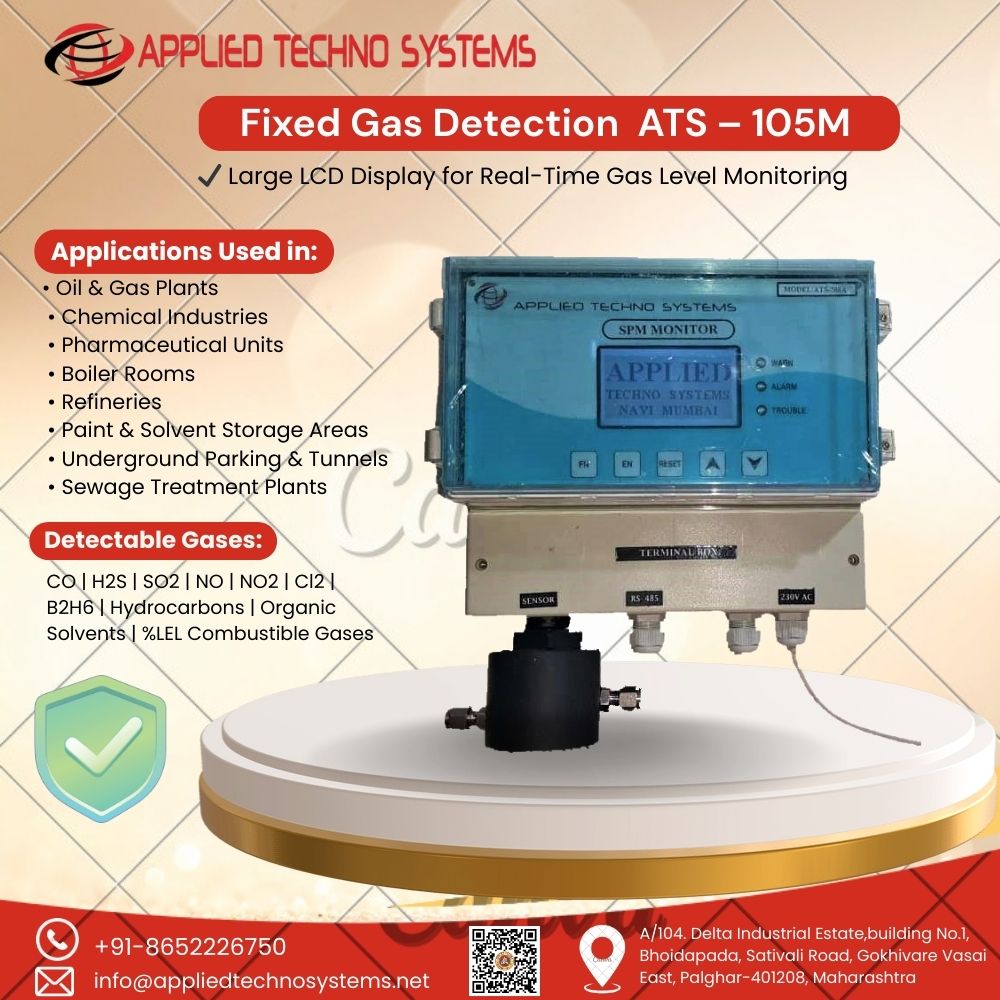
A Hydrogen Sulphide (HS) Gas Detector is a device designed to detect the presence and concentration of hydrogen sulfide (HS) gas in the environment. Hydrogen sulfide is a toxic and highly flammable gas with a characteristic rotten egg smell, commonly produced in industrial settings like petroleum refineries, natural gas processing plants, sewage treatment plants, and agricultural facilities.
Key Features of an HS Gas Detector:-
Detection Range: HS detectors typically have a range to measure low concentrations (e.g., 0-100 ppm or 0-1000 ppm) depending on the application.
-
Real-Time Monitoring: These detectors provide real-time measurements of hydrogen sulfide levels in the air to ensure safety in workplaces where HS is a risk.
-
Alarms: Most detectors have both audible and visual alarms that trigger when the concentration of HS exceeds preset thresholds. This is critical for worker safety.
- Low-Level Alarm: Alerts when the gas concentration approaches a safe limit.
- High-Level Alarm: Alerts when the gas concentration exceeds a dangerous threshold.
-
Sensor Types:
- Electrochemical Sensors: Commonly used in HS detectors due to their sensitivity and ability to detect low levels of gas.
- Infrared Sensors: Can also be used for detection, especially in more complex or industrial systems.
-
Calibration: HS detectors need to be periodically calibrated to ensure accurate readings. Calibration is usually done with certified calibration gases.
-
Portability: Many HS gas detectors are portable, allowing workers to carry them in hazardous environments. These detectors are compact and often equipped with straps or clips for easy attachment to clothing.
-
Data Logging and Connectivity: Advanced models may include features like data logging to store gas concentration history, or wireless connectivity to integrate with monitoring systems.
-
Battery-Powered: Many portable HS detectors run on rechargeable or replaceable batteries for convenience.
Technical Details
Versatile Mounting and Operation
The H2S Gas Detector features both handheld and tripod mounting options, making it adaptable for varied industrial scenarios. Semi-automatic functionality allows users to easily operate the device while maintaining accuracy and safety during gas detection processes, especially in hazardous workspaces.
Built for Industrial Toughness
Constructed from mild steel (MS), the detector offers significant hardness and rigidity, ensuring resilience against harsh industrial conditions. Its good quality build translates into sustained performance and safety assurance, meeting the rigorous demands of sectors handling hazardous gases.
FAQs of Hydrogen Sulphide (H2S) Gas Detector:
Q: How do I operate the Hydrogen Sulphide (H2S) Gas Detector in an industrial setting?
A: To operate the detector, simply position it at the desired location using the handheld or tripod mount. Connect it to the power supply within the 110-215 Volt range. Follow the semi-automatic instructions provided in the user manual for calibration and detection.Q: What makes this H2S Gas Detector suitable for industrial usage?
A: This model is crafted with durable MS material, has proven hardness, and is tailored for semi-automatic operation, making it reliable and safe for continuous use in industrial environments with hazardous gas risks.Q: When should I use a tripod mount versus handheld operation?
A: Choose the tripod mount for continuous or stationary monitoring, such as in a fixed area of concern. Opt for handheld operation when portability is required or when inspecting multiple locations within a facility.Q: Where is this H2S Gas Detector manufactured and supplied from?
A: The detector is manufactured and distributed by reputed exporters, importers, suppliers, and service providers based in India, ensuring broad availability and reliable after-sales support.Q: What is the process for calibrating the detector before use?
A: Calibration involves following the semi-automatic instructions provided with the device, which typically include power connection, setting up the sensor, and performing a test run to ensure accurate readings. Refer to the user guide for step-by-step procedures.Q: What are the benefits of using a semi-automatic gas detector?
A: A semi-automatic detector reduces the likelihood of manual errors, simplifies operation, and enhances safety through consistent and accurate H2S detectioncritical in preventing exposure or accidents in industrial settings.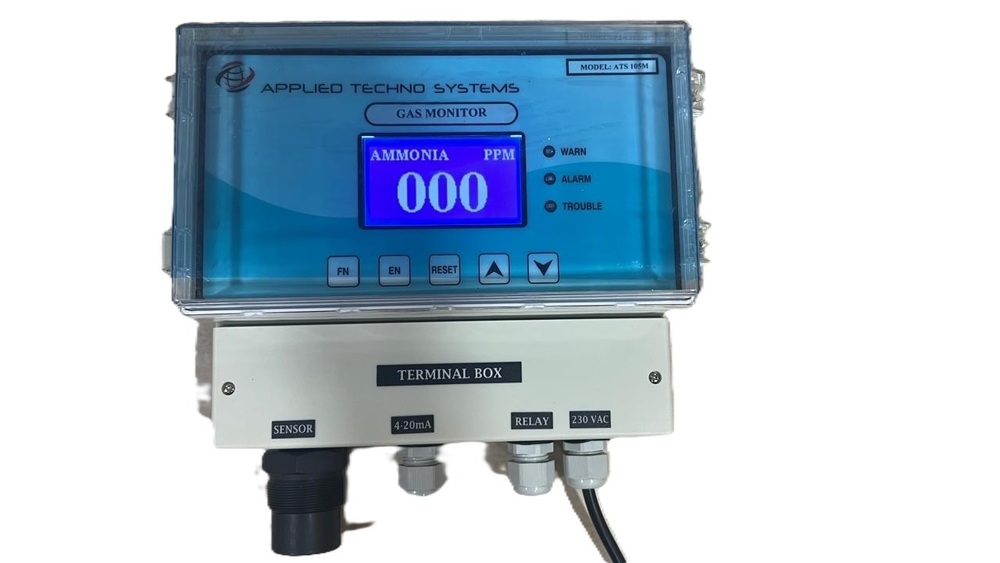

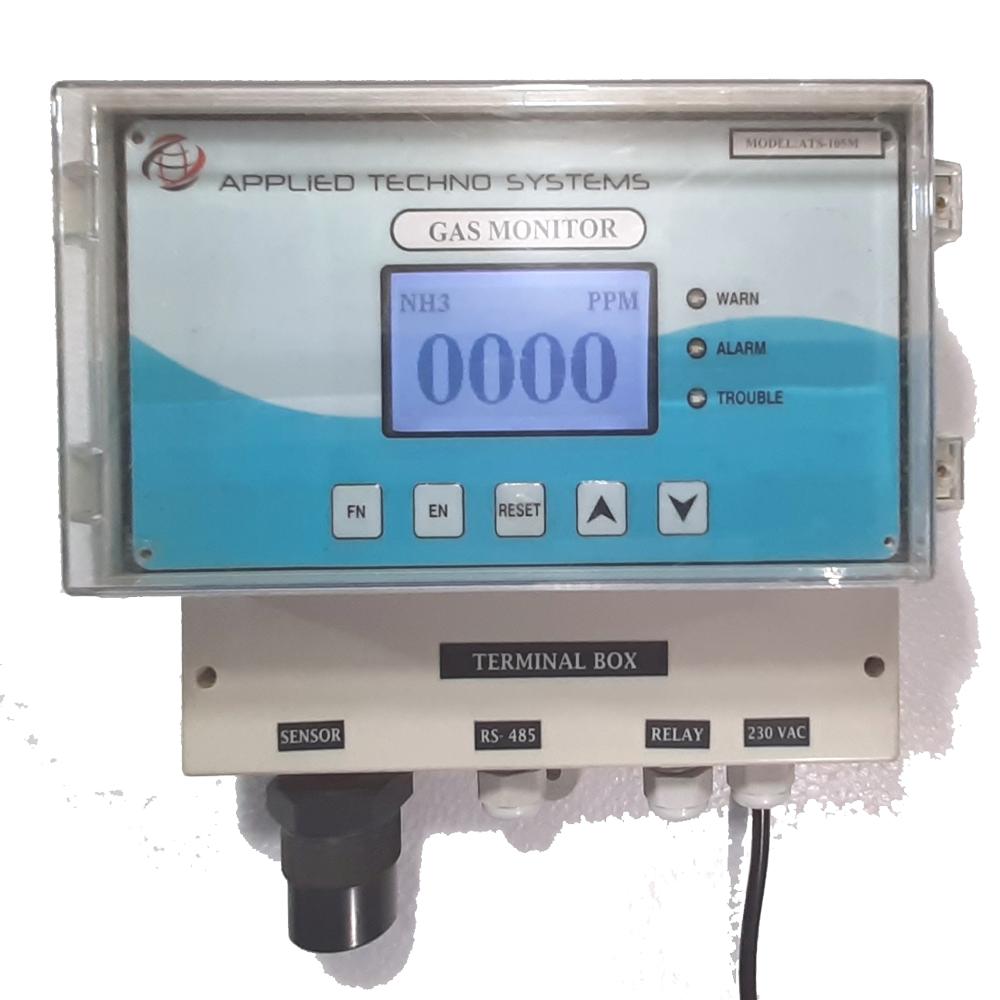

Price:
- 50
- 100
- 200
- 250
- 500
- 1000+

More Products in Gas Detector Category
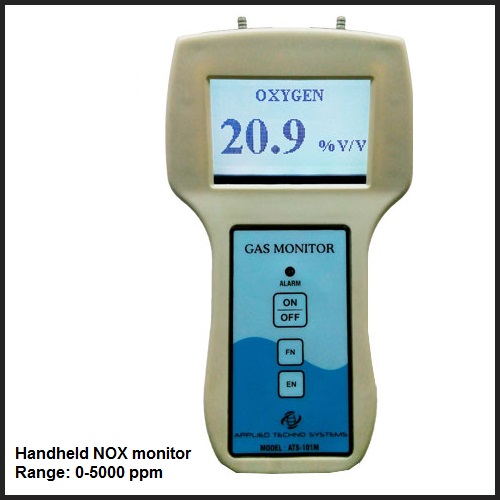
ATS 101M Handheld Explosive Gas Detector Model
Price 28500.0 INR / Unit
Minimum Order Quantity : 1 Unit
Application : Detection of combustible gases
Material : ABS Plastic
Classification : IP 65
Usage : Industrial
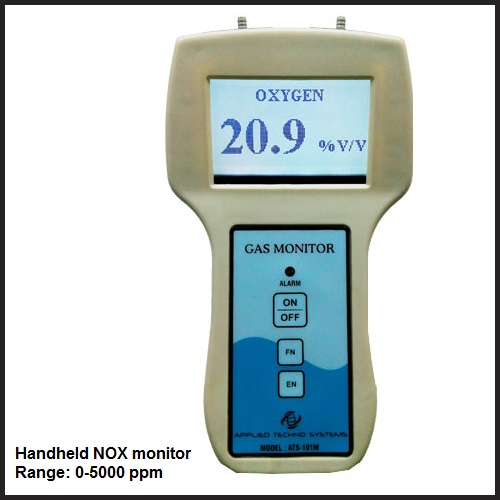
ATS 101M Confined Space Oxygen Gas Leak Monitor
Price 32500.0 INR / Unit
Minimum Order Quantity : 1 Unit
Application : Industrial
Material : MS
Classification : IP 65
Usage : Industrial
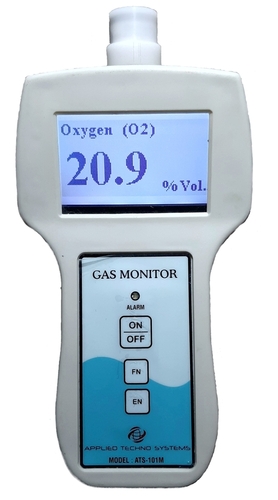
Portable Digital Oxygen Monitor
Price 32000.0 INR / Number
Minimum Order Quantity : 1 Number
Application : GAs Detection
Material : ABS Plastic
Classification : IP 65
Usage : Industrial
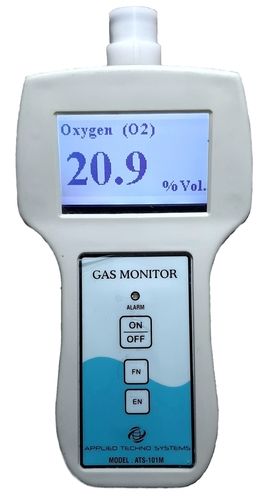
Portable HF Gas Leak Detector
Price 30000.0 INR / Number
Minimum Order Quantity : 1 Number
Application : Industrial
Material : Aluminium
Classification : IP 65
Usage : Industrial


- 104, Delta Industrial Estate, Building No 1, Gokhivare, Sativali Road, Vasai East, Dist-Palghar,Vasai - 401208, Maharashtra, India
- Phone : 08045814504
GST : 27AAVCA1127G1ZN

- Mr M L YADAV (Marketing Manager)
- Mobile : 08045814504
- Send Inquiry
 Send Inquiry
|


- Dew Point Meters
- Gas Analysers
- Portable Gas Detector
- Moisture And Dew Point Analyzer
- Dust/Opacity Monitor
- Gas Monitoring Systems
- Gas Leak Detectors
- Gas Transmitters
- VOC Leak Detector
- Air Quality Monitoring System
- Online Continuous Emission Monitoring System-OCEMS
- Dew Point Monitors
- Gas Detector
- Opacity Monitor
- Portable Flue Gas Analyzer
- Online SOX & NOX Gas Analyzer
- Methane Gas Leak Detector
- Hydrogen Purity Analyzer
- Gas Purity Analyzer
- Effluent Monitoring Systems
- Producer Gas Analyzer
- Gas Detector Calibration Service
- Portable Gas Monitors
- Gas Sensor Transmitter

Developed and Managed by Infocom Network Private Limited.


 English
 Spanish
 French
 German
 Italian
 Chinese (Simplified)
 Japanese
 Korean
 Arabic
 Portuguese